Lockouts · London
Home Lockout Service in London
You stepped out to grab the recycling bin and the door swung shut behind you.
In plain words
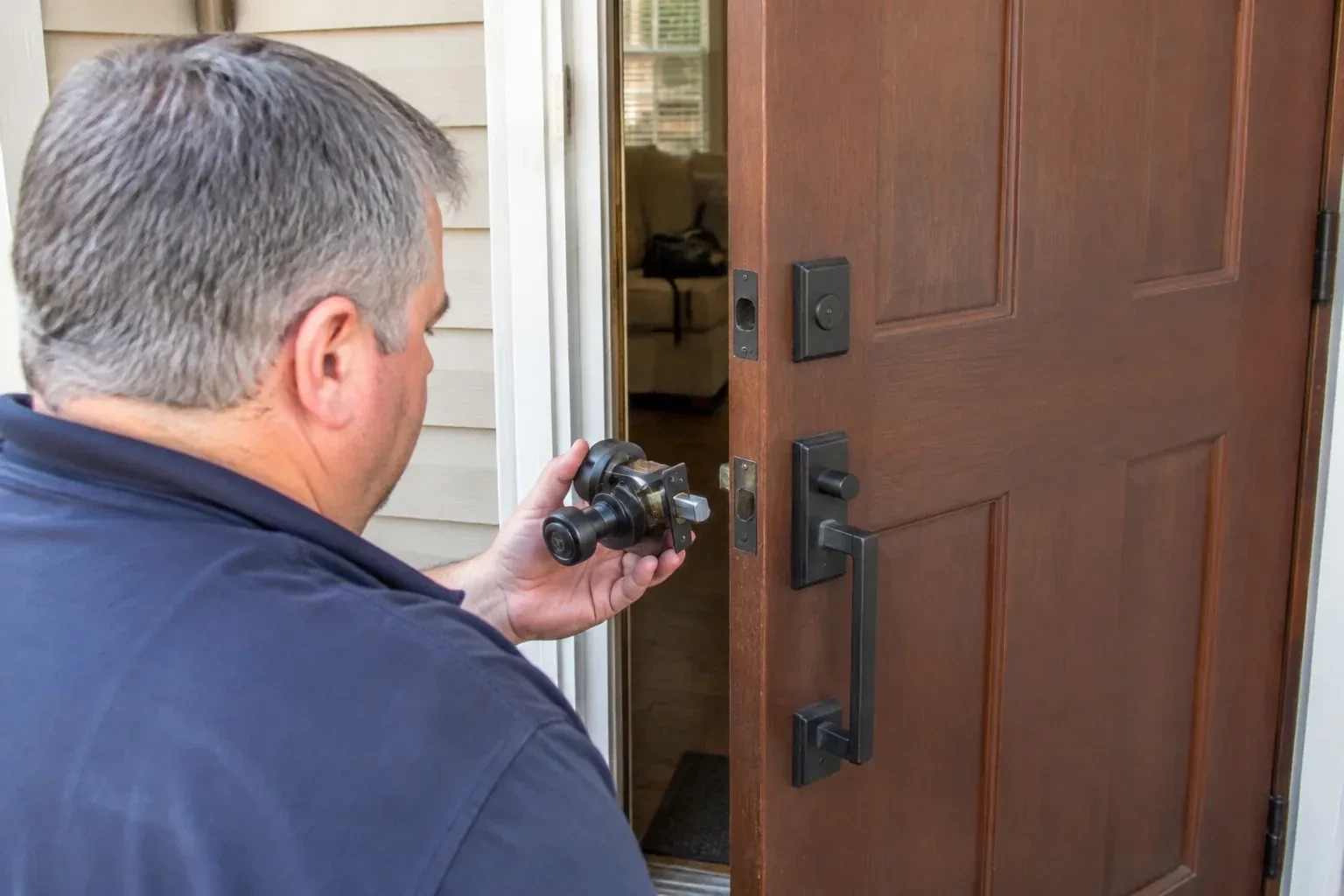
Different locks call for different openings, and a lockout visit starts by reading the hardware on your door. A spring latch in a knob or lever behaves differently from a deadbolt, a mortise lock in an older home has its own internals, and a high-security cylinder resists shortcuts that work on builder-grade hardware. A smart lock adds batteries and, on many models, a hidden keyed override, though some key-free designs rely instead on their own backup power, codes or app access. Knowing which is in front of them lets the locksmith pick, decode or bypass the mechanism, keeping the lock intact rather than reaching for a drill.
How the visit goesThe moving truck has left, half the boxes are inside, and the single key the previous owner handed over turns the knob but not the deadbolt. Someone locked it on the way out, and nobody has a key that fits it.
Home Lockout Service
How the visit goes
Cold, ice and salt on the hardware
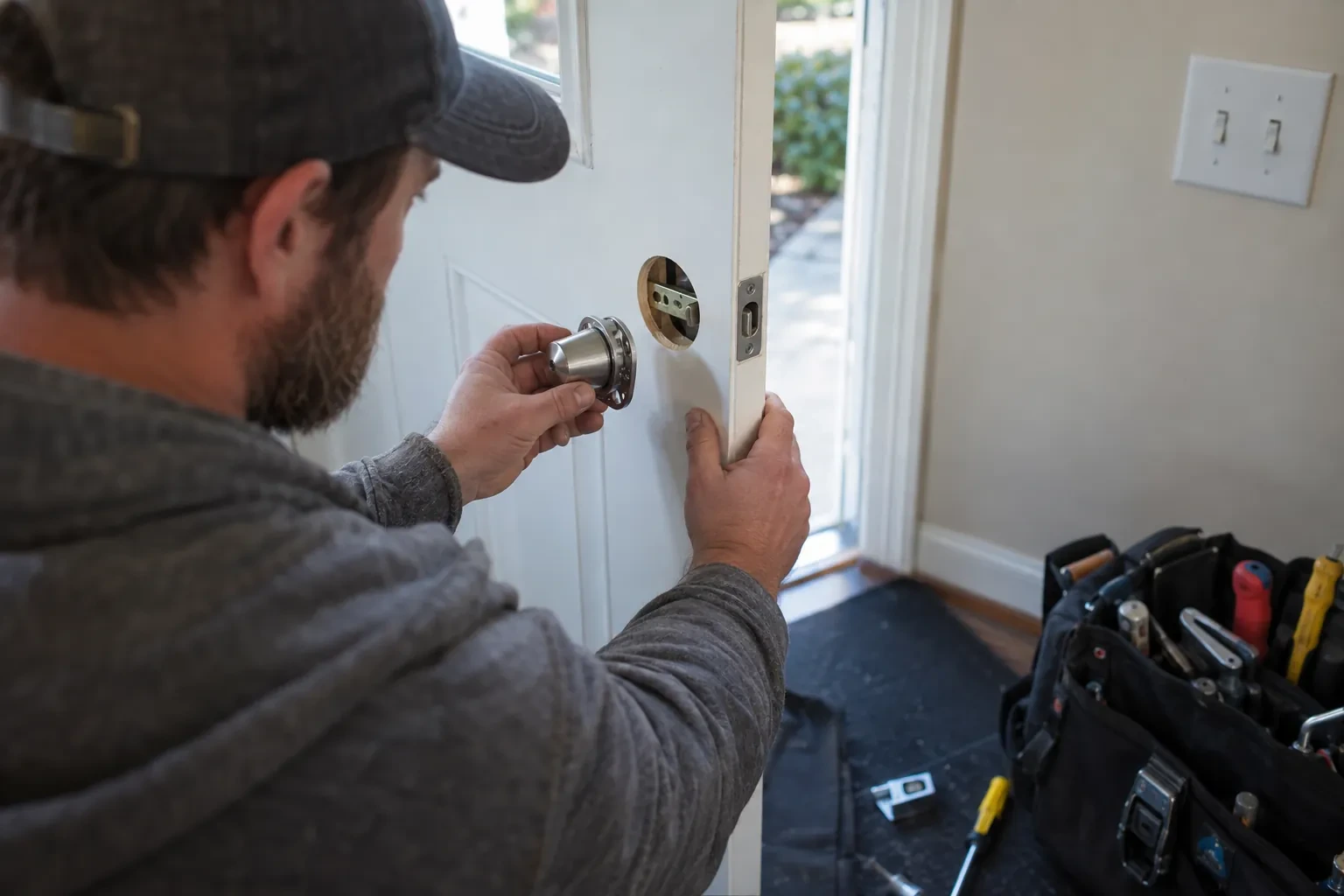
In winter the assessment starts with the weather. A keyway that took on meltwater during a thaw can be frozen solid by morning, and salt spray from a nearby driveway leaves a crust that gums up the pins. The locksmith looks for frost around the cylinder face, tests how far the key seats, and feels whether the plug is stiff from cold grease or genuinely iced. This decides between a gentle thaw with lock de-icer, warming the cylinder, or picking once the ice releases. It also flags hardware that should get a dry lubricant and a weather cover afterwards so the same morning does not repeat next week.
Getting past a dead smart lock
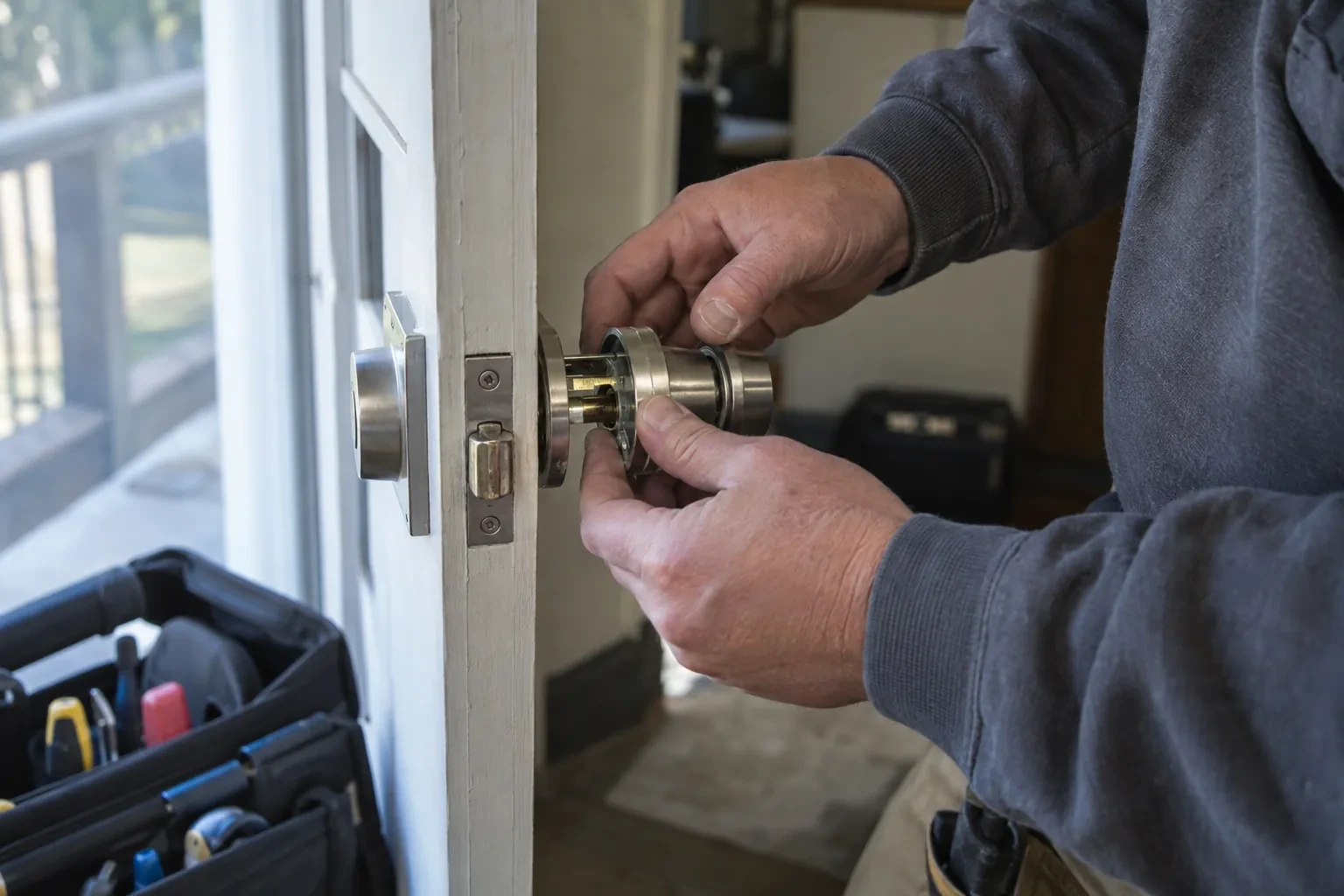
A keypad lock that has lost power is usually opened by giving it power back. Many models expose two small terminals under the keypad that accept a fresh nine-volt battery held against them, which wakes the lock long enough to enter a code. If that route is unavailable, the locksmith removes the cover over the mechanical override and picks or decodes that small cylinder like a conventional lock. Where the lock has no keyway at all, that model's own recovery method is used instead. Afterwards, batteries are replaced, the door is confirmed to relock automatically if it should, and any forgotten code is reset from the inside.
The missing key is now just a piece of metal
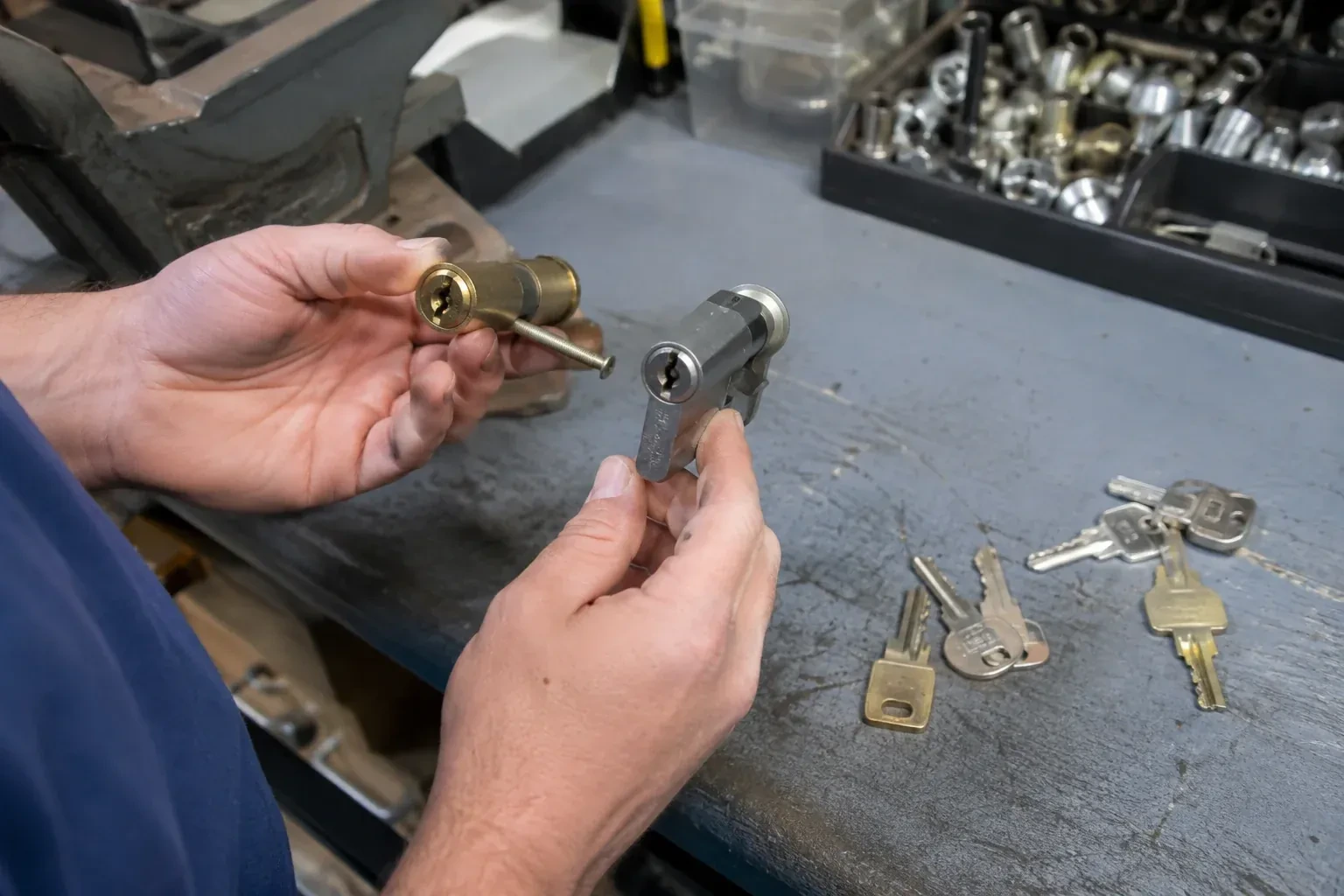
If the cylinder was rekeyed, whoever has the old key is holding something that fits the keyway and turns nothing. You receive the new keys, typically two or three, cut from the fresh pin combination rather than copied from a worn original, so they will operate crisply for years. It is worth counting them, deciding who in the household gets one, and writing down where the spare lives. If several doors were brought onto the same new key, test each one before the locksmith drives off. From this point the lost key is a story to tell, not a worry to carry.
Home Lockout Service
In the van
Nine-volt battery for smart locks
Pick and tension tools
Dry graphite or PTFE lubricant
Plug follower and repinning kit
Key blanks and key cutter
Home Lockout Service
What affects the quote
Interior door or exterior door
A bathroom privacy lock or a bedroom door is generally a lighter job than an exterior deadbolt, and an old keyed interior mortise lock sits somewhere between. The quote follows the hardware, not the room.
Electronic lock work
A dead smart lock may need batteries, a reset, reprogramming of codes or pairing to your phone once the door is open. Each of those is a small task that the quote names separately.
Weather on the day
A cylinder frozen solid or a door iced to its frame takes patient thawing before any opening can begin, so a winter call in a cold snap is quoted with that extra time in mind.
What to have ready
- Is the key inside the house, lost, broken in the lock, or turning without opening?
- Has the lock been stiff, sticky or hard to turn in recent weeks?
- Is there a second door, a garage entry or a spare key nearby you could use?
Home Lockout Service: questions
QuestionsDo I have to show identification before you open my door?
Yes, and it is a reassuring step rather than a hurdle. Photo identification that matches the address settles it in seconds. When your identification still carries a previous address, other proof does the job: a tenancy agreement, a recent bill, a piece of addressed mail, or a word with your building manager. Locksmiths take this seriously because it protects every home they are asked to open, including yours.
I am a landlord. Can you open a unit my tenant is living in?
A locksmith will want to understand the situation first, because a tenant's right to their home is protected and a lockout of a tenant is something only a sheriff enforcing a Landlord and Tenant Board order may carry out. Legitimate reasons do come up: a tenant has asked you to let them in, a vacated unit needs securing, or an emergency requires access. Bring ownership records and be ready to explain the circumstances, and the locksmith will help you handle it properly.
My key turns but the door stays locked. What is going on?
A key that spins freely without moving the bolt usually means the connection between the cylinder and the bolt has failed: the tailpiece or cam at the back of the cylinder has broken or slipped, or the internal parts of an older mortise lock have worn. The good news is that this is a hardware fault rather than a lost key, so once the door is opened the fix is a repaired or replaced cylinder and your keys keep working.