Lockouts · London
Break-In Damage Lock Repair in London
There is a hole where the cylinder used to be.
In plain words
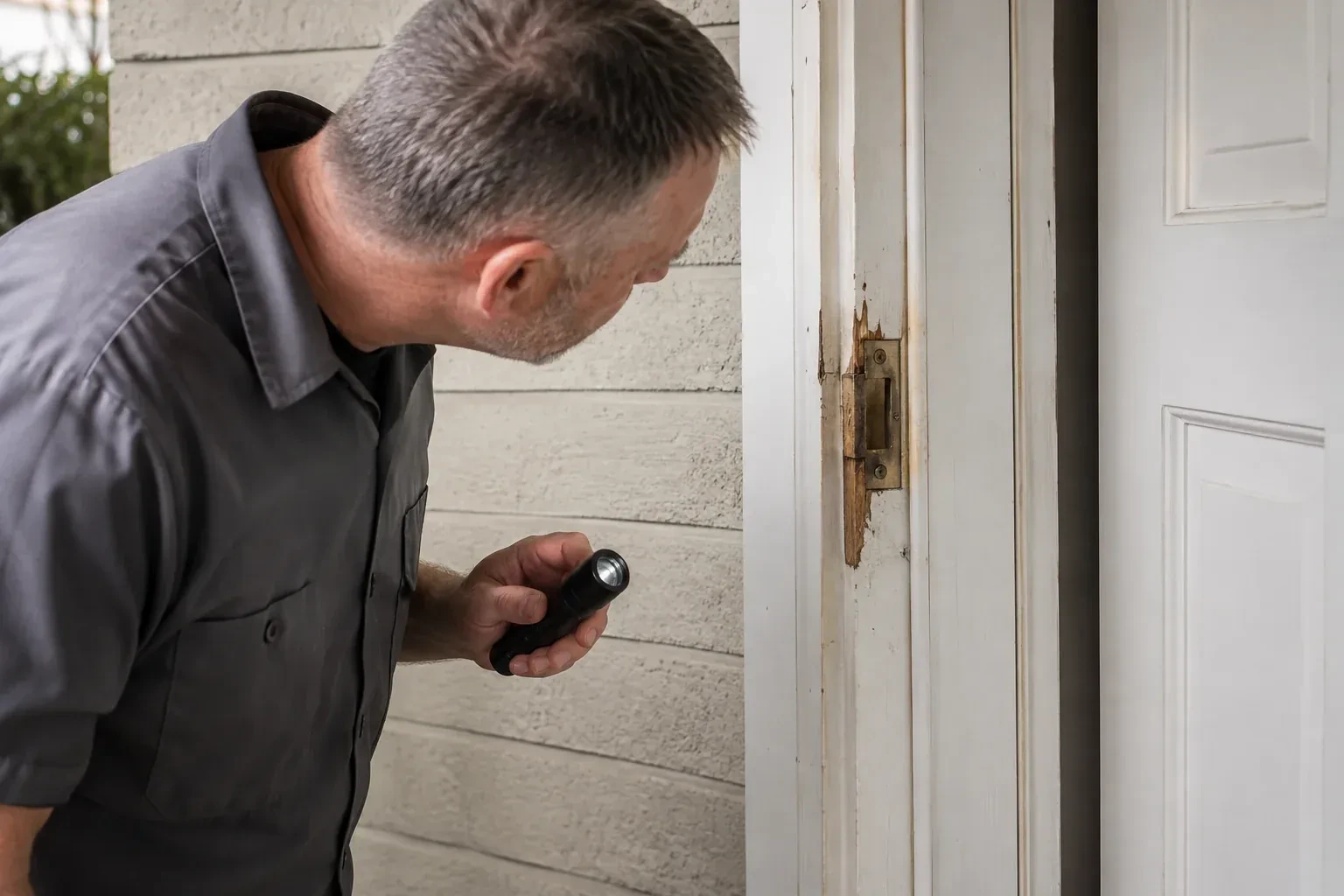
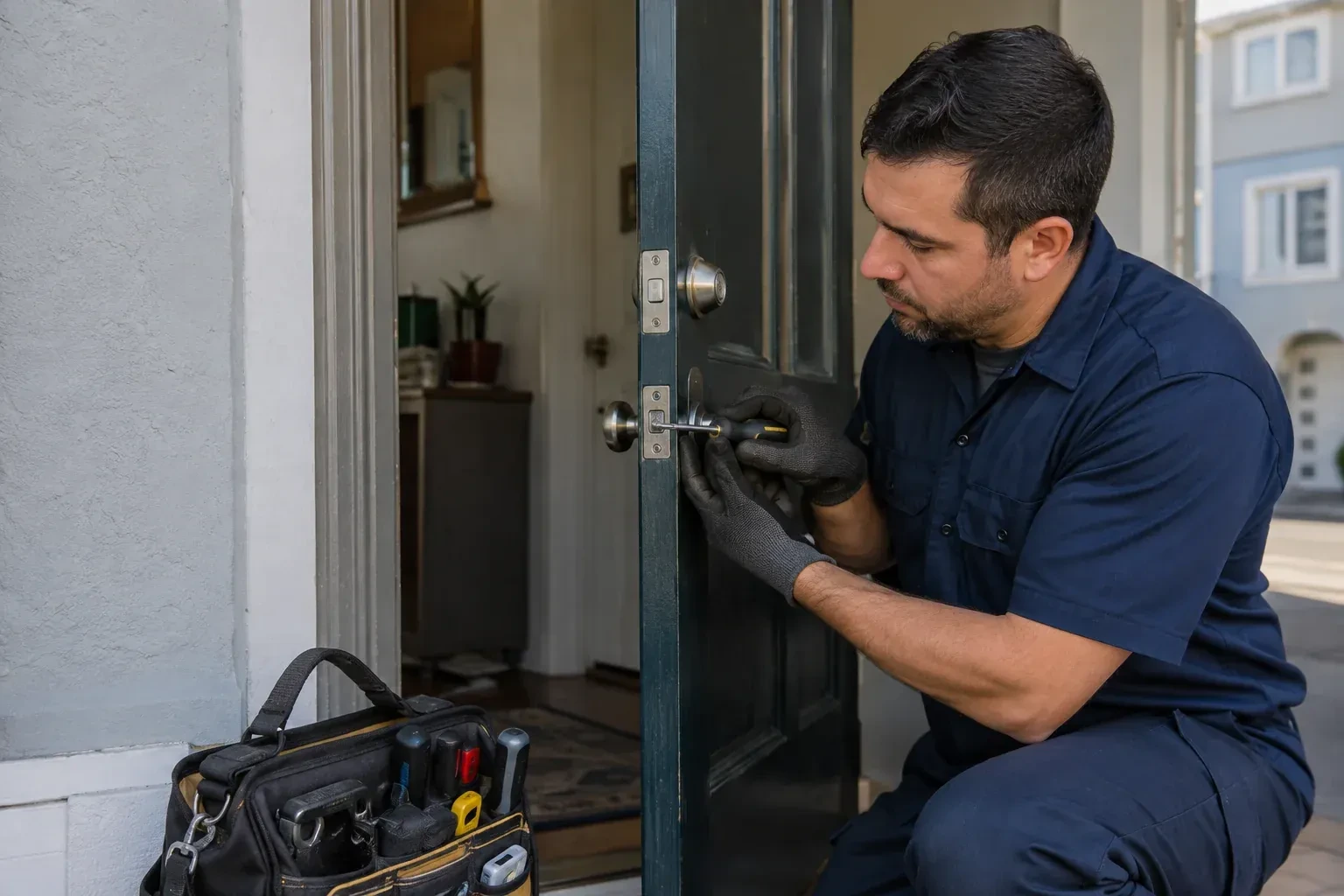
Break-in damage lock repair is the visit that turns a forced door back into a locked one. The locksmith first confirms you own, rent or manage the property, then looks at everything the attack touched: the lock, the bolt, the strike plate and wood behind it, the door edge, the hinges and any glass beside the door. The opening is secured before the visit ends, and the parts that gave way are replaced with stronger hardware and longer fasteners set into the framing. Any lock a taken key could open is rekeyed or replaced, so the house is closed on your terms again.
How the visit goesThe patio slider is sitting crooked on its track. Its latch is snapped, the frame is bowed where it was pried, and the panel no longer meets the jamb, so the house cannot be closed up for the night.
Break-In Damage Lock Repair
How the visit goes
Does the door still hang true
An impact hard enough to break a strike usually moves the door as well. The locksmith checks that the door sits square in its opening, closes on its weatherstrip without force, and that the bolt lines up with its pocket rather than dragging on the strike lip. Hinge screws are tested for grip, since a kick can pull them from the jamb even on the side that was not attacked, and the hinge leaves are checked for bending. Manufacturers treat strike position, pocket depth and door alignment as working parts of the lock, and a repair that ignores them produces a door that locks badly the day after it was fixed.
Fitting the new deadbolt and cylinder
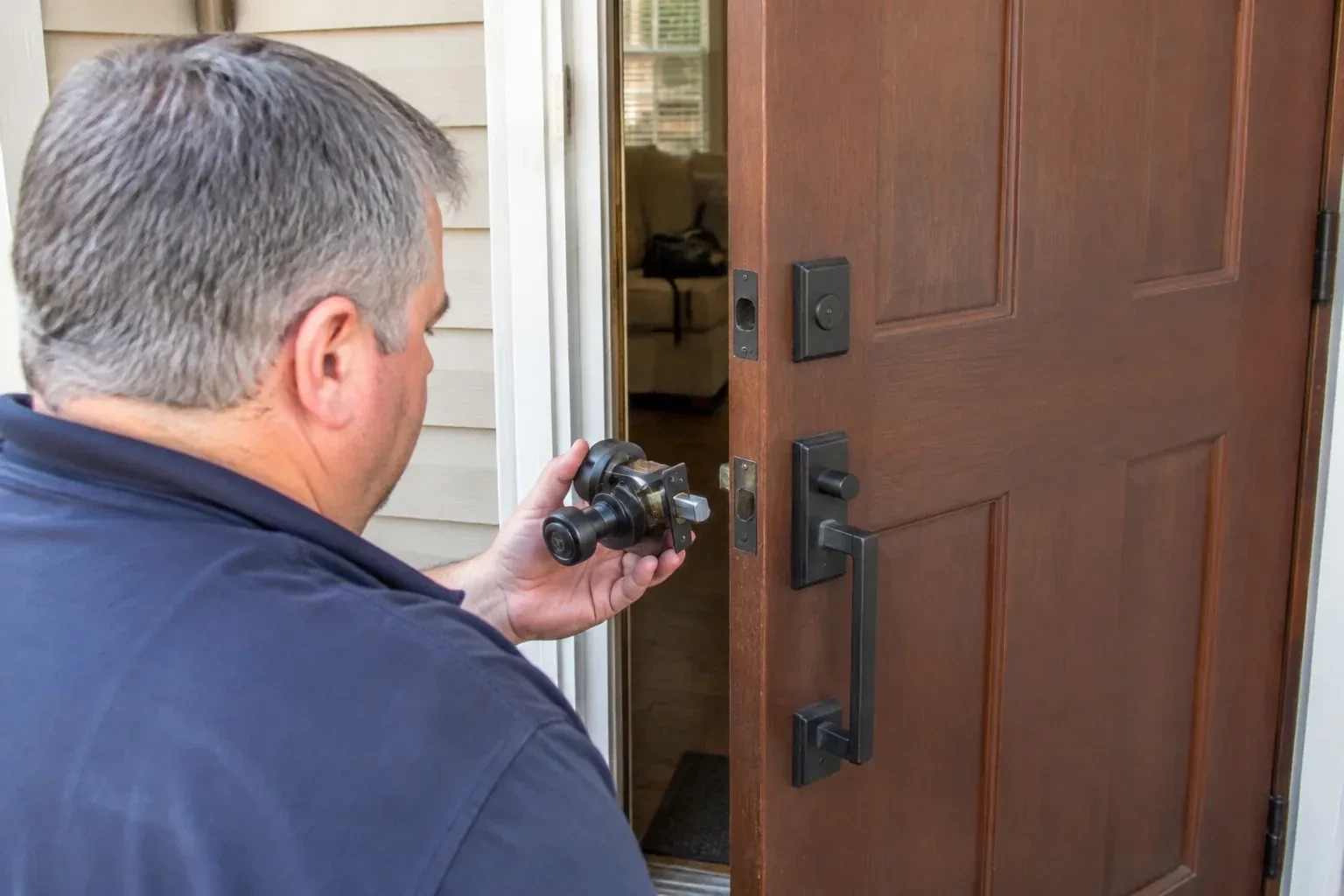
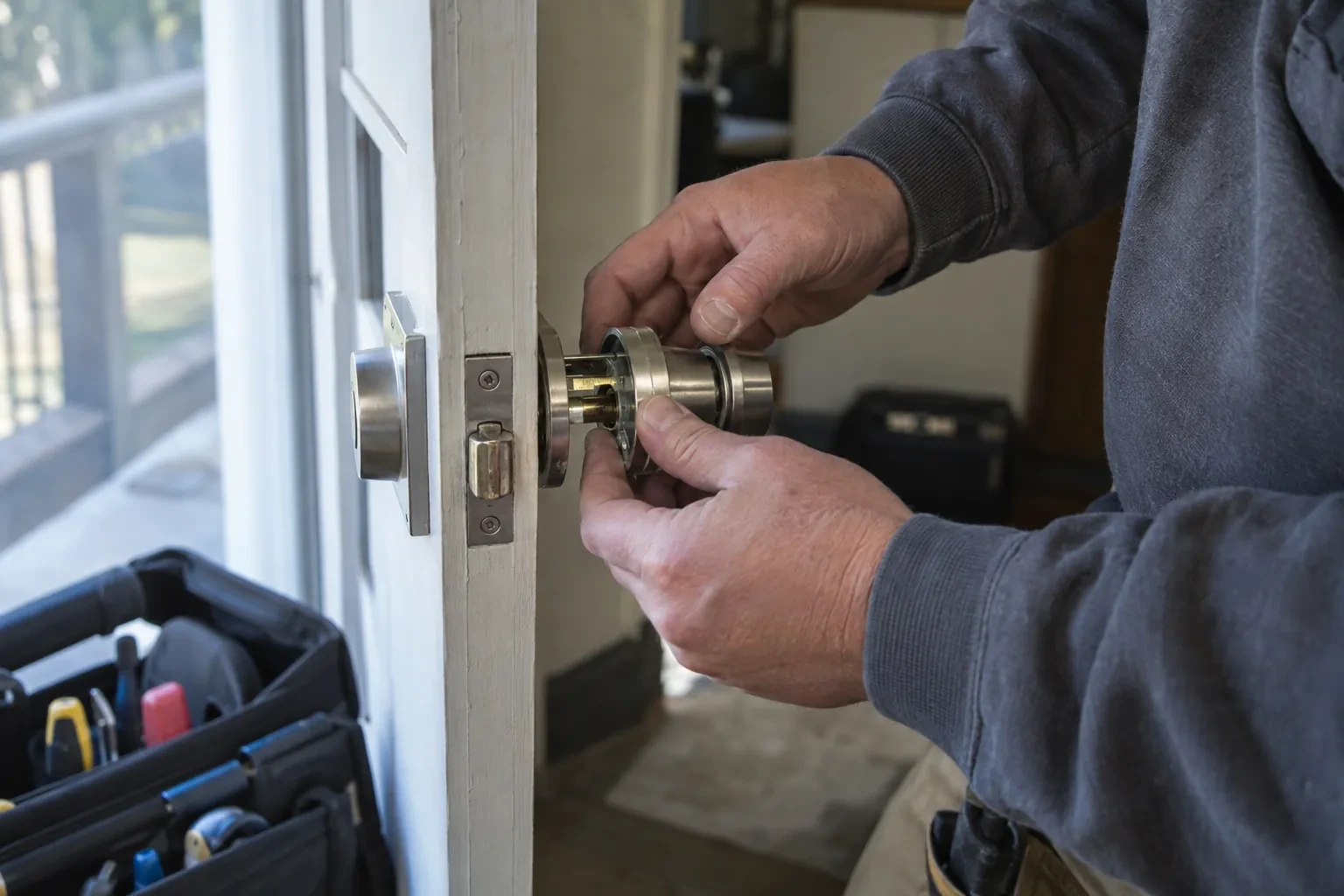
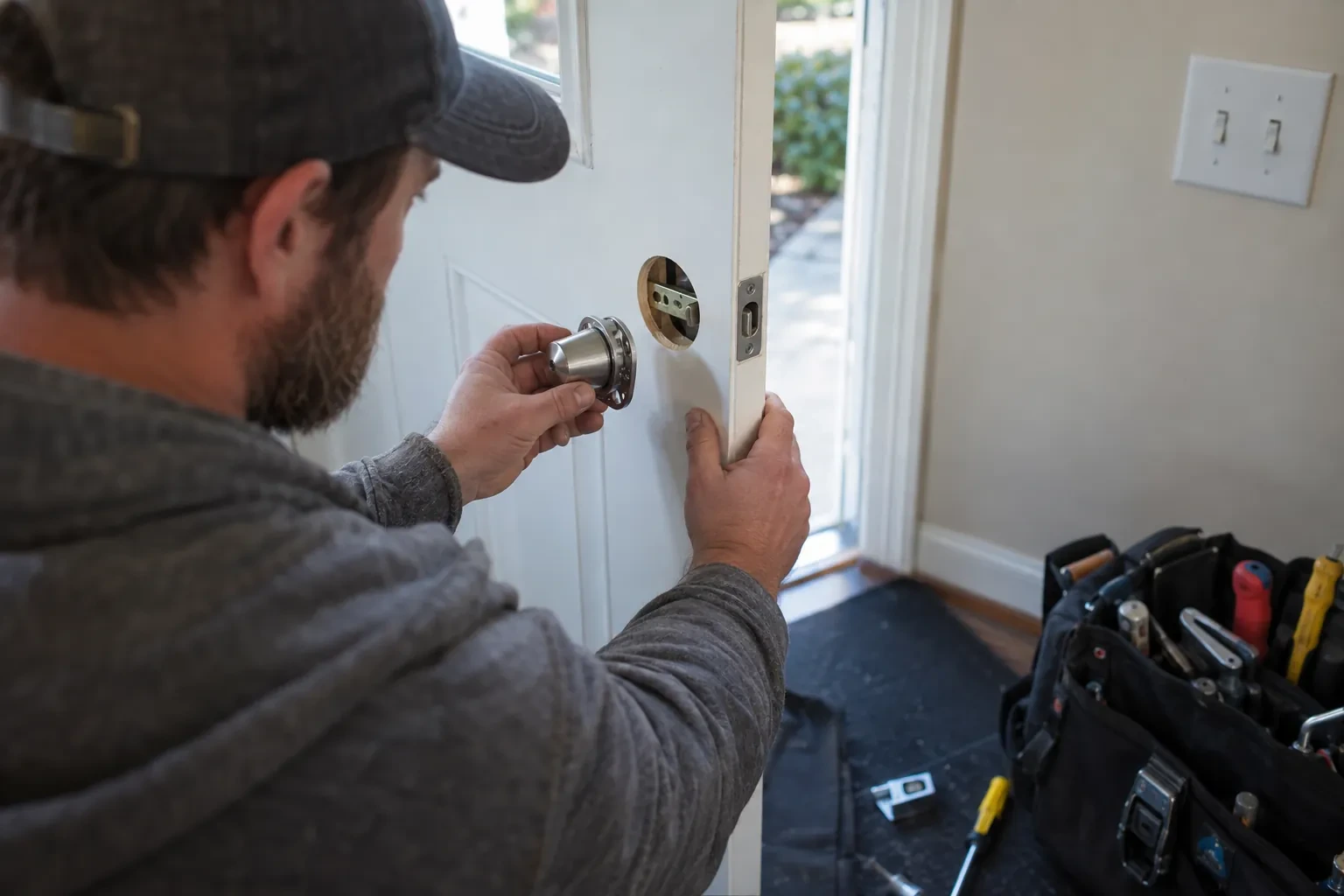
The replacement hardware is chosen for the door and for the attack it suffered. A deadbolt with a full one-inch throw, a hardened insert against sawing and a low-profile face that resists a wrench grip is the usual choice, graded to a recognised durability standard rather than the lightest unit on the shelf. It is matched to the existing bore and backset so no new holes weaken the slab, or the preparation is enlarged cleanly where the old hardware was small. The bolt is tested with the door open, then closed, and the strike adjusted until it throws without dragging. Trim and finish are matched to your other doors where you want that.
A door that closes and locks again
The visit ends with the door tested the way it will be used. The bolt is thrown and withdrawn with the door open, then closed, and it must slide home without dragging on the strike or stopping short of full extension. The latch catches when the door is pushed to, not slammed. The door meets its weatherstrip evenly and the thumb-turn works from inside without a key. You try it yourself before the locksmith packs up, with your own new key, so the first time the household locks up that night is not the first time anyone has tried the door.
Break-In Damage Lock Repair
In the van
Jamb repair plate
Two-part wood epoxy and shims
Wrap-around door edge reinforcer
Grade 1 deadbolt with one-inch throw
Plywood and cleats for boarding
Break-In Damage Lock Repair
What affects the quote
Grade of the replacement deadbolt
A residential deadbolt with a one-inch throw and hardened insert, a heavier commercial-grade unit and a keypad or smart deadbolt sit at different points, and the quote names the one you choose.
Work referred to another trade
A shattered frame, a broken door slab or smashed glass is listed as needing a carpenter, door installer or glazier, and that work is quoted by those trades rather than by the locksmith.
Strike and hinge reinforcement
A security strike box, hinge reinforcement plates and three-inch screws on both sides of the door are listed as their own items, so you can see what strengthens the frame beyond replacing what broke.
What to have ready
- Is there glass beside the door or in it?
- Is the damage to the lock, the frame, the door edge or the glass, or several?
- Is everyone safe, and is the property clear of anyone who should not be there?
Break-In Damage Lock Repair: questions
QuestionsDo longer screws really make a difference?
A large one. Factory strike and hinge screws are usually short enough to grip only the jamb, a piece of trim about an inch thick. Three-inch screws pass through the jamb and the gap behind it into the stud, so a blow has to move the wall rather than the trim. Lock manufacturers supply reinforcement plates with three-inch screws for exactly this reason, and note that a door beside a sidelight needs a different arrangement because glass sits where the stud would be.
Can a split jamb be repaired, or does it need replacing?
Many can be repaired. A split along the grain is pressed back together, glued with a two-part wood epoxy and held by a steel repair plate or a boxed strike screwed through it into the stud, so the fasteners reinforce the repair as well as the lock. Missing wood is built up with filler or a fitted piece. A jamb that has pulled off the framing along its length or shattered around the pocket is replaced by a carpenter, with the opening secured until then.
Will my door be boarded up, or can it be made to lock tonight?
Most forced doors lock again during the visit. If the slab and frame are sound, a new lockset goes in and the strike is reinforced. If the jamb is split, a repair plate or a boxed strike screwed into the stud usually holds it. Boarding is reserved for openings where the frame or the door itself is destroyed, and even then it is fitted so the household can get out from inside without a key.
Related services
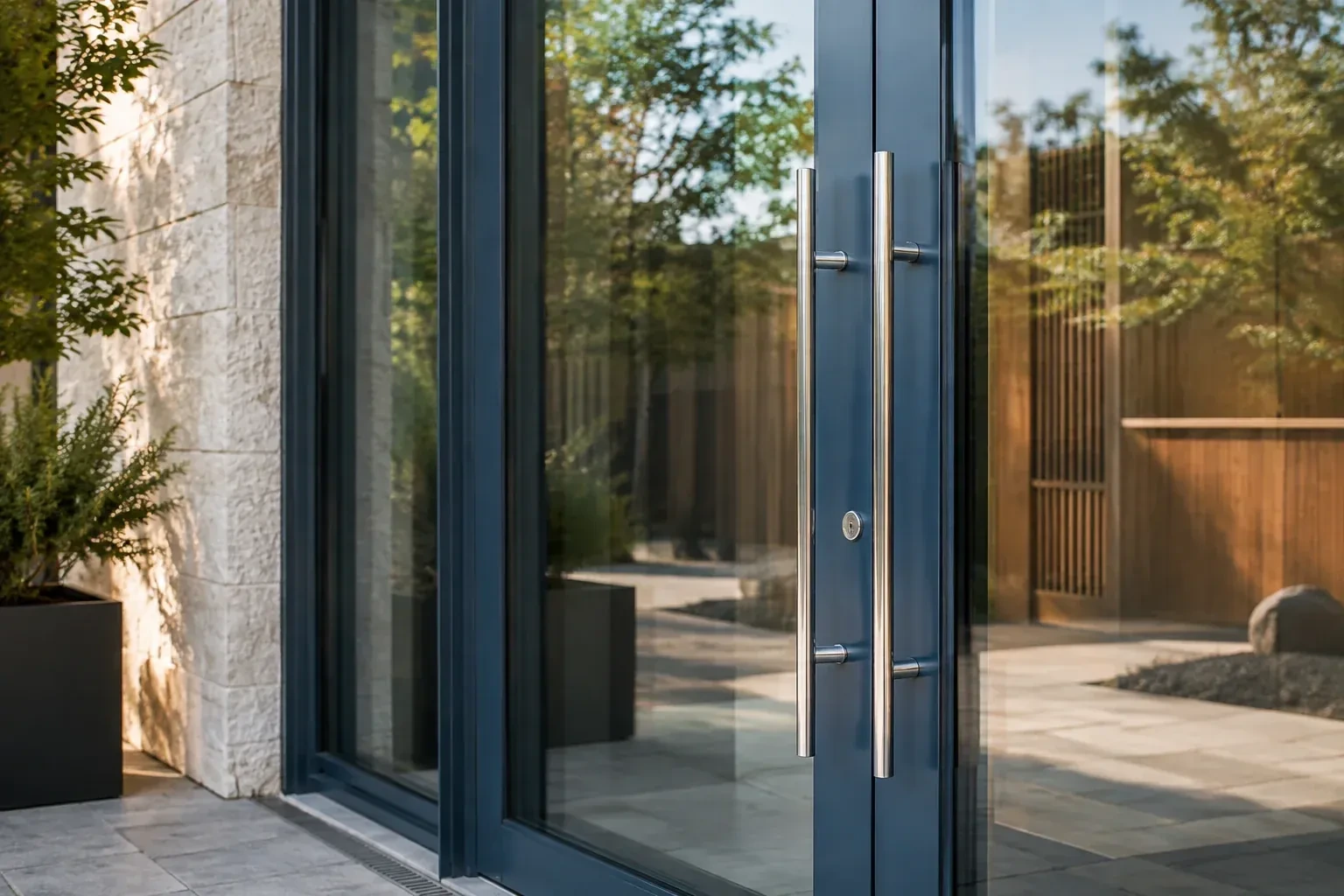
- Business Lockout ServiceIt is ten to nine, three staff are on the sidewalk with their coffees, and the key that has opened the glass front door for six years will not turn.
- Broken Key ExtractionThe padlock on the shed has been stiff all summer.
- Seized & Jammed Lock OpeningEvery time you pull the key out of the side door it comes away gritty.