Car keys · London
Car Key Replacement
The key snapped at the head while you were turning it in a stiff, frosty door lock.
In plain words
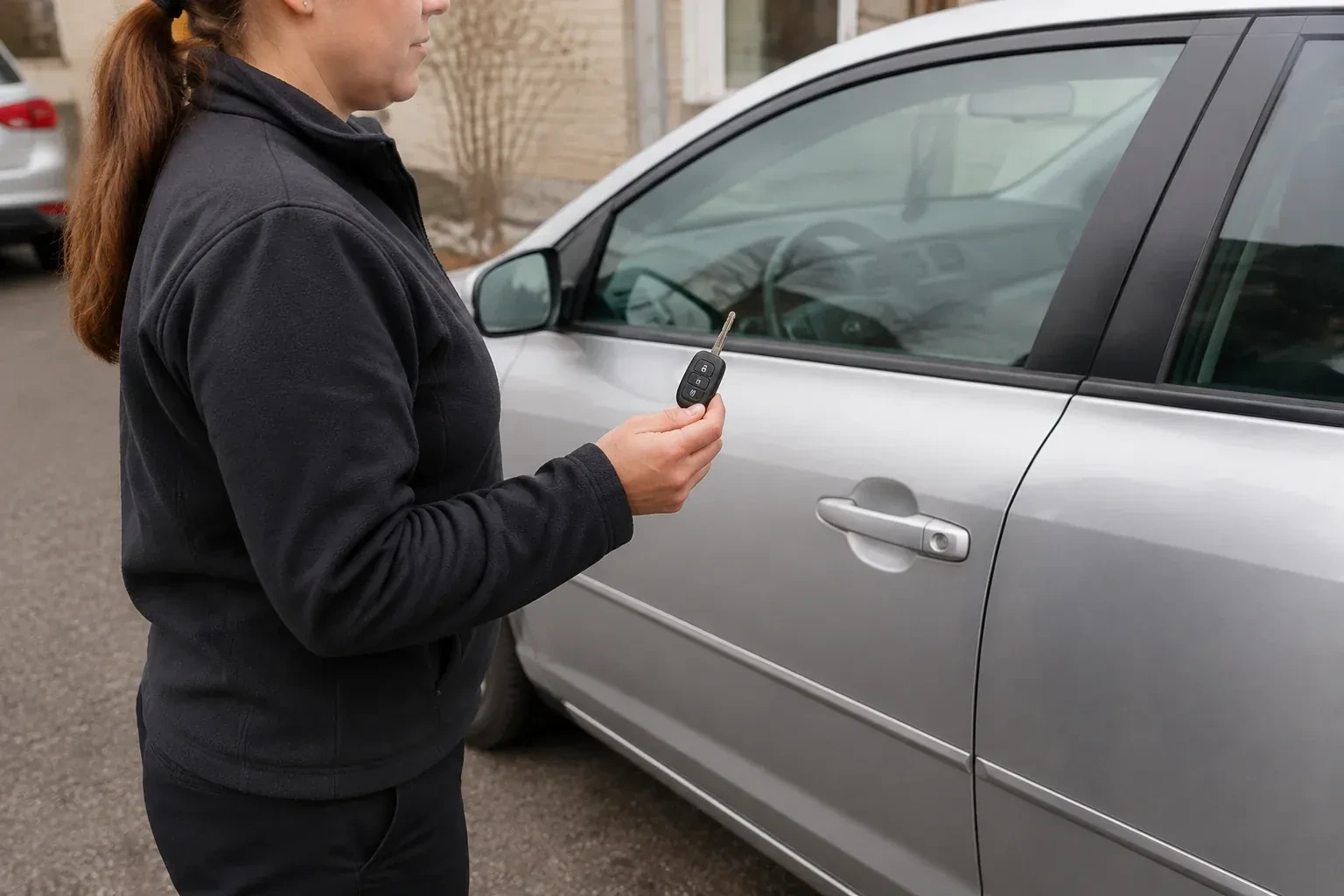
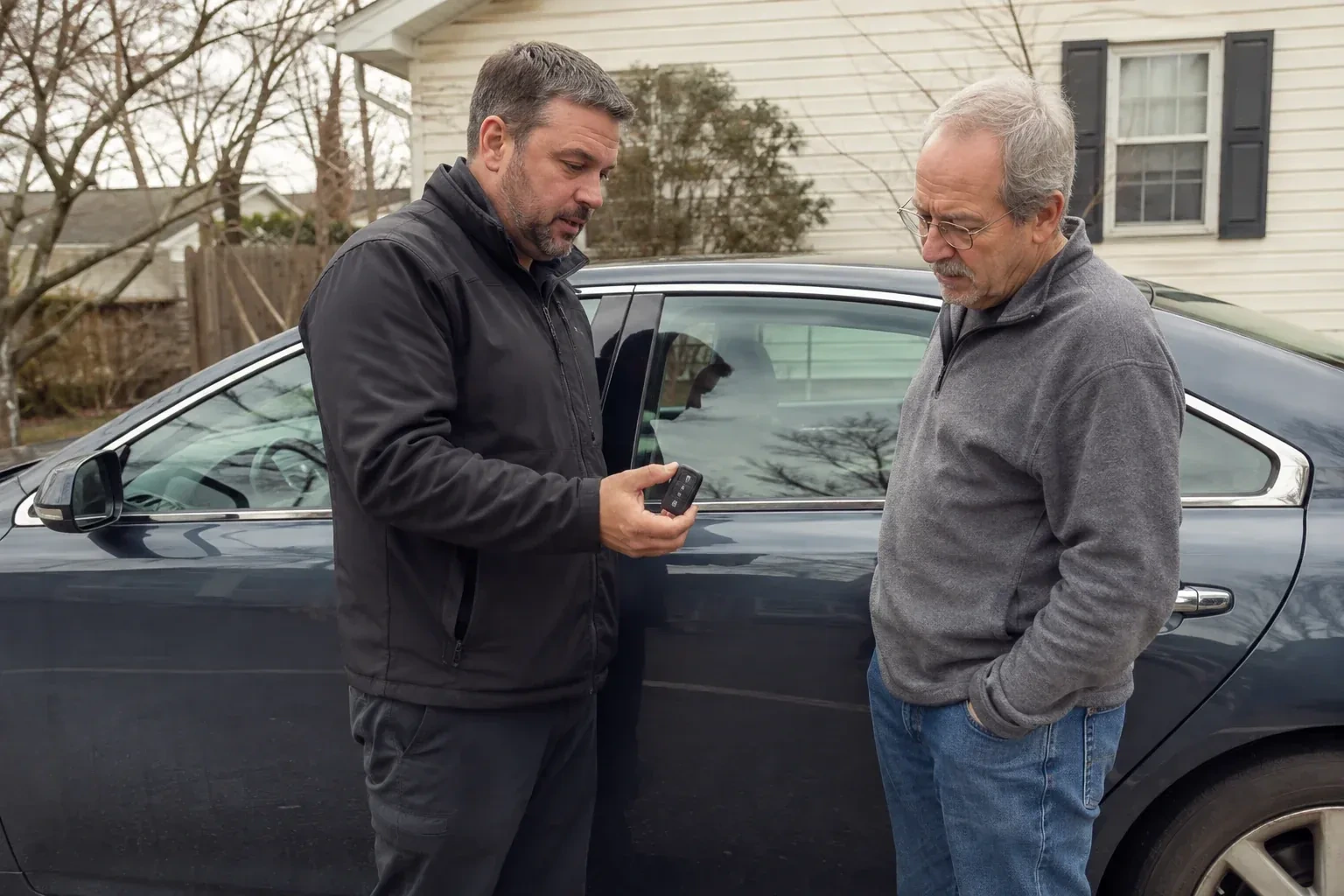
It helps to think of a car key as several parts sharing one case. The metal blade is the mechanical part; it opens the doors and, on older cars, turns the ignition. The transponder is a small chip with no battery that answers the immobilizer when the key is near the ignition; without the right answer the engine refuses to run. The remote is a separate radio circuit with its own battery that works the lock, unlock, trunk and panic buttons. A proximity fob adds hands-free entry and push-button start. Replacement can involve any or all of these, and a good visit begins by working out which ones you need.
How the visit goesThe car is yours now, but somebody else still holds a key to it. Adding another key is not enough; you want the old ones to stop working the vehicle so the question is settled for good.
Car Key Replacement
How the visit goes
Parts and data lined up before the tools come out
Some vehicles hand over their security data readily; others require a PIN pulled from the car, a code from the manufacturer, or a procedure only the dealer's tooling can run. The locksmith confirms which applies to your VIN before committing to a key, and confirms the part is available: fobs are specific to frequency, part number and sometimes trim level, and a wrong one programs and then refuses to work the doors. For the systems that use manufacturer secure data, access is arranged through the industry's Vehicle Security Professional registry, which is why the ownership record is completed properly first. Nothing is cut until this line-up is clear.
Decoding the door lock when there is no code
When the code is unavailable, the lock itself becomes the source. The locksmith works a decoding pick into the driver's door cylinder, feels each wafer to its set position and reads off the depth, producing a full cut sequence without removing the lock from the door. The blank is then cut to that reading and tried in the door and the ignition. On cars where the ignition carries an extra wafer the door lacks, the last position is found by trying the small number of possible depths. This is careful, patient work that leaves the door lock exactly as it was.
A crisp new blade in a well-used ignition
A blade cut to code is made to the lock's original dimensions, so it should turn smoothly from the first use. What it should never do is need the wiggle the old key needed; if it does, or it feels stiff or forced, that points to worn ignition wafers or a cutting issue, and the cylinder is checked and serviced or rebuilt rather than waited out. Keep the new key on a light ring, since a heavy bunch hanging from the ignition is what wears the wafers in the first place.
Car Key Replacement
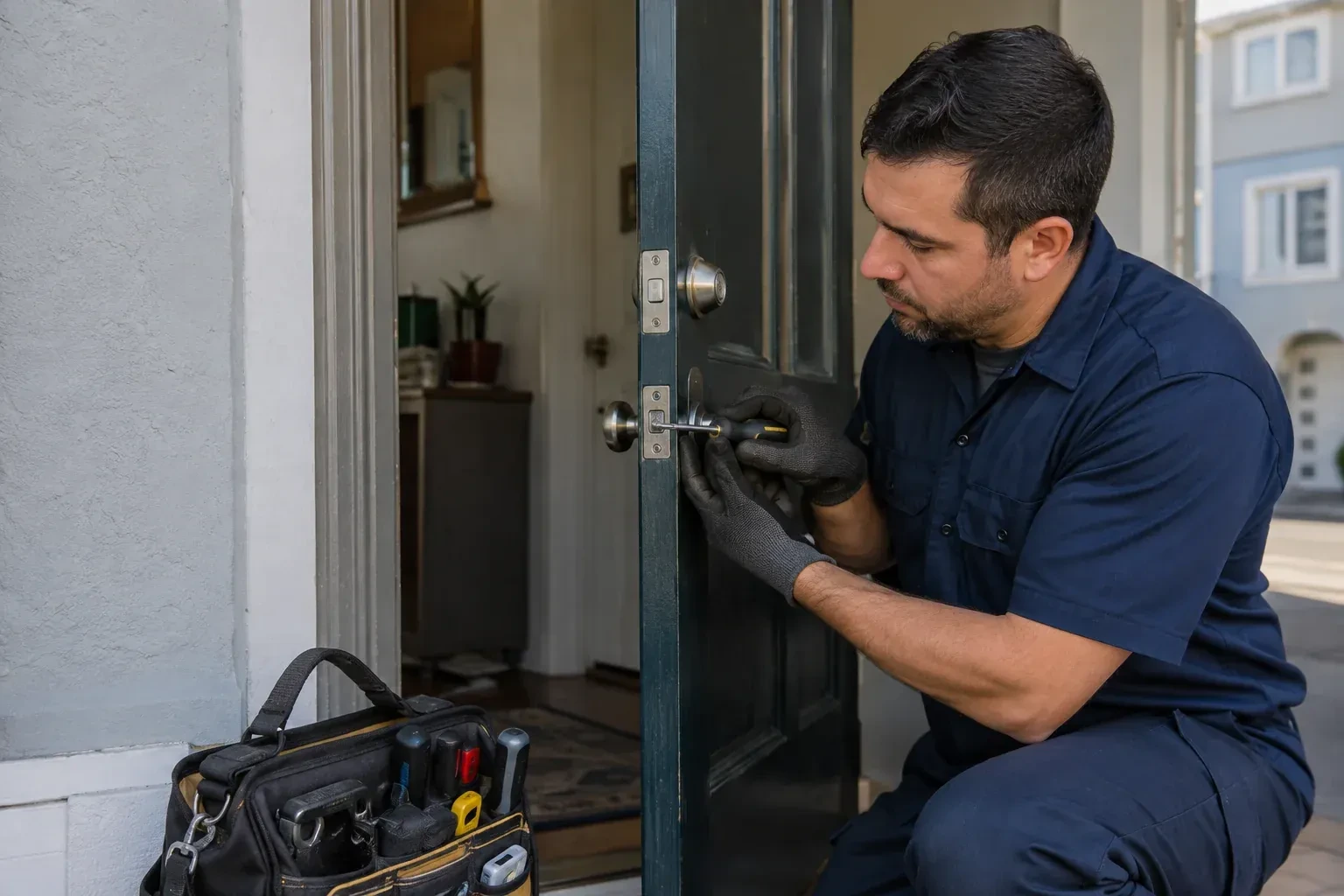
In the van
Remote-head key shell
Code-cutting machine
OBD programming tool
Vehicle battery maintainer
Proximity fob with emergency blade
Car Key Replacement
What affects the quote
One working key or none
A spare added beside a working key is a shorter routine. Starting from nothing means working through whatever that vehicle's own all-keys-lost procedure calls for, commonly opening the car, decoding the lock and resetting the immobilizer, and the quote reflects those extra stages.
Extracting a broken key
Drawing a snapped blade out of a door or ignition cylinder without harm to the lock is a separate piece of work, done before the new key is cut, and it appears on the quote as its own line.
Where the vehicle is
Travel is part of every mobile call. A car on a driveway across town and one in a lot at the end of a rural road involve different trips, and the quote reflects the distance.
What to have ready
- Does the car start with a key in the ignition or with a push button?
- Is the car registered in your name, leased, or owned by a company?
- What buttons did the old key have: lock, unlock, trunk, panic, remote start?
Car Key Replacement: questions
QuestionsWhat is a transponder key, and does my car have one?
A transponder is a small chip in the head of the key with no battery of its own. When the key is in the ignition, or the fob is inside the cabin, the immobilizer sends a signal and the chip answers with a code; if the code is unknown, the engine is prevented from running. Every new light vehicle sold in Canada since September 2007 has been required to have an immobilizer, so almost any car from that time on uses one.
Can a key be made for an older car with no chip?
Yes, for a vehicle that genuinely has no immobilizer, checked by VIN and equipment rather than assumed from age, since several early-2000s vehicles already shipped with a factory immobilizer and coded key. Where that is the case, it is the simplest key work there is: a blade cut to the factory code from the VIN or to a reading of the door lock, rather than copied from a worn original. If the ignition has become sloppy, the locksmith can rebuild it in the same visit.
Will I get a written estimate before the work starts?
You should expect one. Consumer rules for motor vehicle repair work in this province call for a written estimate before any charge and for your authorization of the work, and a good locksmith works that way as a matter of course. The estimate names what is being supplied: the blank or fob, the cutting, the programming, any erasing of old keys and the number of keys, so you can see the parts of the job before agreeing.
Related services
- Spare Car Key DuplicationA teenager just passed a driving test and reasonably wants a key of their own rather than negotiating over the family's single copy every time the car is needed.
- Key Fob ProgrammingA fob went missing weeks ago somewhere between a coat pocket and a parking lot, and a spare has covered the gap since.
- Transponder Key ProgrammingSince the remote starter was installed last month, the original key has started acting strangely, the car catches on the first turn some mornings and refuses outright on others.