High security · London
High Security Locks
You have lost count of how many people have had a key to your house over the years: cleaners, a contractor, a former partner, the previous owner's family.
In plain words
Most break-ins do not involve picking; they involve a boot, a pry bar or a key that should never have been copied. High security hardware answers all three. A deadbolt with a full one-inch throw and a hardened core resists sawing and kicking, a reinforced strike with three-inch screws keeps the jamb whole, and a patented keyway means a copy can only be made through the locksmith who holds your system. The pick, bump and drill resistance of the cylinder is the layer on top. The locksmith's job is to fit those layers to your particular door and your particular worries.
How the visit goesAfter the attempted break-in the police officer pointed at your door and said the strike plate was held by two short screws. Nobody got in, but you have looked at that door differently every evening since.
High Security Locks
How the visit goes
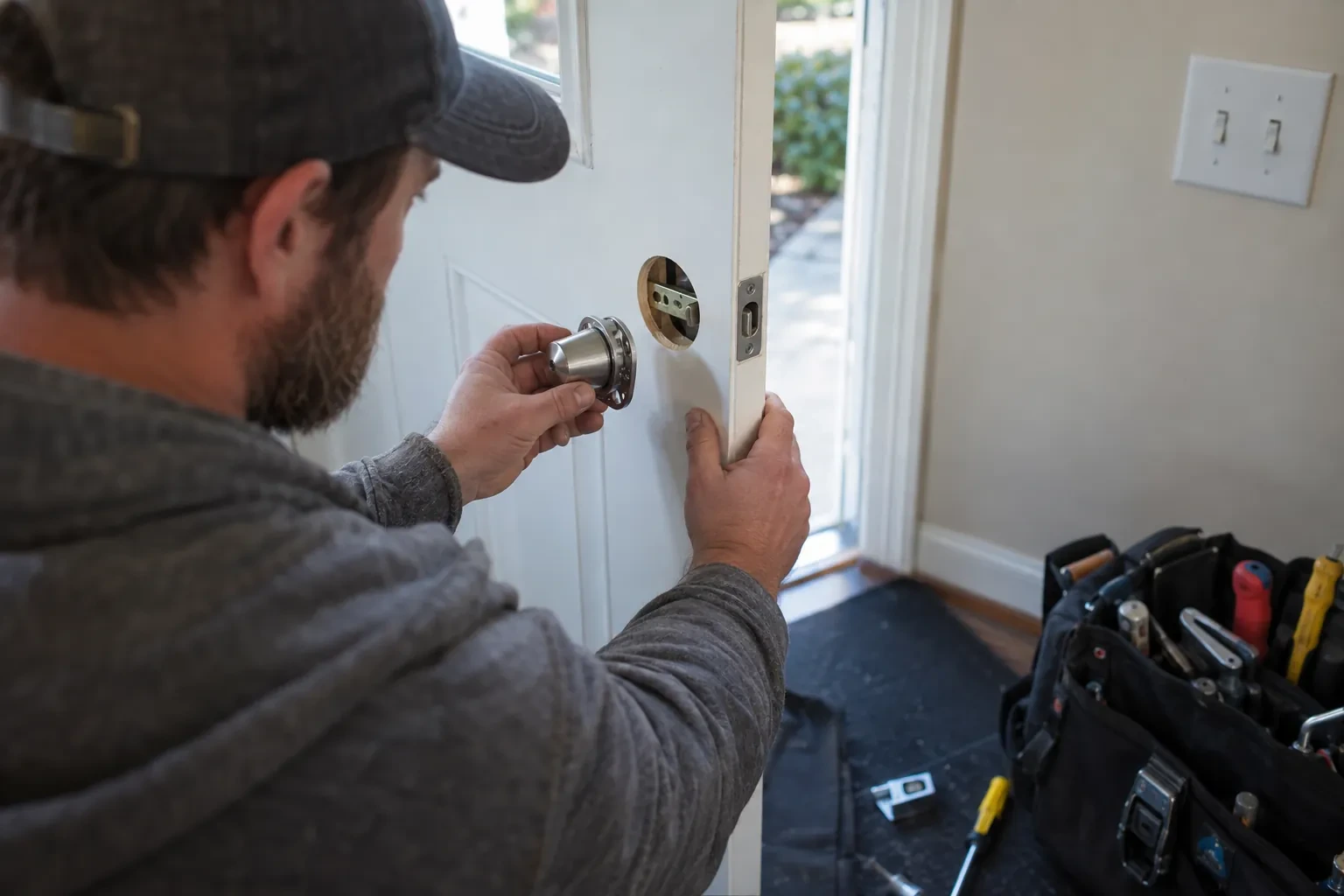
The bolt, the pocket and the strike
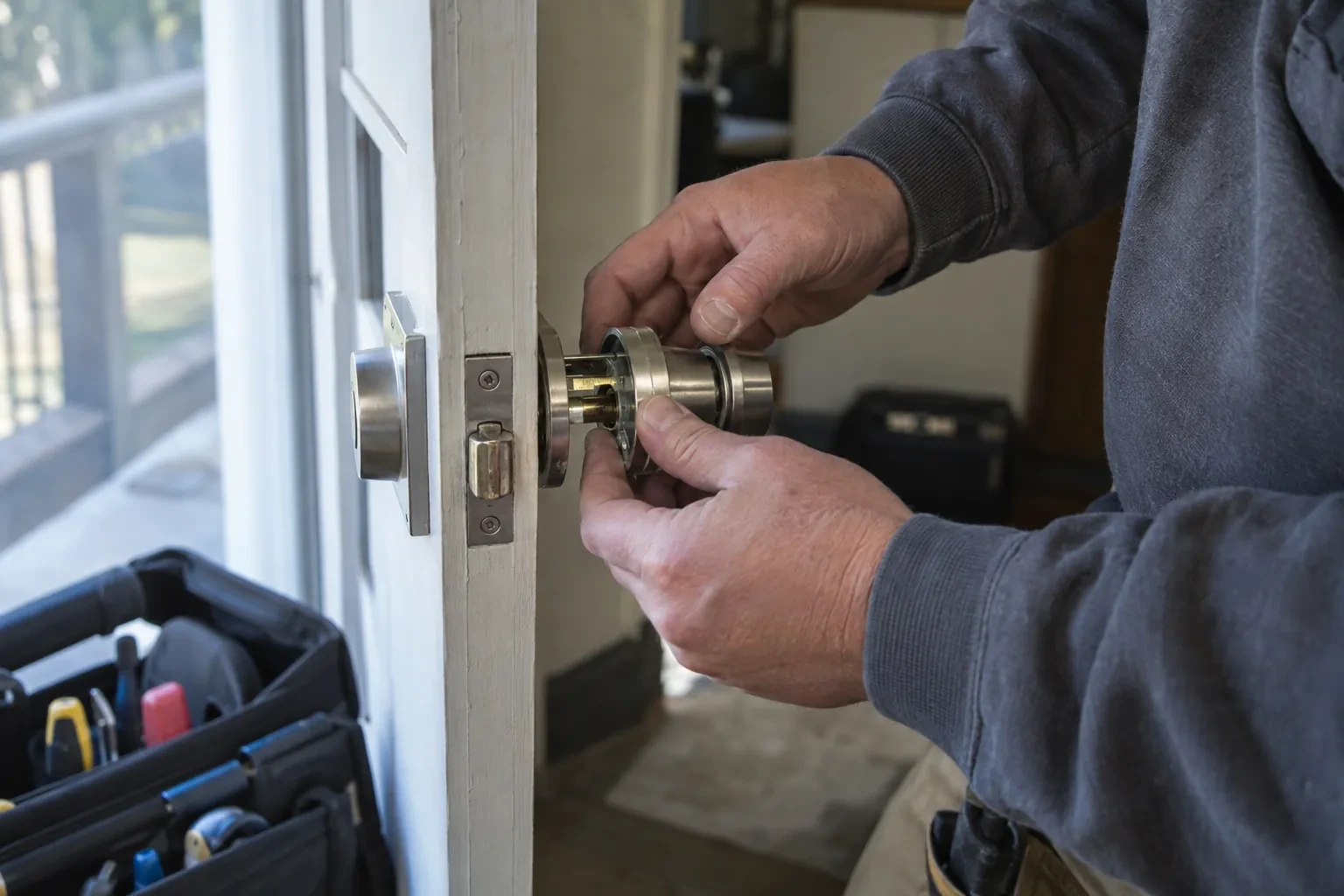
A deadbolt is only as good as how far it reaches and what it reaches into. The locksmith measures the throw of the bolt with the door closed, checks that it fully extends without the door being lifted or pushed, and looks at the pocket it enters in the jamb. A shallow pocket, a stamped strike plate and screws barely longer than a thumbnail are the usual finding on a builder-grade door. Then the frame is examined for splits, soft wood and gaps behind the jamb, since a kick lands on the strike, not on the cylinder.
Testing the whole assembly
The finish is a methodical test. Every key is cycled in every lock from both sides, with the door open and then closed and latched. The bolt is watched entering the strike pocket to confirm it throws fully and does not drag. The door is pushed and pulled while locked to feel for play at the strike or hinges. Cylinders receive a dry lubricant approved for their mechanism. Then the locksmith walks you through the operation, the key control documents and the record of hardware fitted, so you know both how to use the door and how to order the next key.
Looking after a precision cylinder
High-security cylinders are finer mechanisms than the pin tumblers they replace, and a little care keeps them turning sweetly. Use only the dry lubricant the locksmith recommends, once or twice a year and sparingly, and never household oil, which gathers grit around the finger pins and sidebar. In cold weather, if the key resists, warm it in your hand or use a de-icer rather than forcing it. Insert the key fully before turning. Keep a spare key indoors so a bent or worn key is retired rather than pushed on. Treated this way, the cylinder outlasts the door around it.
High Security Locks
In the van
Pinning kit and plug follower
Key control authorisation card
Wrap-around door reinforcer
High-security cylinder
Hardened cylinder guard ring
High Security Locks
What affects the quote
Glass near the lock
Sidelights or glazed panels beside the deadbolt may call for a different function or extra hardware to keep the inside turn out of reach, always keeping easy exit in view.
Retiring the old keyway
If other doors stay on the old key for now, they may need rekeying so an unknown copy has nowhere to go; that is additional cylinder work alongside the upgrade.
Distance and access
A rural property, a high-rise with loading dock rules or a site that must be visited outside trading hours affects travel and scheduling, and the quote says so plainly.
What to have ready
- Does the door have a closer, push bar, alarm contact or keypad on it already?
- How many exterior doors do you want included?
- Is this a house, condo, rental unit or business premises, and do you own or manage it?
High Security Locks: questions
QuestionsWhat proof do I need to show before locks are changed?
The locksmith confirms that the person ordering the work is entitled to change the locks: the owner, a tenant with the landlord's agreement, or a property or facilities manager for a business. Photo identification and something linking you to the address usually settle it, and for a company a letter or a call to the named contact does the same. It protects you as much as anyone, since the same check stops someone else from changing your locks.
What information helps before the visit?
A photo of each door's lock from inside and outside, the type of door, whether there is glass nearby and roughly how many keys are in circulation. For a business, a sketch of the doors and who needs to reach each area saves a great deal of time. Mention any door that sticks, has been forced or has a closer or push bar on it. With that, the locksmith arrives with the right formats and a plan to discuss.
What actually makes a lock high security?
Three things working together. The cylinder has a second locking mechanism, usually a sidebar released by finger pins or rotating pins, plus hardened steel in the path of a drill, so picking, bumping and drilling take far longer than on an ordinary lock. The deadbolt and strike are heavier and fastened into the framing. And the key is cut on a patented or restricted blank that only an authorised person can have copied. Remove any one and the door is weaker than the label suggests.