High security · London
High Security Locks in London
You have lost count of how many people have had a key to your house over the years: cleaners, a contractor, a former partner, the previous owner's family.
In plain words
Think of the upgrade as four layers working together. The cylinder resists picking, bumping and drilling. The deadbolt resists sawing and kicking with a long, hardened bolt. The strike and screws keep the frame from splitting when the door is struck. And the key control stops copies being made without your say-so. A locksmith assesses your door for each layer and tells you where it is weak, because a strong cylinder screwed into a soft frame gains you little. Most homes end up with a graded deadbolt and a patented cylinder; businesses often step up to laboratory-rated cylinders and heavier lock bodies.
How the visit goesThe restricted keys you bought years ago are no longer restricted; the locksmith mentioned the patent has run out and blanks are sold openly. Your key control quietly stopped being control.
High Security Locks
How the visit goes
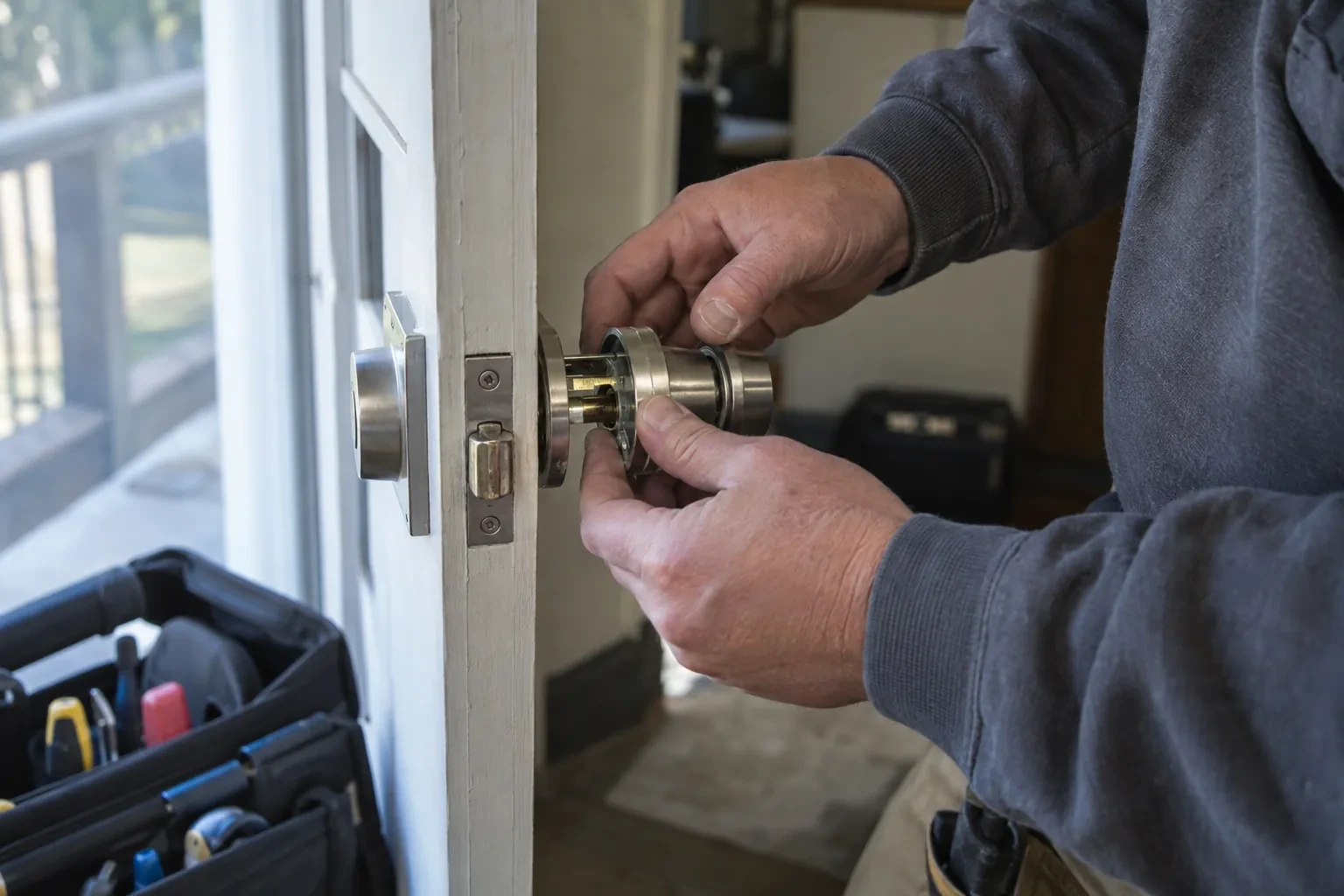
The fit of new hardware to old doors
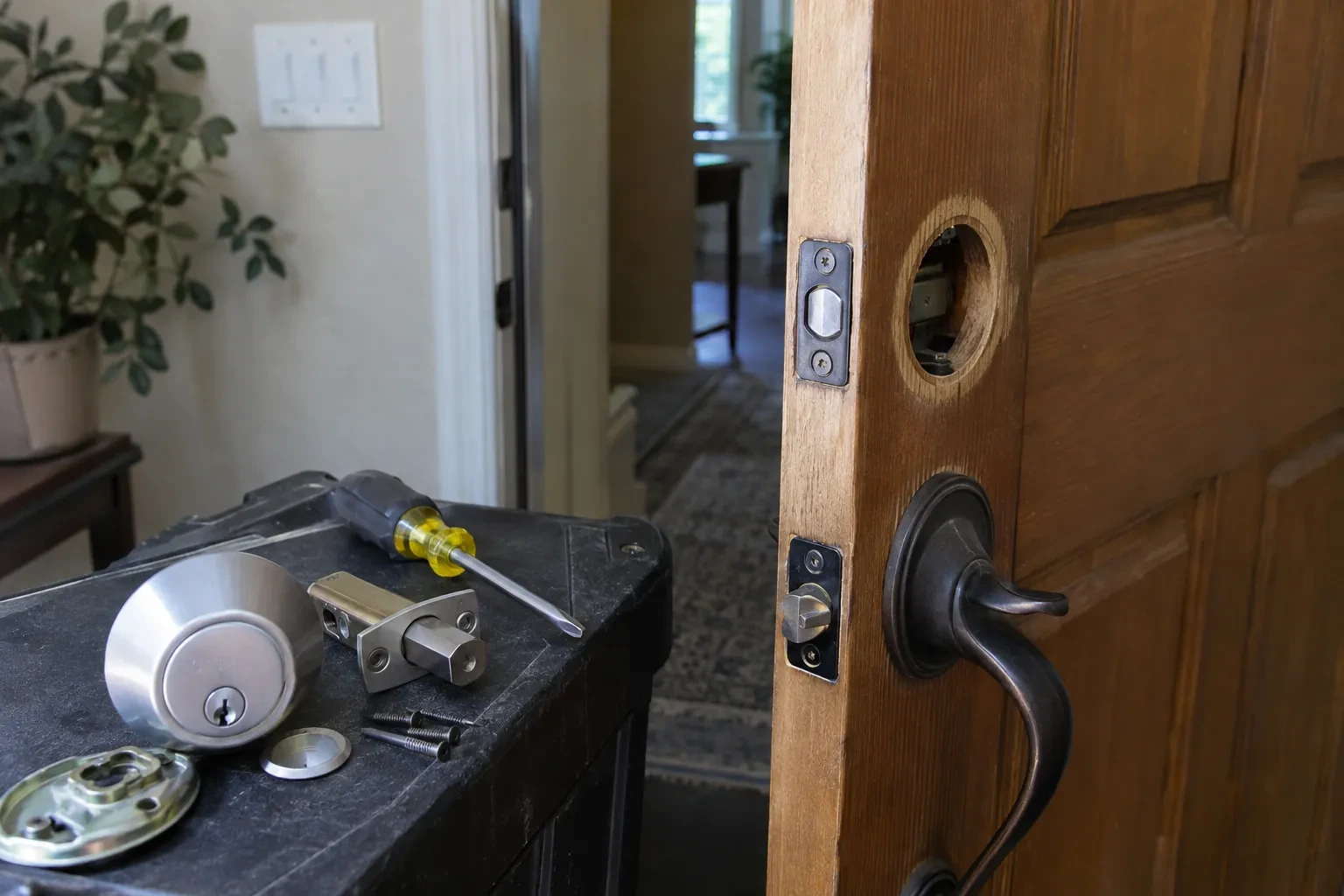
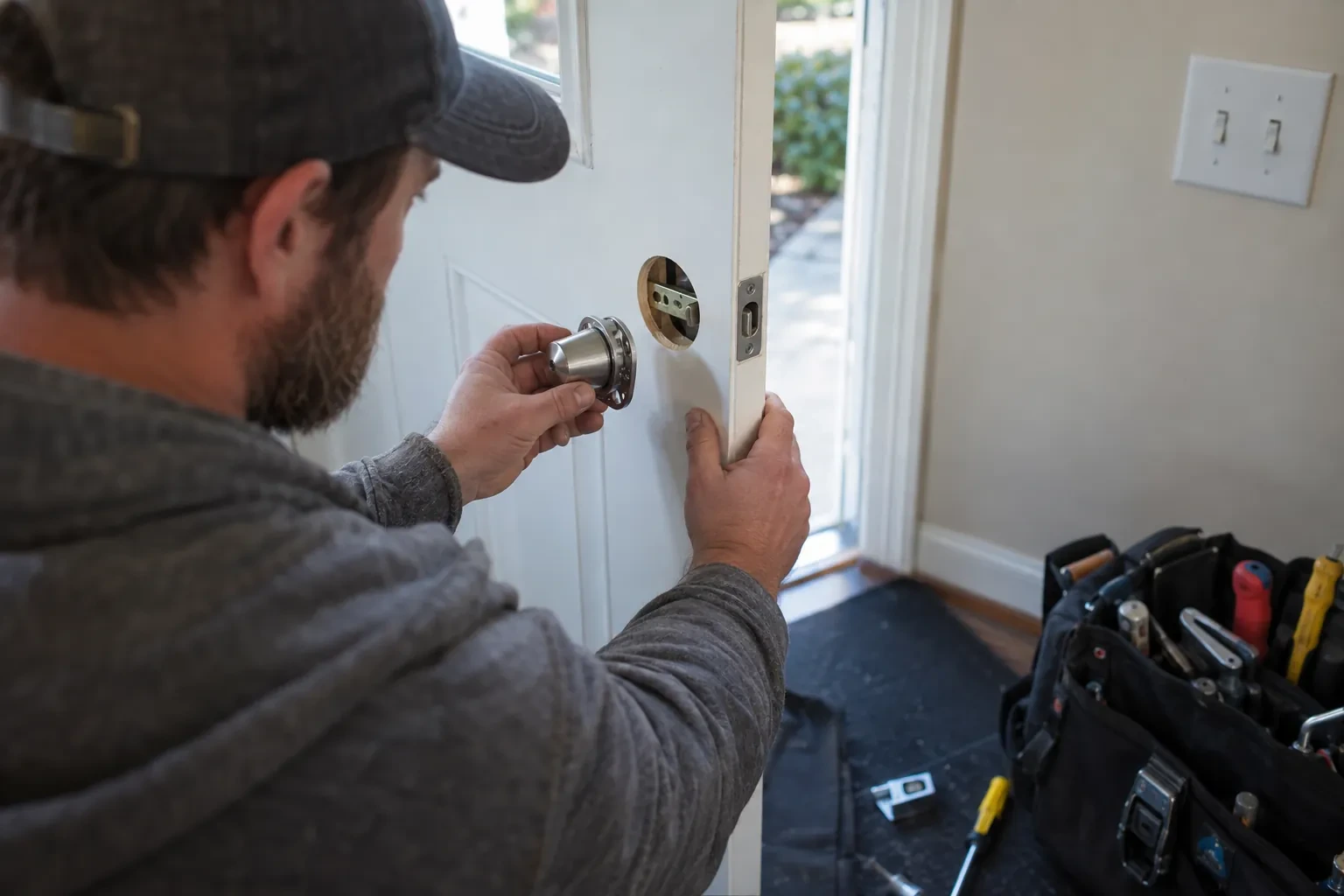
Older houses in this region have doors that predate modern hardware: narrower stiles, a mortise pocket already cut, a thick slab door or a steel-clad door with a specific backset. The locksmith measures the bore, backset, door thickness and edge preparation so the chosen deadbolt or cylinder fits without hacking at the door. Where a mortise lock is present, a high-security mortise cylinder often replaces the old one directly. Where a knob lock is the only lock, the assessment includes where a new deadbolt bore would sit and whether the frame can take a proper strike.
Keying several doors sensibly
When more than one door is upgraded, the locksmith plans the keying before pinning anything. A home usually wants every exterior door on one key. A business often wants staff keys that open the front and their own area, and one manager key that opens everything, arranged as a small master system on the same patented keyway. Cylinders are pinned on the bench, labelled and fitted door by door, and each key is checked against the doors it should open and, just as carefully, the doors it should not. The written key schedule is part of the handover.
Ordering keys the right way
Extra keys are now a small procedure rather than an errand. An authorised person contacts the locksmith, the request is checked against the system record, and the key is cut from code so it works as cleanly as the first. New keys are numbered and added to the register. Businesses often issue keys against a signature and collect them when someone leaves, which the register makes simple. Homeowners typically keep two or three spare keys and hold onto the authorisation card. A key cut from a worn copy would not release the sidebar properly, which is one more reason the code route is the only route.
High Security Locks
In the van
Pinning kit and plug follower
Key control authorisation card
Wrap-around door reinforcer
High-security cylinder
Hardened cylinder guard ring
High Security Locks
What affects the quote
Strike and frame reinforcement
A reinforced strike with long screws is modest work on a healthy frame. Deepening the pocket, filling split wood, fitting a jamb plate or a wrap-around reinforcer adds materials and time.
Key control level
A patented keyway with authorisation cards covers most homes. Geographically exclusive keyways and signature-controlled systems for businesses carry registration and administration that show in the quote.
Master keying
Arranging staff keys, area keys and a manager key on one system takes bench time to plan and pin, and the more levels you want, the more careful that planning is.
What to have ready
- Is the door wood, steel-clad, fibreglass or aluminium with glass?
- What does the door protect, and what prompted you to think about upgrading now?
- For a business, who should be allowed to authorise new keys?
High Security Locks: questions
QuestionsWhat proof do I need to show before locks are changed?
The locksmith confirms that the person ordering the work is entitled to change the locks: the owner, a tenant with the landlord's agreement, or a property or facilities manager for a business. Photo identification and something linking you to the address usually settle it, and for a company a letter or a call to the named contact does the same. It protects you as much as anyone, since the same check stops someone else from changing your locks.
What information helps before the visit?
A photo of each door's lock from inside and outside, the type of door, whether there is glass nearby and roughly how many keys are in circulation. For a business, a sketch of the doors and who needs to reach each area saves a great deal of time. Mention any door that sticks, has been forced or has a closer or push bar on it. With that, the locksmith arrives with the right formats and a plan to discuss.
What actually makes a lock high security?
Three things working together. The cylinder has a second locking mechanism, usually a sidebar released by finger pins or rotating pins, plus hardened steel in the path of a drill, so picking, bumping and drilling take far longer than on an ordinary lock. The deadbolt and strike are heavier and fastened into the framing. And the key is cut on a patented or restricted blank that only an authorised person can have copied. Remove any one and the door is weaker than the label suggests.