
Commercial · London
Access Control Installation
The keypad on the side door has started sticking on cold mornings, codes get shared instead of reset, and half the staff still remember a code you meant to retire two hires ago.
In plain words
Where a building has more than one controlled door, a networked system lets each opening run its own schedule: the front office unlocked for regular hours, a stockroom open to two people only, a loading dock released for a delivery window, with the management software tying those schedules together. A shared entrance in a multi-tenant building can carry each tenant's own credentials without giving one business access to another's suite, and the same platform keeps a combined log, so a manager checking last night's entries never has to walk the building door by door.
How the visit goesThe keypad on the side door has started sticking on cold mornings, codes get shared instead of reset, and half the staff still remember a code you meant to retire two hires ago.
Access Control Installation
How the visit goes
Power, cabling, and where the controller will live
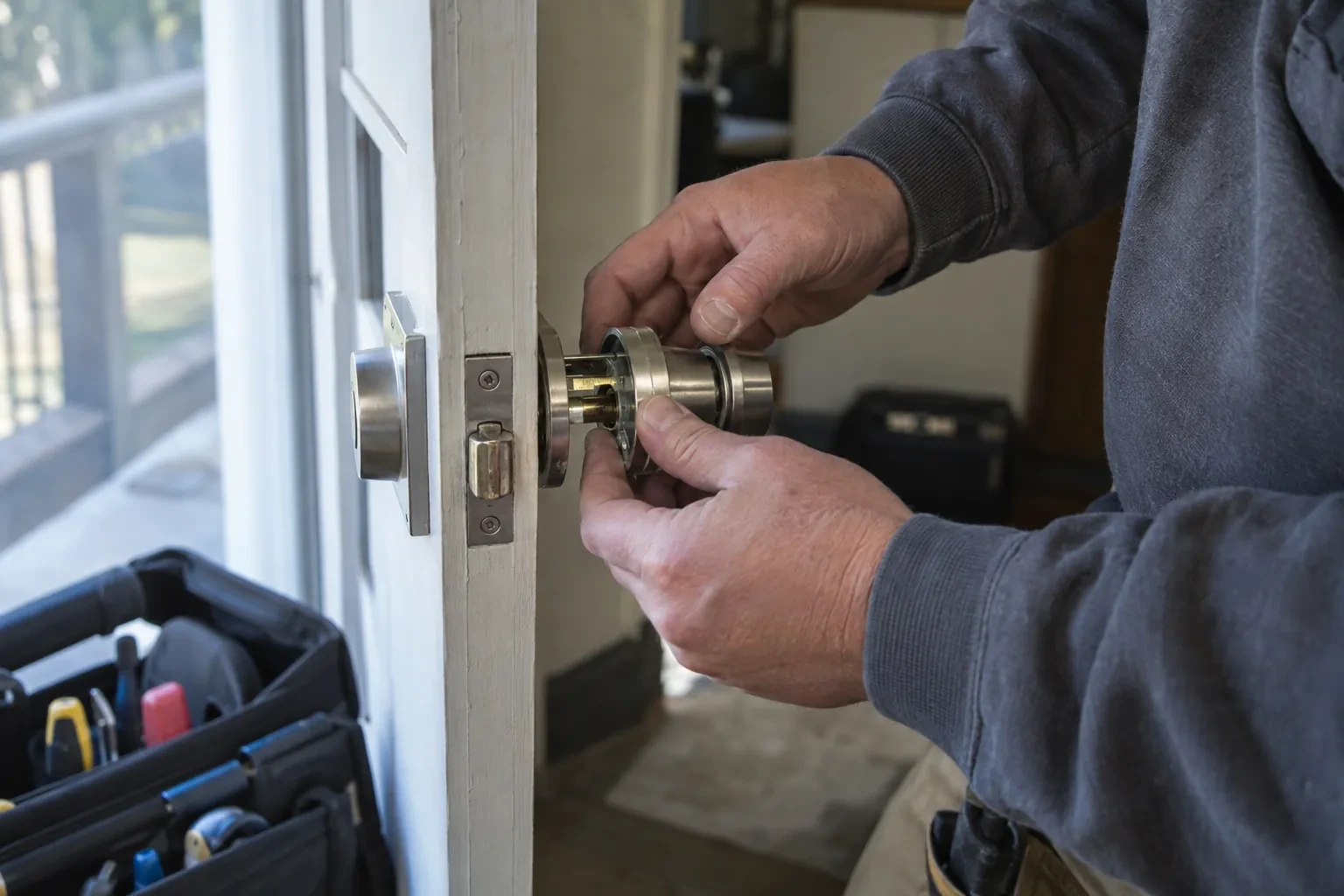
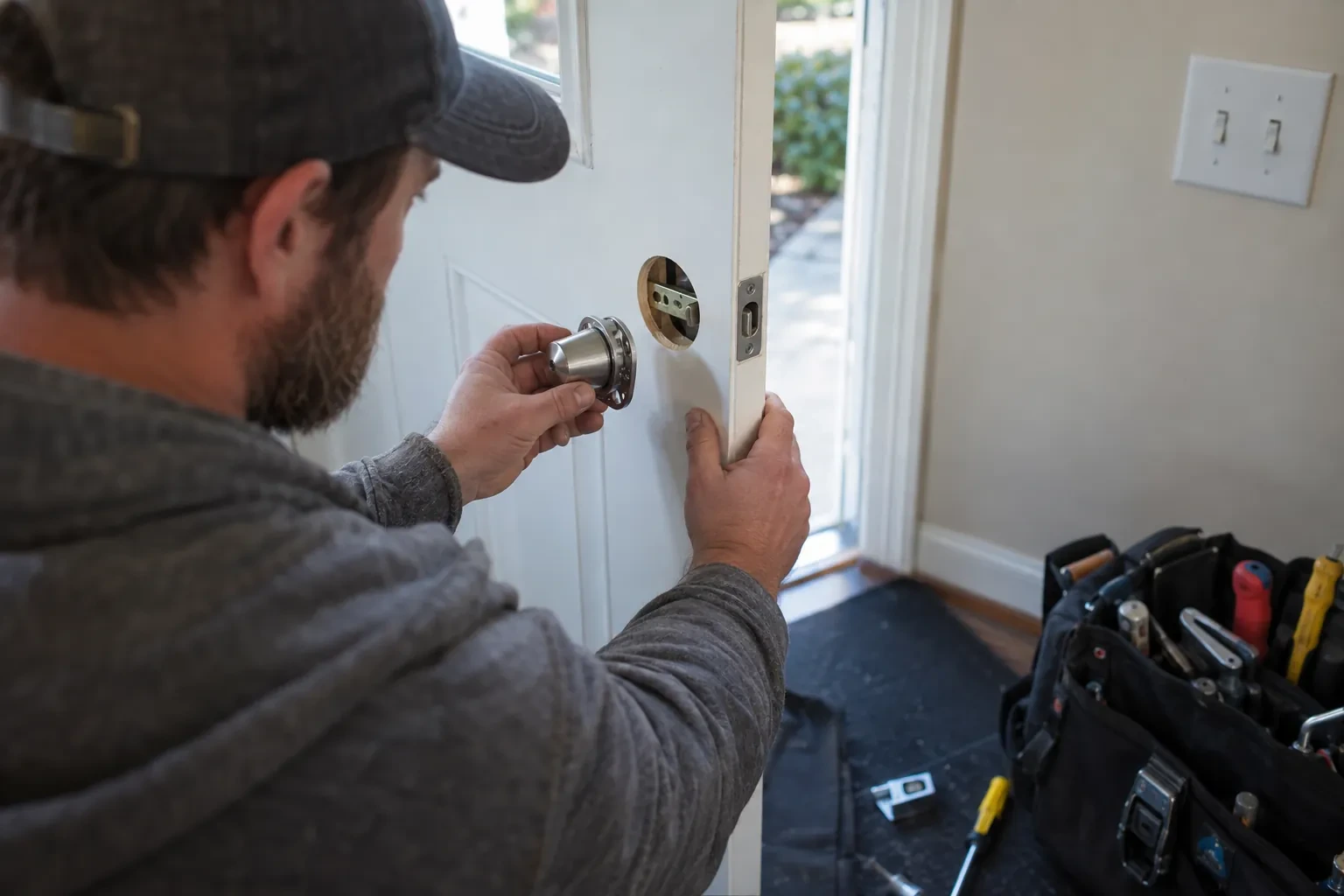
An access control system needs somewhere for its low-voltage wiring to run and somewhere secure for the controller and its power supply to sit, away from public reach. The survey traces a path from each opening back to that location, checks whether existing conduit or cable trays can be reused, and confirms what power is already available against what a new circuit or a battery backup needs to supply. A building with exposed ceilings or accessible risers is a simpler pull than one with finished walls throughout, and that difference shapes how the installation is sequenced.
Fitting a magnetic lock with its release device
A magnetic lock is mounted to the head of the frame with a matching armature plate on the door, and it is never installed alone: a request-to-exit device, usually a motion sensor or a mechanical push bar, is wired in to drop power to the magnet the moment someone inside moves to leave, and a connection to the fire alarm panel does the same the instant an alarm activates. The lock is aligned so the plate meets the magnet squarely across the full swing of the door, since even a small gap lets a determined push defeat the hold.
What the system adds to the rest of the building's security
Once the installation settles into daily use, its value tends to show up alongside whatever else the business already runs: an alarm event that lines up with the person who unlocked the door that morning, a camera clip that can be matched to a specific credential instead of just a timestamp, or a plain answer, finally, to who was in the building last weekend. Getting there can mean linking the access system to the alarm panel or the camera platform, which sometimes calls for extra configuration or an integration licence beyond the original installation, but the controller and the log it already keeps are the starting point either way.
Access Control Installation
In the van
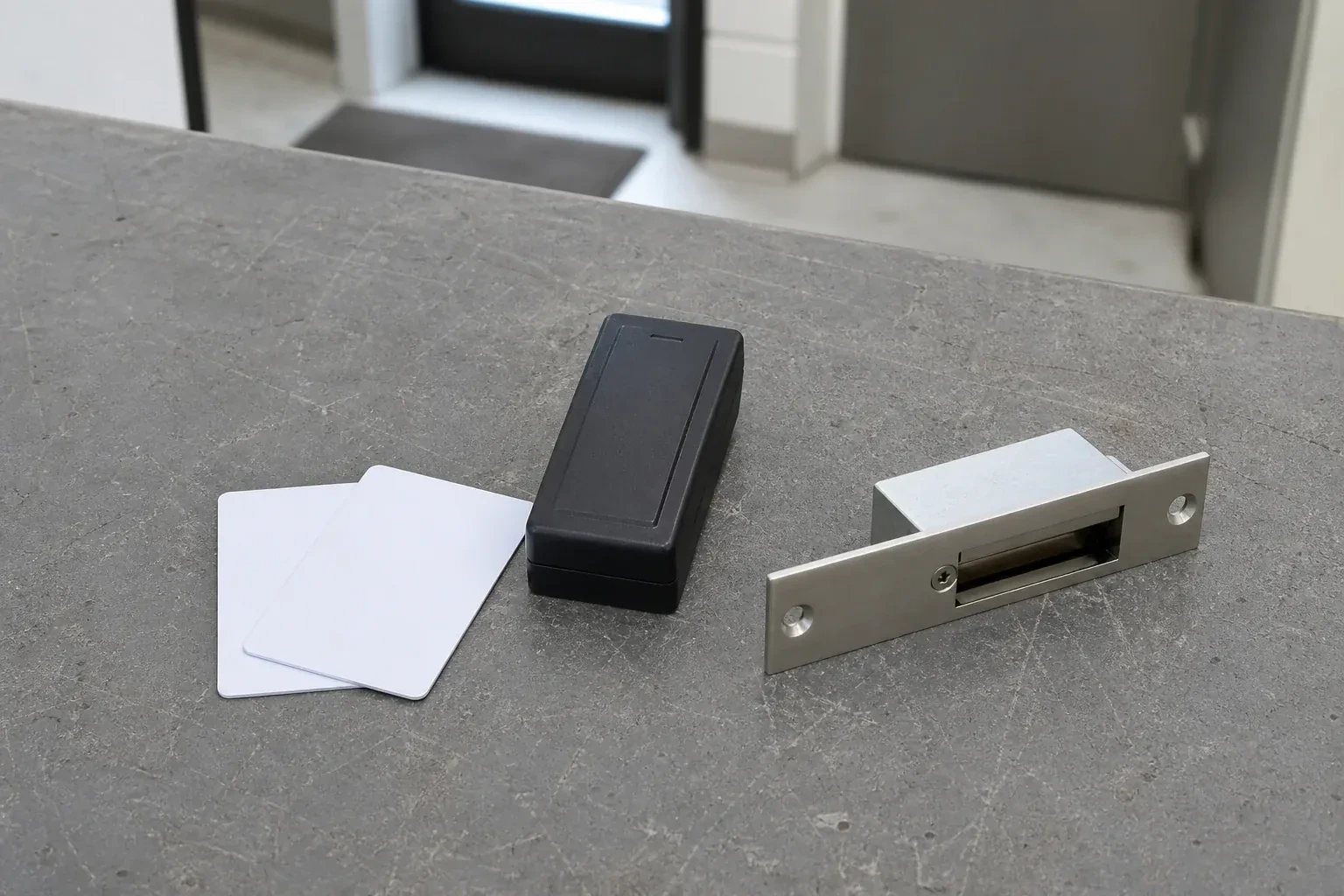
Electric strikes
Request-to-exit devices
Power supply with battery backup
Door position switches
Magnetic locks
Access Control Installation
What affects the quote
Coordinating a shared or multi-tenant entrance
A shared lobby or parking entrance in a multi-tenant building needs agreement between the property manager and each tenant on which credentials belong where, and that coordination adds time beyond a single business's own doors.
Whether any door is also a fire exit
An exit route on a magnetic lock brings its own hardware — a request-to-exit device and a fire alarm tie-in — while an electric strike paired with a free-egress lockset can meet the same one-motion exit without those extra components, unlike a purely interior door.
Standalone or networked
A self-contained reader at one door is simpler than a networked controller managing several openings with shared schedules and a combined log, and the choice between them changes both the hardware list and the wiring involved.
What to have ready
- Is there network access near where a controller could be mounted?
- Is any of these doors also a fire exit or required exit route?
- Do you want cards, fobs, keypad codes, or a mix of these?
Access Control Installation: questions
QuestionsCan access control be added to just one door, or does it have to cover the whole building?
A single door with its own standalone reader is a complete installation on its own, and plenty of businesses start there. If more doors need controlling later, a networked controller can be added at that point, or the building can simply add another standalone unit. Nothing about starting small commits the business to expanding, and nothing about a single-door job rules out growing the system later.
How is a lost fob or card handled?
It is switched off in the software the moment it is reported, which stops that specific card or fob from working at any door it used to open. A new one is issued and enrolled in its place. No lock has to be changed and no other credential in the building is affected, which is the main advantage a lost fob has over a lost mechanical key.
Can a person's access change automatically by time of day or day of the week?
Yes. Access levels can be set to change automatically by time of day or day of the week, so a credential that opens a door during a shift can be denied outside it without anyone having to remember to switch it off manually. This is set up once in the schedule and then runs on its own from that point forward.
Related services
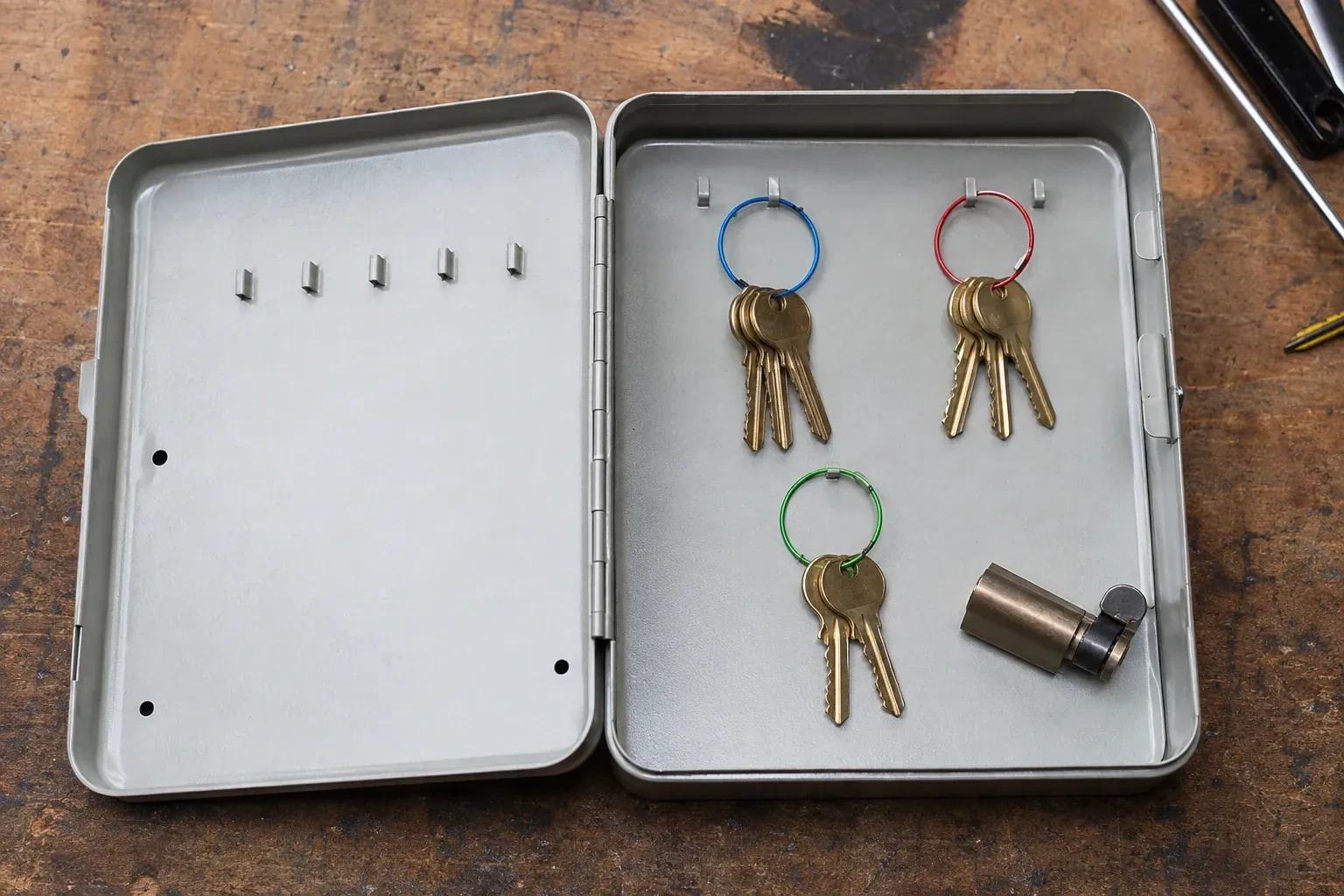
- Master Key System DesignThe new wing was built with its own brand of cylinder, so the two-year-old keys from the original building do not open a single door in the addition.
- Panic & Exit HardwareThe new access-control reader at the staff entrance works fine going in, but nobody has sorted out the door's exit side, and right now a card reader and a pushbar exist as two separate ideas.
- Commercial-Grade Lock ReplacementAn inspection report flagged the rear exit as needing hardware that opens with one motion and no key, and that door currently has an ordinary keyed knob on the inside.