
Commercial · Oakridge Acres
Access Control Installation in Oakridge Acres
The keypad on the side door has started sticking on cold mornings, codes get shared instead of reset, and half the staff still remember a code you meant to retire two hires ago.
In plain words
An exit door does not stop being an exit once it is wired into an access control system. A magnetic lock on that route is paired with a request-to-exit device so anyone leaving is never held up looking for a code, and it is tied into the fire alarm so an alarm signal releases the door on its own. The installation is planned around the building's exits from the start rather than added around them afterward, so the system controls who comes in without complicating how people get out.
How the visit goesDeliveries arrive before anyone is scheduled to be there, which right now means either propping the loading dock open at dawn or handing a key to a driver you have never met.
Access Control Installation
How the visit goes
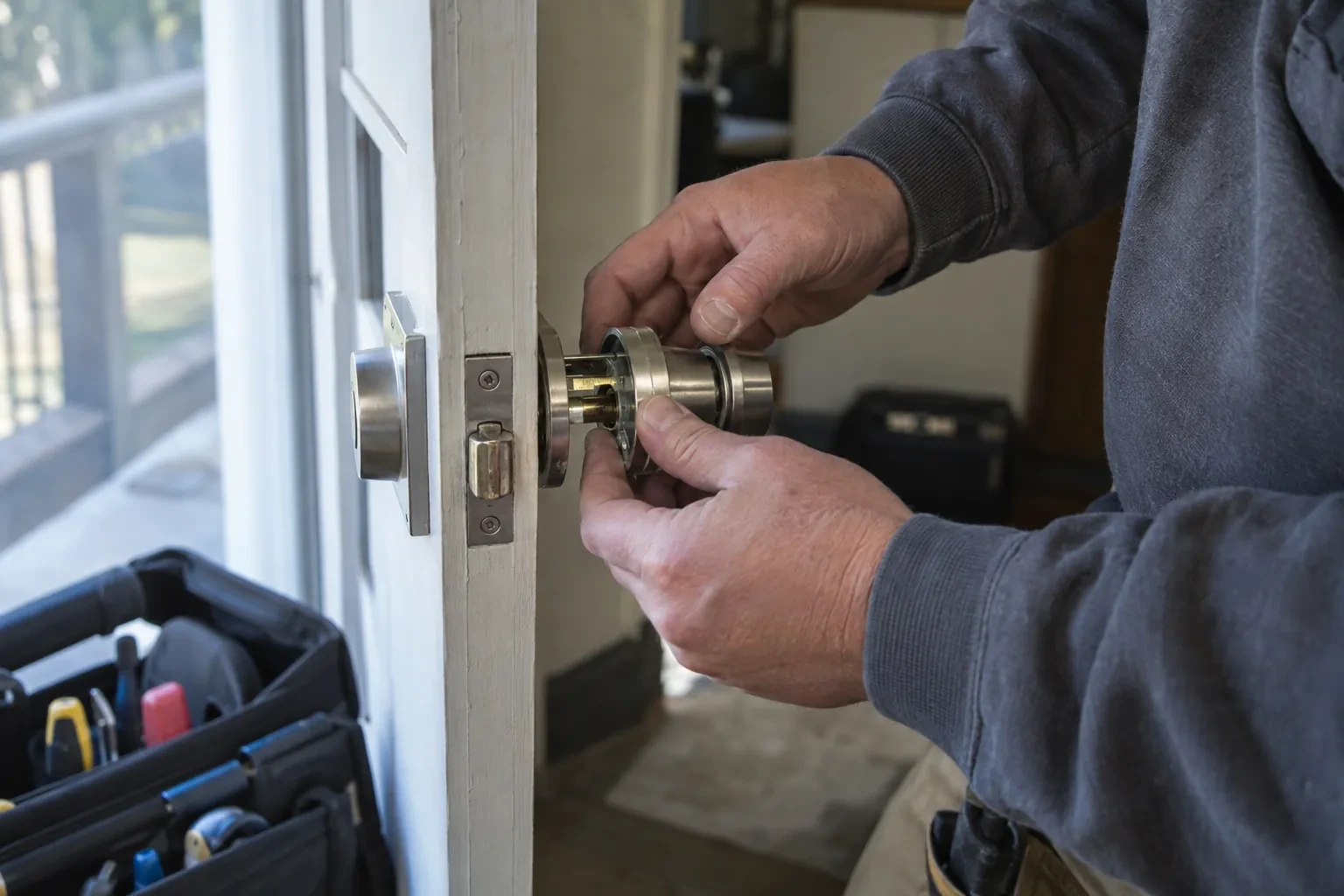
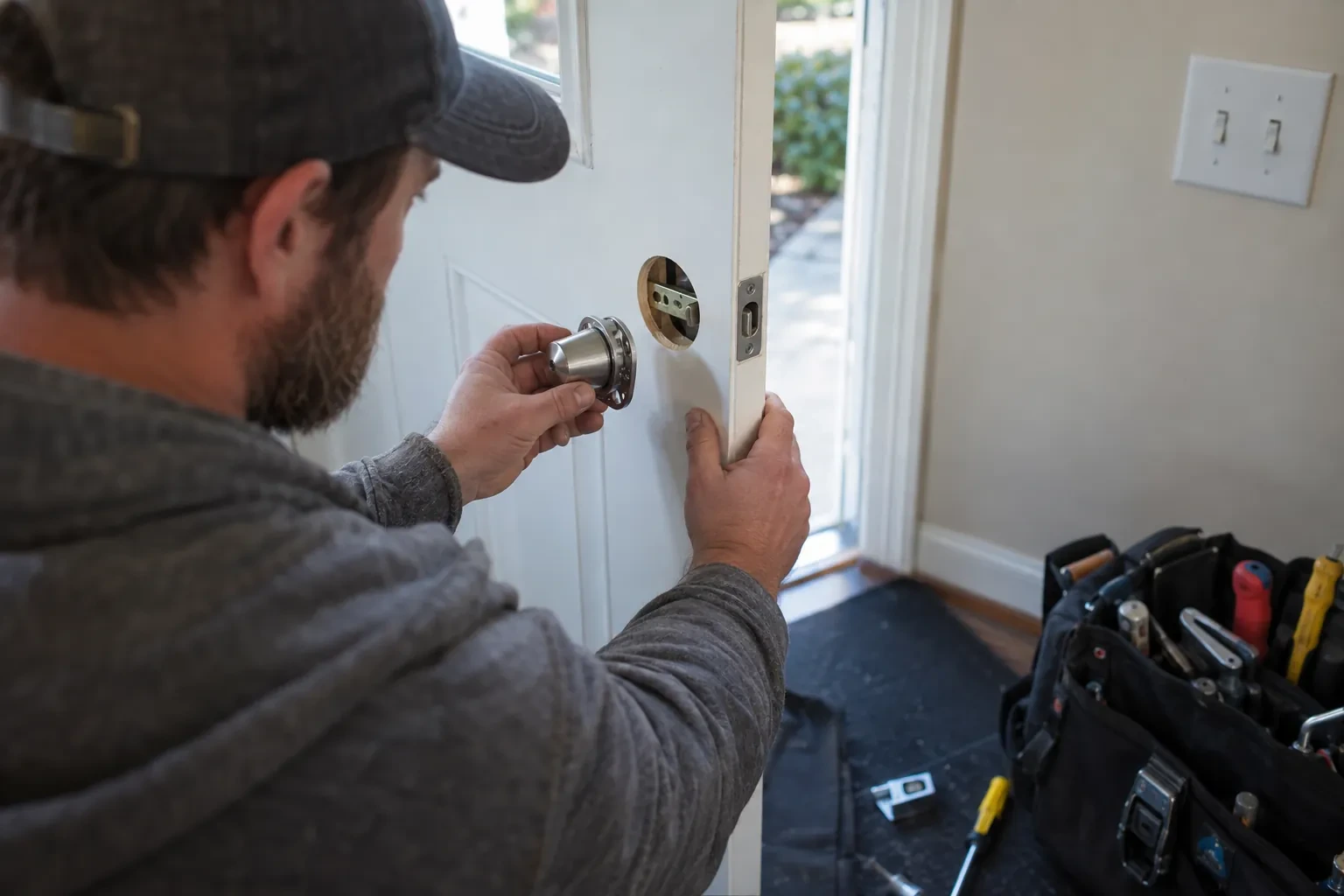
Power, cabling, and where the controller will live
An access control system needs somewhere for its low-voltage wiring to run and somewhere secure for the controller and its power supply to sit, away from public reach. The survey traces a path from each opening back to that location, checks whether existing conduit or cable trays can be reused, and confirms what power is already available against what a new circuit or a battery backup needs to supply. A building with exposed ceilings or accessible risers is a simpler pull than one with finished walls throughout, and that difference shapes how the installation is sequenced.
Testing every opening before calling it finished
Each door is tested the same way regardless of how simple or complex its hardware is: a valid credential releases it, a disabled one does not, the request-to-exit device or push bar releases a magnetic lock on demand, and the door position switch correctly reports open and closed. Where a fire alarm interface is fitted, the locksmith confirms the lock actually releases when the alarm activates, not only when it is reset afterward. The battery backup is tested by removing main power briefly and confirming every door still behaves the way it is meant to.
What to do when a card or fob goes missing
A lost card or fob is handled by switching it off in the software rather than replacing a lock. The credential stops working as soon as it is disabled, whoever lost it is issued a new one, and every other door in the building keeps running exactly as it did before. There is no locksmith call needed for this, no rekeying, and no gap where a door sits unsecured while a replacement is arranged. Reporting a lost credential without delay, rather than holding onto the news, is the one habit that keeps this advantage working the way it was intended.
Access Control Installation
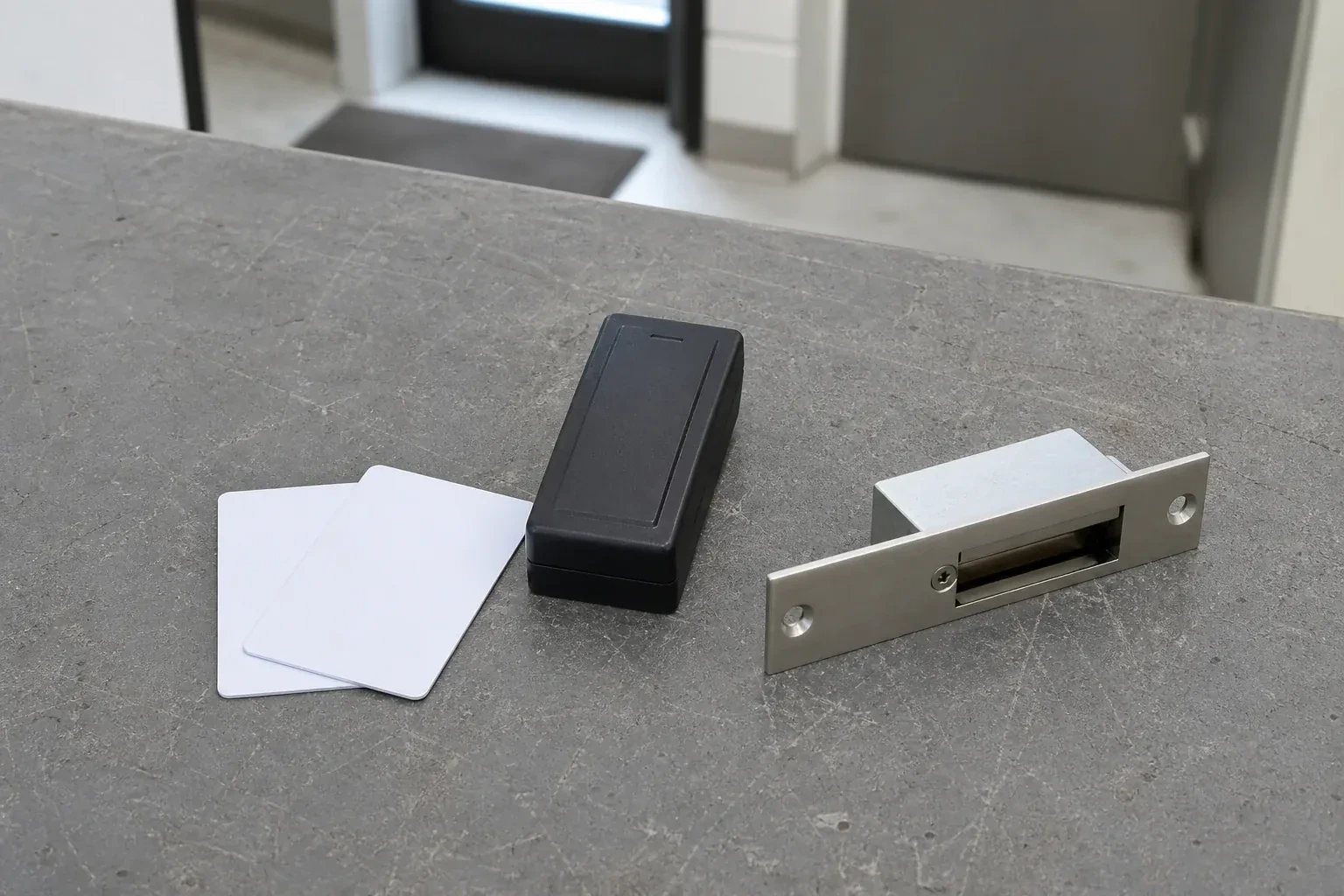
In the van
Electric strikes
Request-to-exit devices
Power supply with battery backup
Door position switches
Magnetic locks
Access Control Installation
What affects the quote
Condition of the existing hardware
A working mechanical lock that can stay in place as the override is a simpler starting point than an old, failing keypad system that has to be removed before new hardware goes on in its place.
Fitting the mechanical override
Keying an override cylinder into the same system as the rest of the property's keys, rather than leaving it as an unrelated spare lock, takes coordination with whatever keying already exists across the building.
Network readiness for a networked system
A networked controller needs a suitable connection point and technology-department approval to join the building's network; where that is not already in place, preparing it is a separate piece of the job from the door hardware itself.
What to have ready
- Is any of these doors also a fire exit or required exit route?
- What are the doors and frames made of, as far as you know?
- Do you already have an alarm or camera system in place?
Access Control Installation: questions
QuestionsCan access control be added to just one door, or does it have to cover the whole building?
A single door with its own standalone reader is a complete installation on its own, and plenty of businesses start there. If more doors need controlling later, a networked controller can be added at that point, or the building can simply add another standalone unit. Nothing about starting small commits the business to expanding, and nothing about a single-door job rules out growing the system later.
How is a lost fob or card handled?
It is switched off in the software the moment it is reported, which stops that specific card or fob from working at any door it used to open. A new one is issued and enrolled in its place. No lock has to be changed and no other credential in the building is affected, which is the main advantage a lost fob has over a lost mechanical key.
Can a person's access change automatically by time of day or day of the week?
Yes. Access levels can be set to change automatically by time of day or day of the week, so a credential that opens a door during a shift can be denied outside it without anyone having to remember to switch it off manually. This is set up once in the schedule and then runs on its own from that point forward.
Related services
- Master Key System DesignThe new wing was built with its own brand of cylinder, so the two-year-old keys from the original building do not open a single door in the addition.
- Panic & Exit HardwareThe new access-control reader at the staff entrance works fine going in, but nobody has sorted out the door's exit side, and right now a card reader and a pushbar exist as two separate ideas.
- Commercial-Grade Lock ReplacementAn inspection report flagged the rear exit as needing hardware that opens with one motion and no key, and that door currently has an ordinary keyed knob on the inside.