High security · Oakridge Acres
Safe Opening & Combination Change in Oakridge Acres
A customer's rifle safe at the range has a dial that simply will not respond to the combination written on the sales receipt from years ago.
In plain words
Two different problems can look identical from outside a locked safe: a combination that genuinely no longer opens it, and a mechanism that is jammed, corroded or blocked while the correct numbers still work perfectly. Sorting out which one is happening comes before any decision about drilling, since a stuck handle or a tripped relocker needs freeing rather than a fresh combination. Getting this diagnosis right the first time keeps the visit focused on the actual cause rather than the symptom in front of you.
How the visit goesA software update reset the clinic's small safe overnight, and the receptionist's usual code now does nothing on a keypad that lights up but goes no further.
Safe Opening & Combination Change
How the visit goes
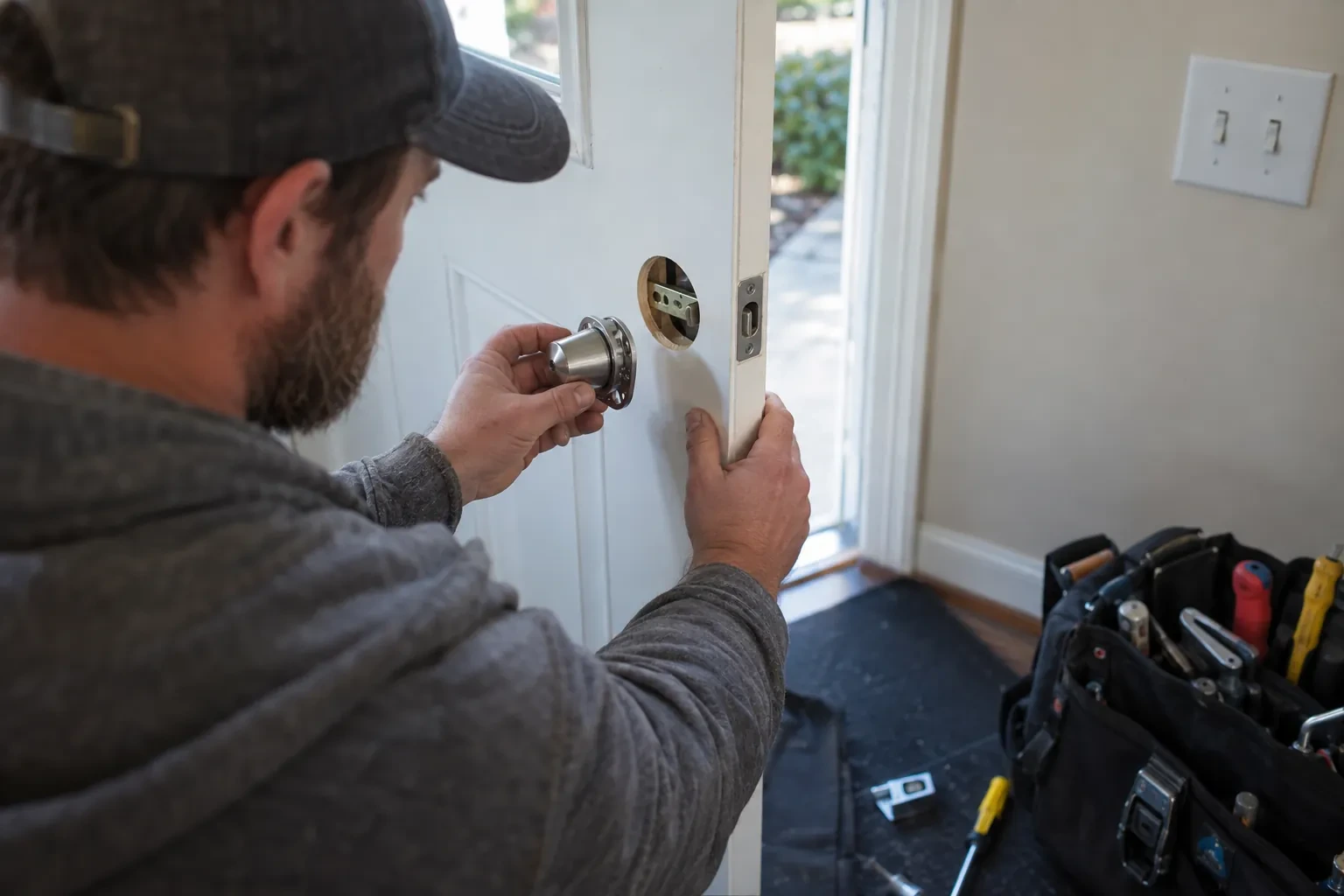
Looking for a relocker or prior damage
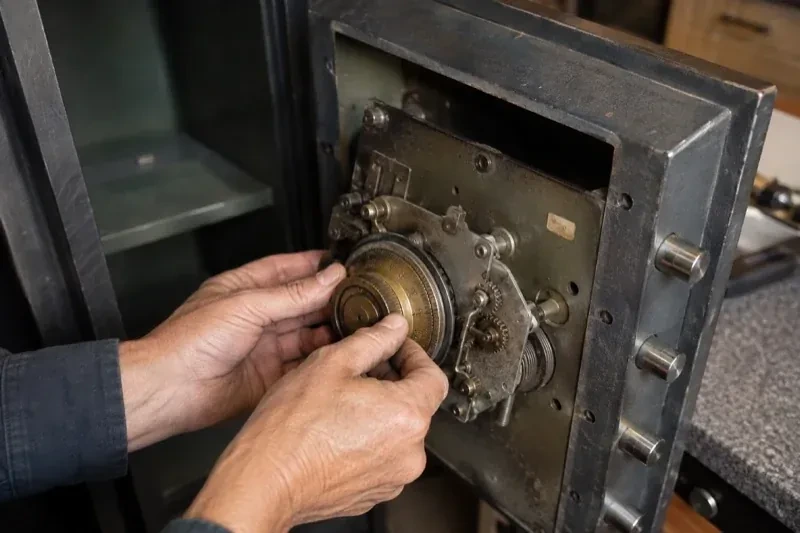
Some safes include a relocker, a small device built to jam the bolt work until a trained technician services it, if the case is drilled in the wrong place, dropped, or exposed to fire. The locksmith looks for pry marks, drill attempts, scorching or a history of the safe being moved or dropped, since any of these can explain a lock that suddenly refuses a combination that worked yesterday. Recognizing a tripped relocker early changes the plan: the fix is mechanical, freeing or replacing the relocking mechanism, rather than another attempt at the original combination or a straightforward reset.
Repairing or replacing the lock afterward
Once the safe is open, the lock that caused the trouble gets its own decision. A worn or damaged mechanical lock can often be repaired in place, its wheel pack, drive cam or spindle replaced individually rather than swapping the whole assembly. A failed electronic lock is more often replaced outright with a comparable or higher-rated unit, since circuit boards and keypads are not field-serviceable like a wheel pack. Either path aims for a lock at least as capable as the one it replaces, matched to the case's existing cutout, though restoring the safe's overall rated protection after any field repair follows the manufacturer's approved method rather than being assumed automatic.
Keeping a record without keeping it obvious
A combination worth changing is worth writing down somewhere that is not the safe itself. A sealed note with a manager, a separate secure file, or a password manager used for other business records all work better than a sticky note in a nearby drawer or taped beneath the safe, which is one of the first places anyone would look. For a business, deciding in advance who updates that record when staff change keeps the next transition from repeating this one. The locksmith can suggest a simple system on the spot if none currently exists.
Safe Opening & Combination Change
In the van
Replacement wheel pack
Manipulation and tension tools
Replacement dial and ring
Dial decoding instrument
Drill rig and carbide bits
Safe Opening & Combination Change
What affects the quote
Timing of the call
A visit during regular business hours costs the same amount as one arranged outside them. The locksmith confirms the exact figure on site once the safe's lock type, size and condition have been looked at in person.
Lock type: mechanical dial, electronic keypad or key
Each lock family calls for different tools and a different amount of time on site, and a safe with more than one lock, such as a keypad backed by a mechanical dial, involves assessing both.
Whether model or service records are available
A visible data plate, a purchase receipt or a manual on hand speeds up identifying the exact lock; a safe with none of that takes a few extra minutes to assess on site.
What to have ready
- Has the safe been through a fire, flood or break-in attempt?
- Roughly how old is the safe, if you had to guess?
- Has the safe ever been drilled or serviced before?
Safe Opening & Combination Change: questions
QuestionsDo you need to see proof that I own the safe before opening it?
Yes, and it is meant as a protection rather than a hurdle. For a business, identifying yourself as the owner, manager or an authorized employee is usually enough. For an estate, a secondhand purchase or a change of ownership, a bill of sale, transfer document or executor's paperwork fills the same role. This step protects whoever actually has a claim on what is inside the safe, which includes you.
Can a mechanical dial safe be opened without drilling it?
Most of the time, yes. Manipulation reads the wheel pack through the dial by feel, and decoding tools built for a specific lock family read the gate positions directly, both without any lasting effect on the lock. Whether either works depends on the lock's own security rating and condition, since a high-security Group 1 lock resists these methods far longer than an older Group 2 one, but drilling is only used once both routes are ruled out.
Is a mechanical dial or an electronic keypad the better choice for a business safe?
Each suits a different way of working. A mechanical dial has no battery to fail and a long service life, but only ever holds one combination at a time. An electronic keypad allows separate codes for different staff and an audit trail on some models, at the cost of needing battery changes. Either can be fitted with a genuinely high security rating; the choice usually comes down to how many people need independent access.