Change or rekey · London
Lock Replacement & Upgrade
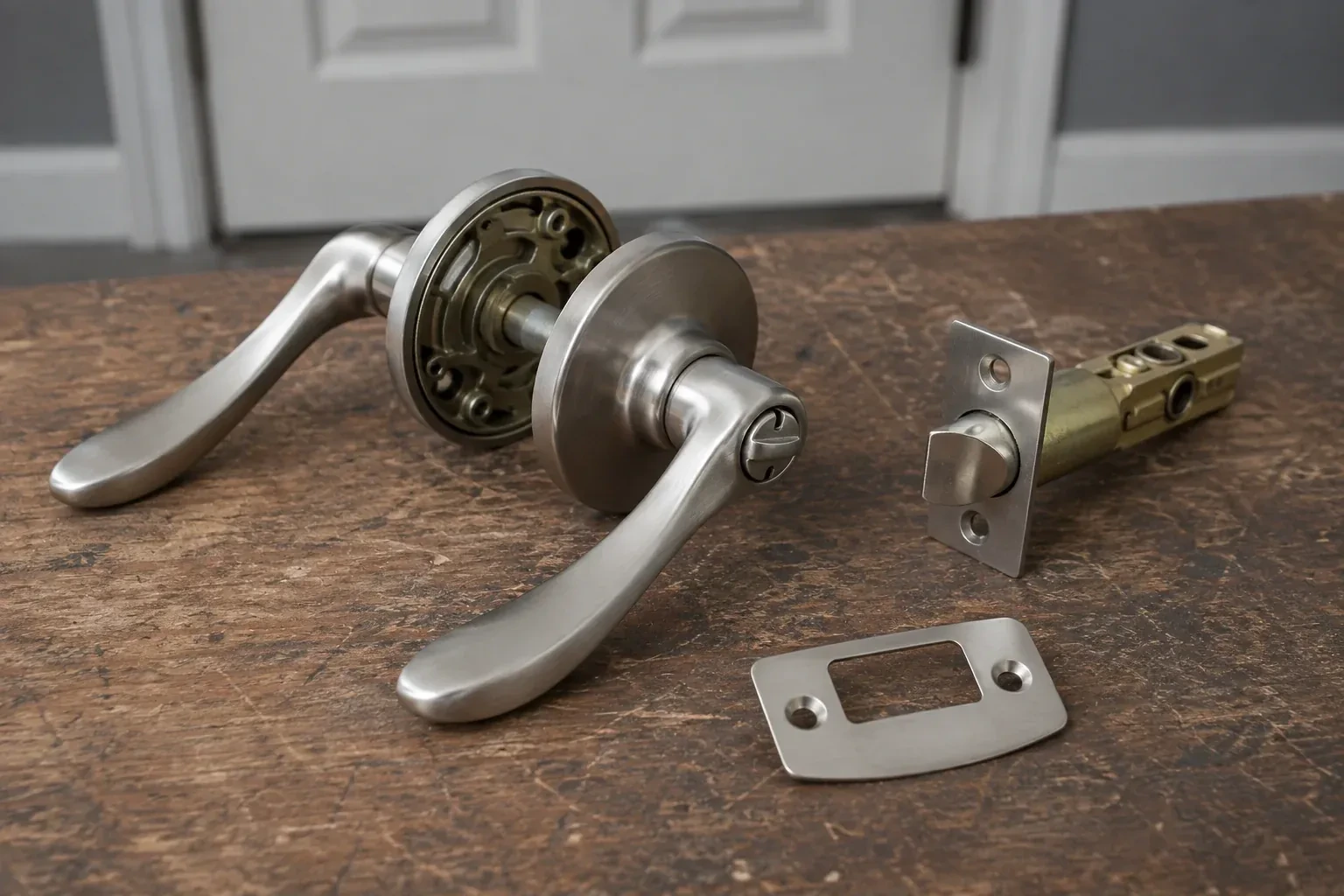
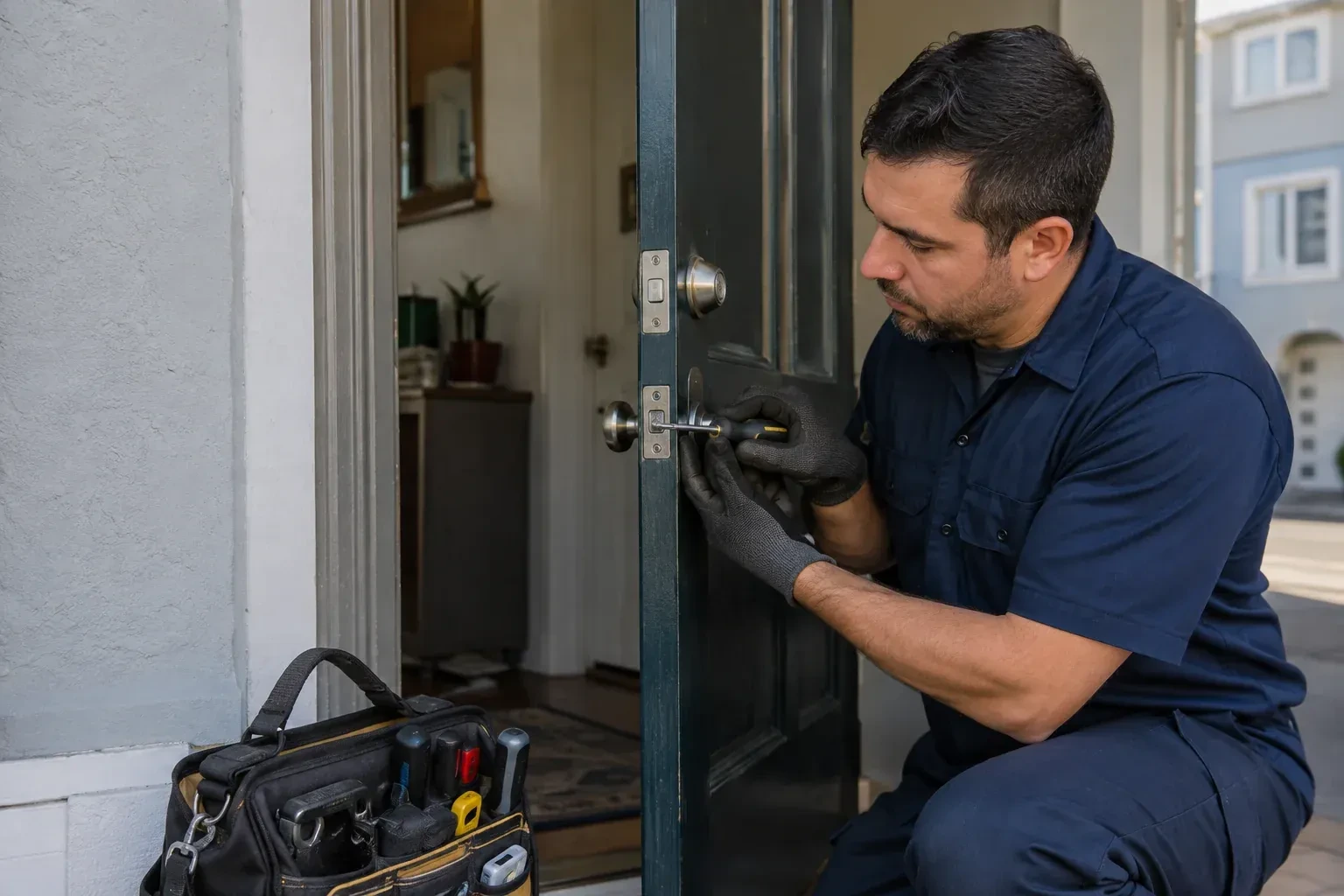
The house is fifteen years old and every exterior door still wears the light hardware the builder fitted: a short bolt, a thin strike held by two small screws, and a knob lock that never suited a street entrance.
In plain words
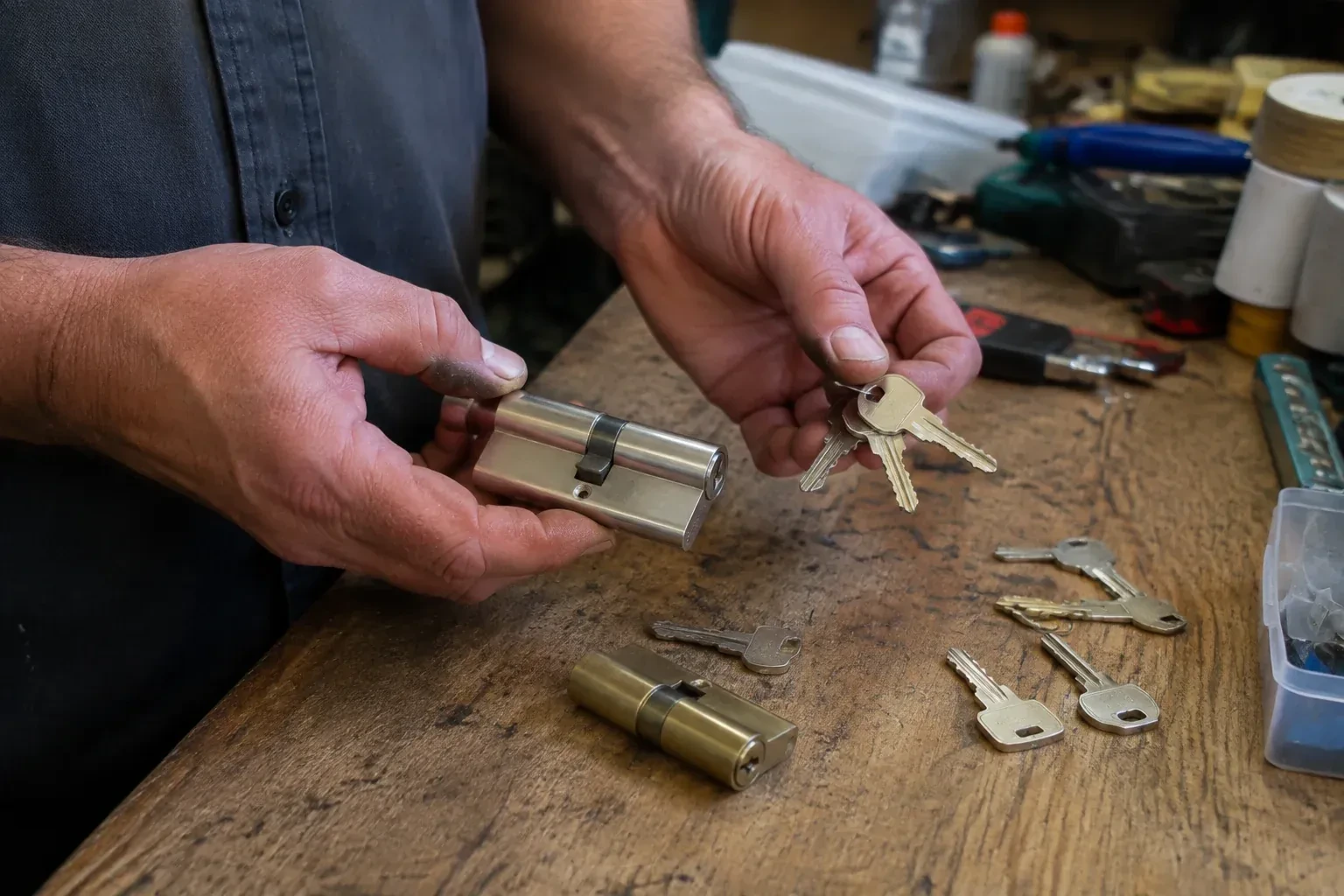
Not every complaint about a lock ends in a new lock, and a good visit says so. A cylinder that turns stiffly may only need cleaning and fresh pins; a lost key calls for rekeying, which keeps the hardware and changes the key; a loose lever often wants a tightened spindle. Replacement earns its place when the mechanism is worn through, the housing is damaged, the grade was never adequate for the entrance, or you want a different function, finish or a keypad. The locksmith lays the three routes side by side so the choice rests on what the door needs rather than on what is in the van.
How the visit goesSomeone tried the back door while you were away. The jamb is splintered around the strike, the bolt is bent, and the knob turns with a grinding feel. Everything held, barely, and you want hardware that would do better next time.
Lock Replacement & Upgrade
How the visit goes
Measuring the existing preparation
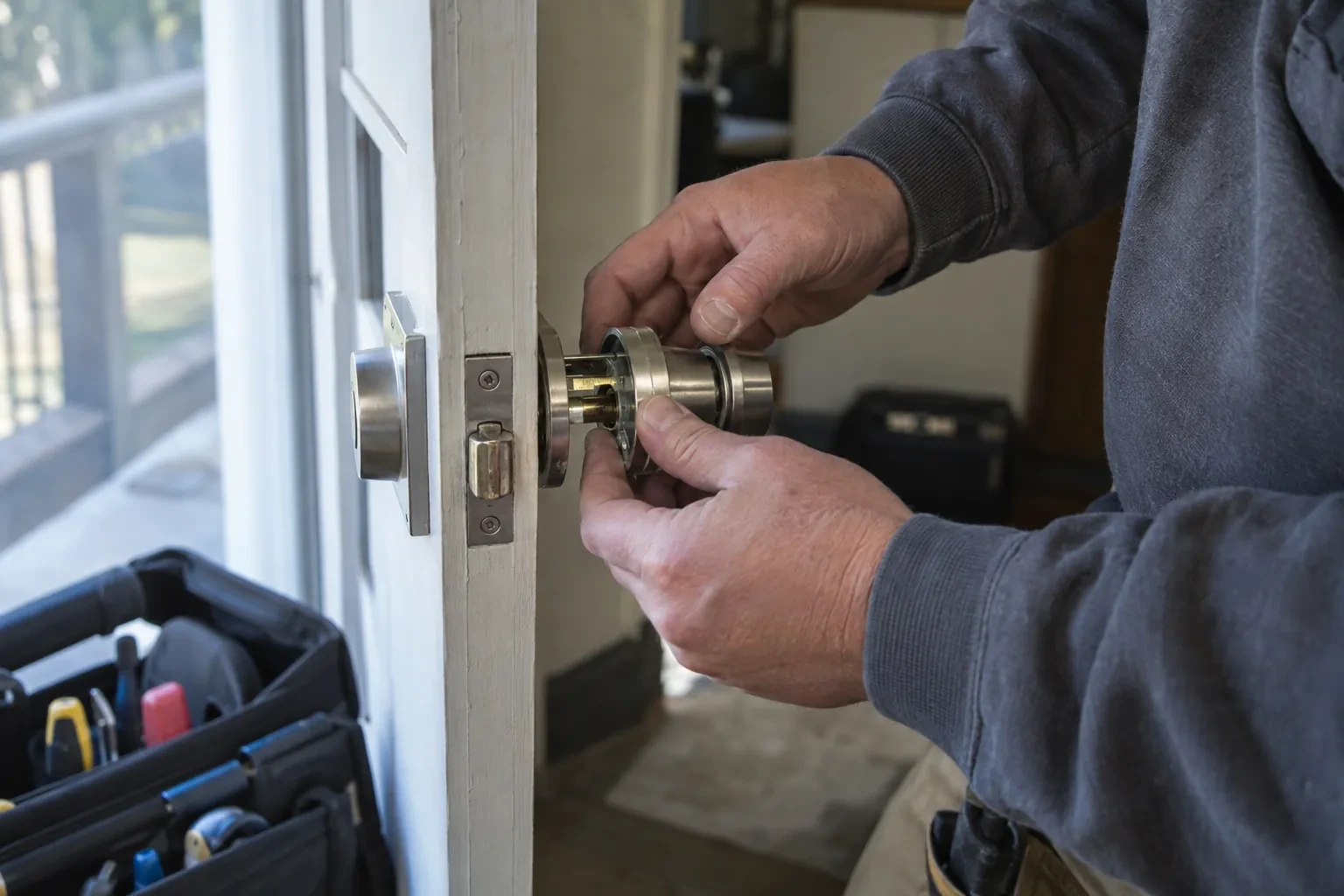
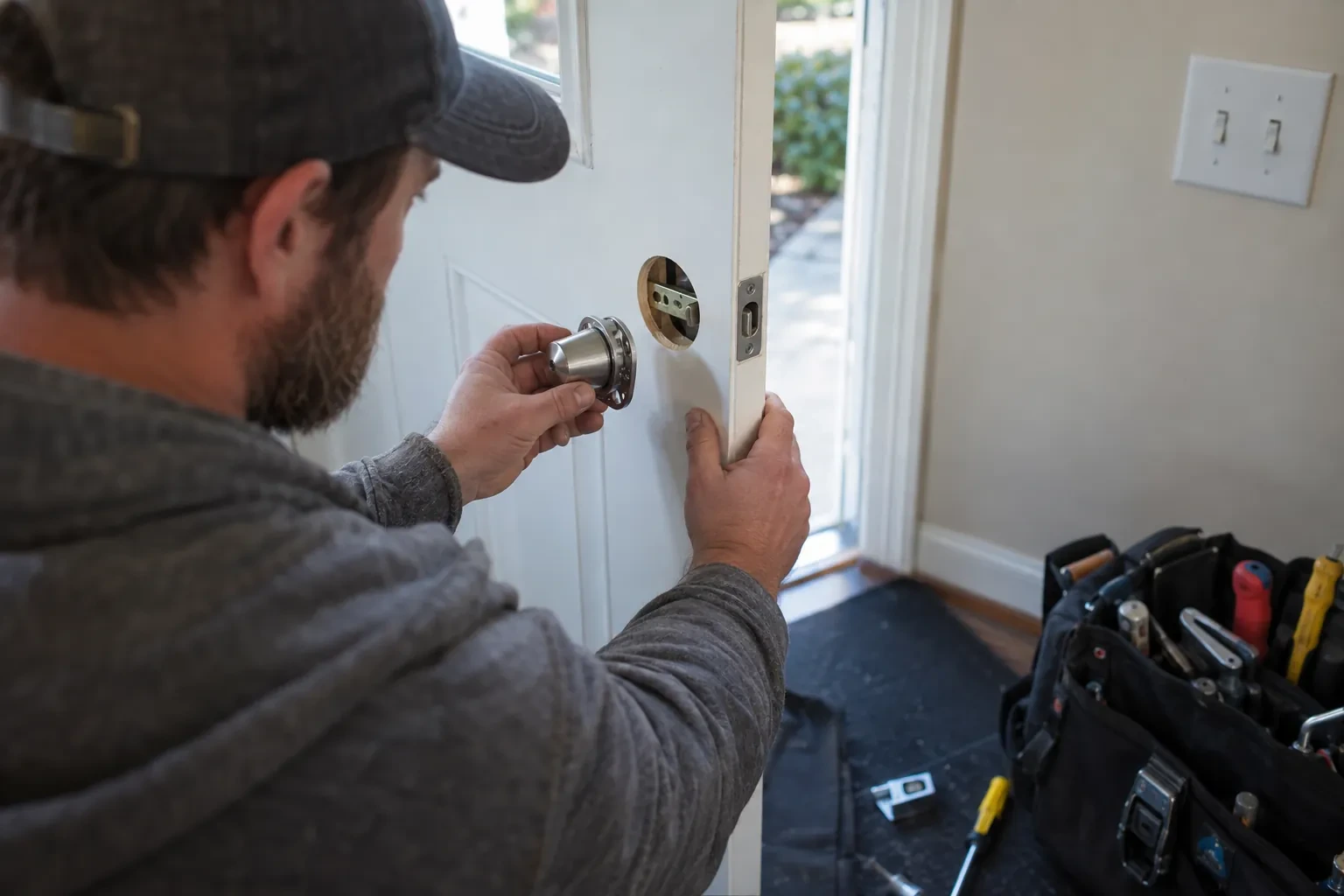
Before any product is chosen the door is measured. Backset first, the distance from the door edge to the centre of the bore, which on most doors here is 60 or 70 millimetres. Then the cross-bore diameter, the edge-bore size, the shape of the latch faceplate, the door thickness and the handing. The strike cut-out and any glass, trim or storm door that limits where hardware can sit are noted too. These few numbers decide which locks will drop straight into the door and which would need a filler plate, an extension kit or fresh drilling, so they are written down before the catalogue is opened.
Stepping up the grade of a deadbolt
When the brief is a stronger door, the new deadbolt is chosen for what is inside it: a bolt with a full 25 millimetre throw and a hardened steel insert that spins against a saw, a housing that stands low so a wrench has nothing to grip, and a cylinder with pins that resist picking and bumping. Fitting follows the normal steps, but the locksmith confirms the bolt reaches full extension with the door closed, because a high-grade bolt seated halfway into a shallow pocket behaves like a low-grade one. The strike is upgraded alongside it so both halves of the lock share the same standard.
The rental paperwork, quietly sorted
If the door belongs to a rental unit, the visit finishes with the keys in the right hands. When a landlord orders the change, giving the tenant a full set of new keys is standard practice. When a tenant orders it with the landlord's consent, a key for the landlord is cut alongside the household's and the consent is noted. The locksmith can leave a short written record of the hardware fitted and the keys issued for the property file, so both sides know what is on the door and nobody is surprised at the next inspection or move-out.
Lock Replacement & Upgrade
In the van
75 millimetre strike and hinge screws
Knob or lever entry set
Cylinders, plug follower and pinning kit
Reinforced strike plate and strike box
Adjustable latch or bolt
Lock Replacement & Upgrade
What affects the quote
Door material and thickness
Wood, steel and fibreglass doors are drilled and fitted differently, and a door thicker than the standard 45 millimetres needs extension parts, so the door itself shapes part of the quote.
Finish and style
Standard satin nickel or brass is one line; specialty finishes, matched suites across several doors and designer handlesets are others. The finish you choose for exposure and looks is priced as the maker prices it.
Special-order hardware
Most standard locks come from the van. A specific style, an unusual finish or a restricted system may need ordering, which affects scheduling and is noted in the quote rather than discovered on the day.
What to have ready
- Are you interested in a keypad or smart lock on any door?
- Has the door been forced or damaged, or does it need a push to lock?
- Do you own the home, or rent it with the landlord's agreement to change locks?
Lock Replacement & Upgrade: questions
QuestionsShould I rekey my locks or replace them?
Rekey when the hardware is sound and the problem is the key: a lost copy, a move, or too many keys for one house. Replace when the mechanism itself is worn, the housing or bolt is damaged, the grade was never suitable for the entrance, or you want a different function, finish or a keypad. Many visits do both, keeping good locks and rekeying them while replacing the tired ones, all to one key.
What happens to the old lock?
It is yours. Some people keep a sound old cylinder as a spare or move a decent deadbolt to a shed or garage door, and the locksmith can rekey it to the house key for that purpose. Worn or damaged hardware is taken away for recycling if you prefer. Either way, the old keys should be gathered up and discarded so nobody confuses them with the new set.
Can the same visit replace locks on more than one door, or does each door need its own appointment?
One visit usually covers every door on the job. The locksmith brings a range of cylinders and strikes, measures each door's backset and bore, and works through the list in order, front entrance first if a key change matters most there. Having a rough list ready, which doors, and whether they should end up on one key or several, lets the locksmith plan hardware before arriving rather than working it out door by door on site.
Related services
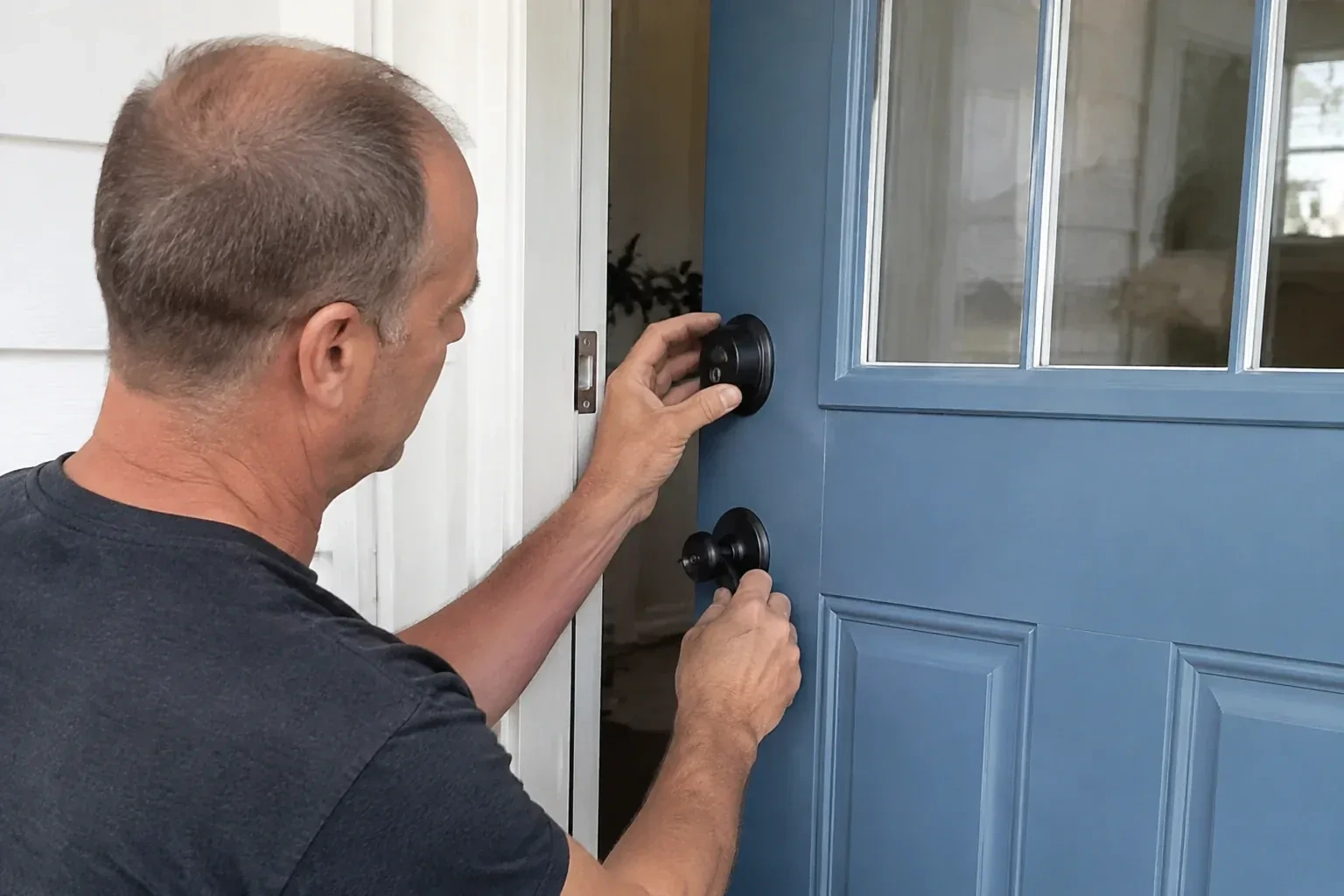
- Deadbolt InstallationThe old deadbolt has grown lazy.
- Vintage Mortise Lock ServiceThe old skeleton key still fits the keyhole, but it now needs a jiggle, a lean on the door and a little luck before the bolt moves.
- Smart Lock InstallationThe deadbolt is a stiff double-cylinder model that needs a key from both sides, and in the dark hallway finding it is a nuisance.