Lockouts · London
Lost Keys — Same-Visit Rekey
The spare under the planter by the side door is gone.
In plain words
If you rent, losing a key is handled in three steps rather than one. Tell your landlord first, since a lock change on a rented unit goes smoother when both sides know about it and both end up with a working key. Then the locksmith rekeys the suite door, and any other cylinder that key fitted, with both parties knowing. Finally new keys are cut for you and for the landlord's set, so the arrangement that existed before the loss is restored on a fresh combination. Landlords generally welcome the call; their hardware stays in place and their own key set is refreshed too.
How the visit goesYour purse was taken from the back of a chair at a restaurant. The cards can be cancelled by phone tonight, but the house keys were in the side pocket beside a driver's licence that shows exactly where those keys fit.
Lost Keys — Same-Visit Rekey
How the visit goes
How many keys, and who gets them
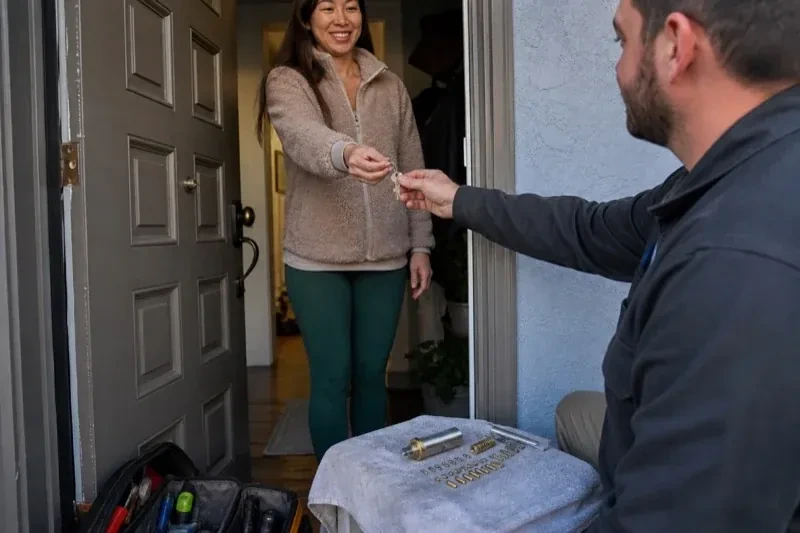
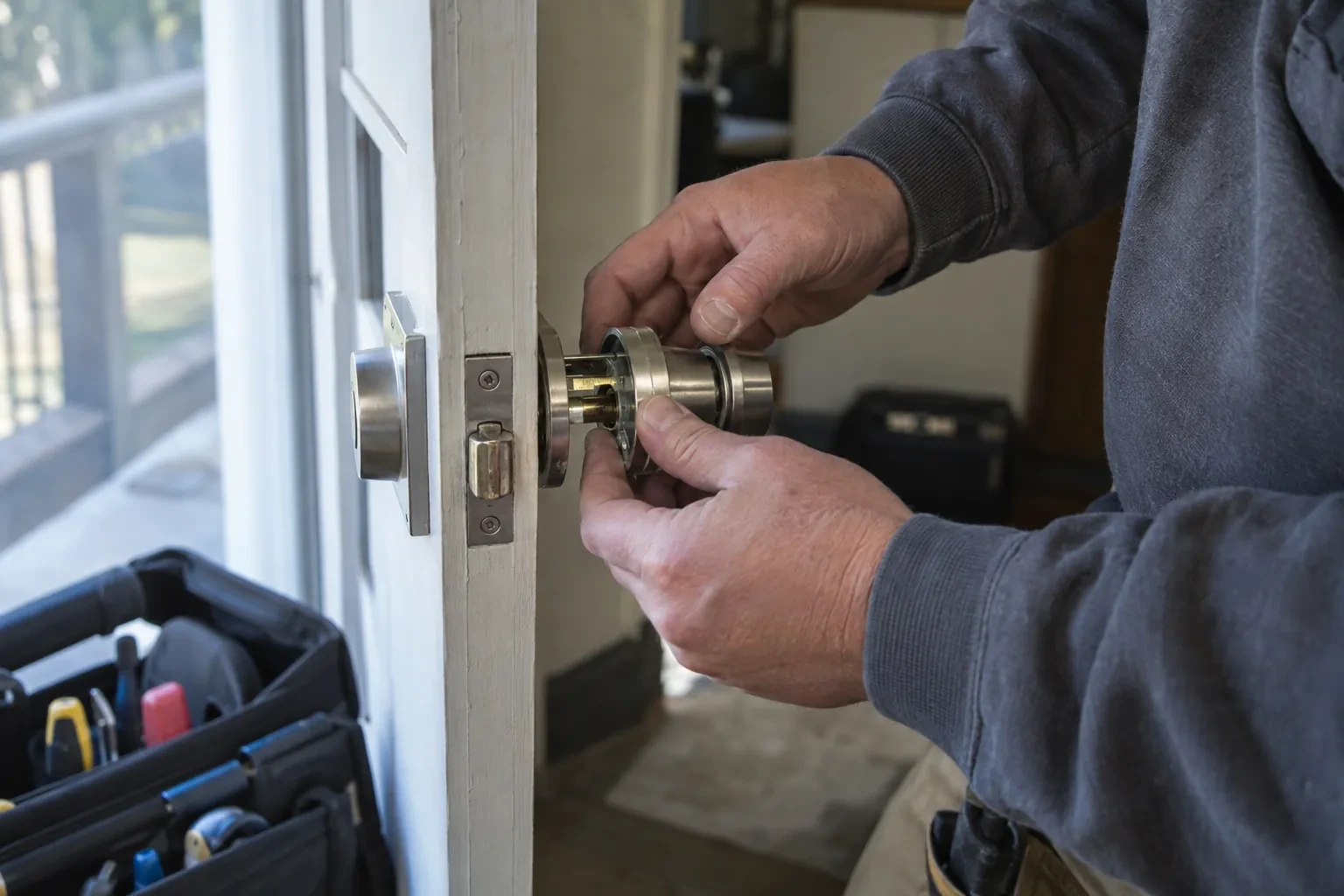
Before pins are touched, the number of keys is agreed, because that number is the whole point of key control. The locksmith asks who in the household or business needs one: each adult, a teenager, a caregiver, the neighbour who feeds the cat, the landlord, the cleaner. Each name gets a key and the total is written down. Anyone who had a copy of the old key but is not on the new list is, from that moment, simply someone without a key. Knowing the count on day one is what makes it possible, years later, to say with confidence exactly how many keys to this property exist.
Cutting the new keys on site
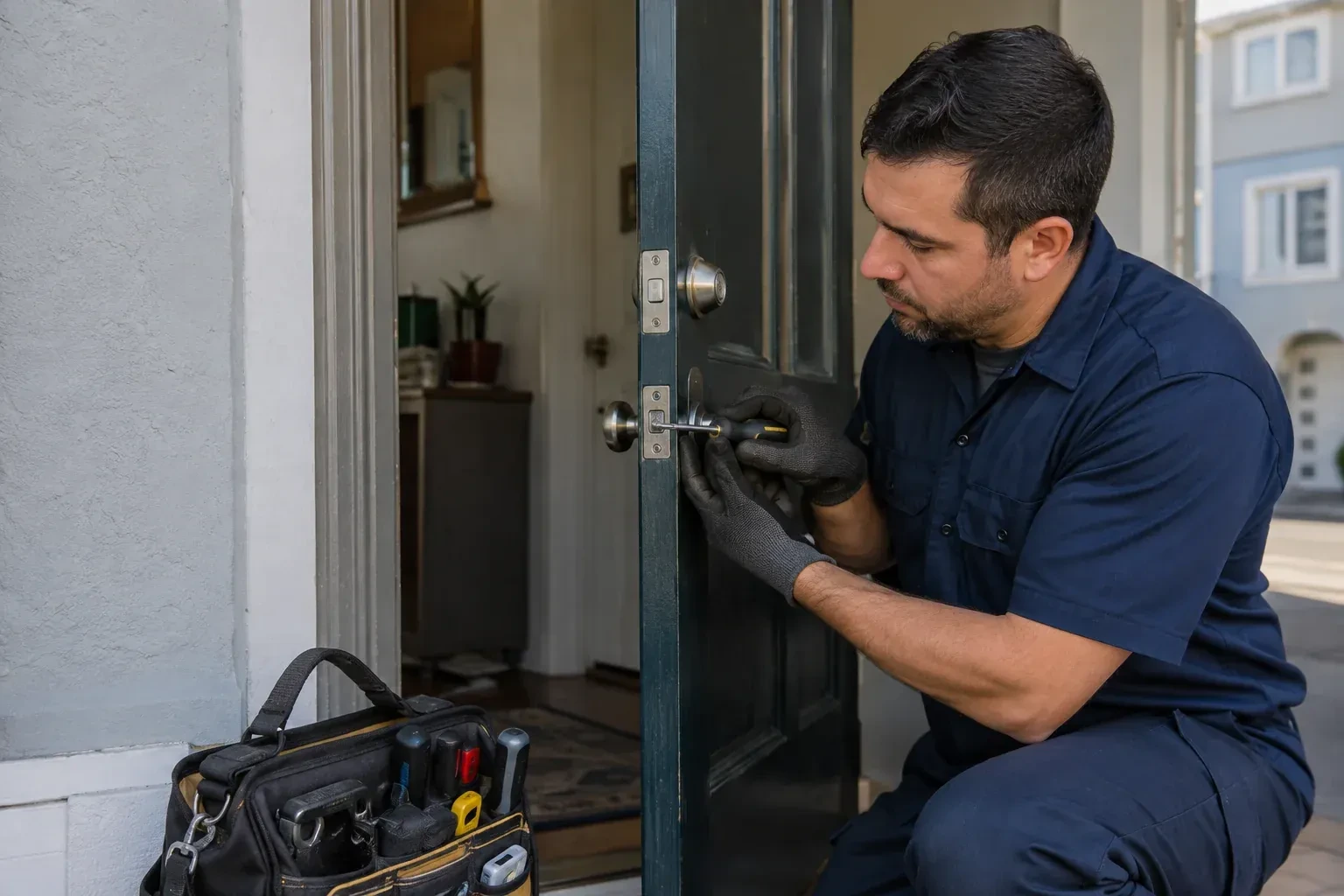
Common keys are cut on the van rather than ordered in, though some restricted systems need the blank from an authorised distributor first. The first key is cut on a code machine, a crisp, original-depth key rather than a copy of a copy, and tried in the first repinned cylinder before another is touched, so any adjustment happens once. The rest are cut to the same code, deburred, and tested in turn. Keys cut this way run smoothly from the start and stay accurate through years of copying, because every later duplicate can be made from the code rather than from a worn blade.
A known number of keys, with names on them
You leave with a set of keys whose count you agreed and can name: one each for the adults, one for the neighbour, one in the lockbox. That is the count of authorised keys, not proof against every copy unless the key system also controls its blanks. A small habit keeps it honest: when a key goes to a contractor, a cleaner or a house sitter, note it and get it back, or rekey when the arrangement ends. From today the answer is a figure you wrote down, not a guess about who might still hold something from years ago.
Lost Keys — Same-Visit Rekey
In the van
Top pins and cylinder springs
Key blanks in common keyways
Rekeyable-cylinder reset tool
Key gauge and decoder
Cylinder retaining-clip and cap tools
Lost Keys — Same-Visit Rekey
What affects the quote
Electronic credentials on the same ring
Clearing a garage opener's memory and re-pairing remotes, changing keypad codes or helping report a building fob are small tasks the quote names separately.
Entry as well as rekeying
If the lost key was your only key and you are locked out too, the door is opened first and that opening is quoted as its own step ahead of the rekey.
Travel to the property
Every call-out includes the drive. A house across town and a rural property at the end of a concession road involve different time on the road, and the quote reflects the trip.
What to have ready
- Are the door locks all the same brand, or a mix?
- Which doors did the missing key open: front, back, side, garage, shed, gate?
- Do you know roughly how many copies of the old key exist?
Lost Keys — Same-Visit Rekey: questions
QuestionsWhat should I do before the locksmith arrives?
Walk the property and note every door the missing key opened, including the garage, shed and gate. Gather any keys you still have, since a working key helps in reading each cylinder. Have identification and, for tenants, something showing the tenancy. Decide roughly how many keys you want and whether you would like all doors on one key. If a garage remote or building fob was lost too, mention it when you book.
Do I need to be there for the whole visit?
An authorised adult should be present at the start, for identification and to agree the list of doors and the number of keys, and at the end, to test every key and take the count. In between, the work happens at the doors and on the van, so you are free to get on with your day inside. A property manager or a family member with your authorisation can stand in if you cannot be there.
What about the mailbox key?
It depends on whose mailbox it is. A private box at your door or on your post is yours, and its small cylinder can be rekeyed or replaced in the same visit. A compartment in a community mailbox or an apartment mailroom belongs to the postal service or the building, which handles lost-key lock changes through its own process. The locksmith will tell you which you have and who to call.
Related services
- Business Lockout ServiceIt is ten to nine, three staff are on the sidewalk with their coffees, and the key that has opened the glass front door for six years will not turn.
- Broken Key ExtractionThe padlock on the shed has been stiff all summer.
- Break-In Damage Lock RepairThere is a hole where the cylinder used to be.