Lockouts · London
Broken Key Extraction
The padlock on the shed has been stiff all summer.
In plain words
What you have when the locksmith leaves matters as much as what was removed. The fragment is out and shown to you. The cylinder has been cleaned of grit, its pins and springs checked, and dressed with the lubricant its maker specifies. A new key has been cut from the key code or by reading the cuts on the two halves with a gauge, not copied from a worn original, and tested from both sides with the door open and closed. If the key broke because the lock was on its way out, a rekey or a replacement cylinder is offered as its own decision, explained first.
How the visit goesThe padlock on the shed has been stiff all summer. Today the key twisted, cracked at the tip, and left the end buried deep in the keyway. The rest came out in your hand, and the padlock is still closed.
Broken Key Extraction
How the visit goes
Locked or unlocked right now
Whether the bolt is thrown changes the order of work. If the door is locked, extraction is the first half and getting you inside is the second; the locksmith plans both so the door is opened with the least fuss once the keyway is clear. If the key broke while you were locking up and the door is open, the priority reverses: the fragment comes out and the door is made secure before anything else is discussed, so you can leave when you need to. On a vehicle the same question applies to the door and, separately, to whether the ignition turns.
When the piece is standing proud
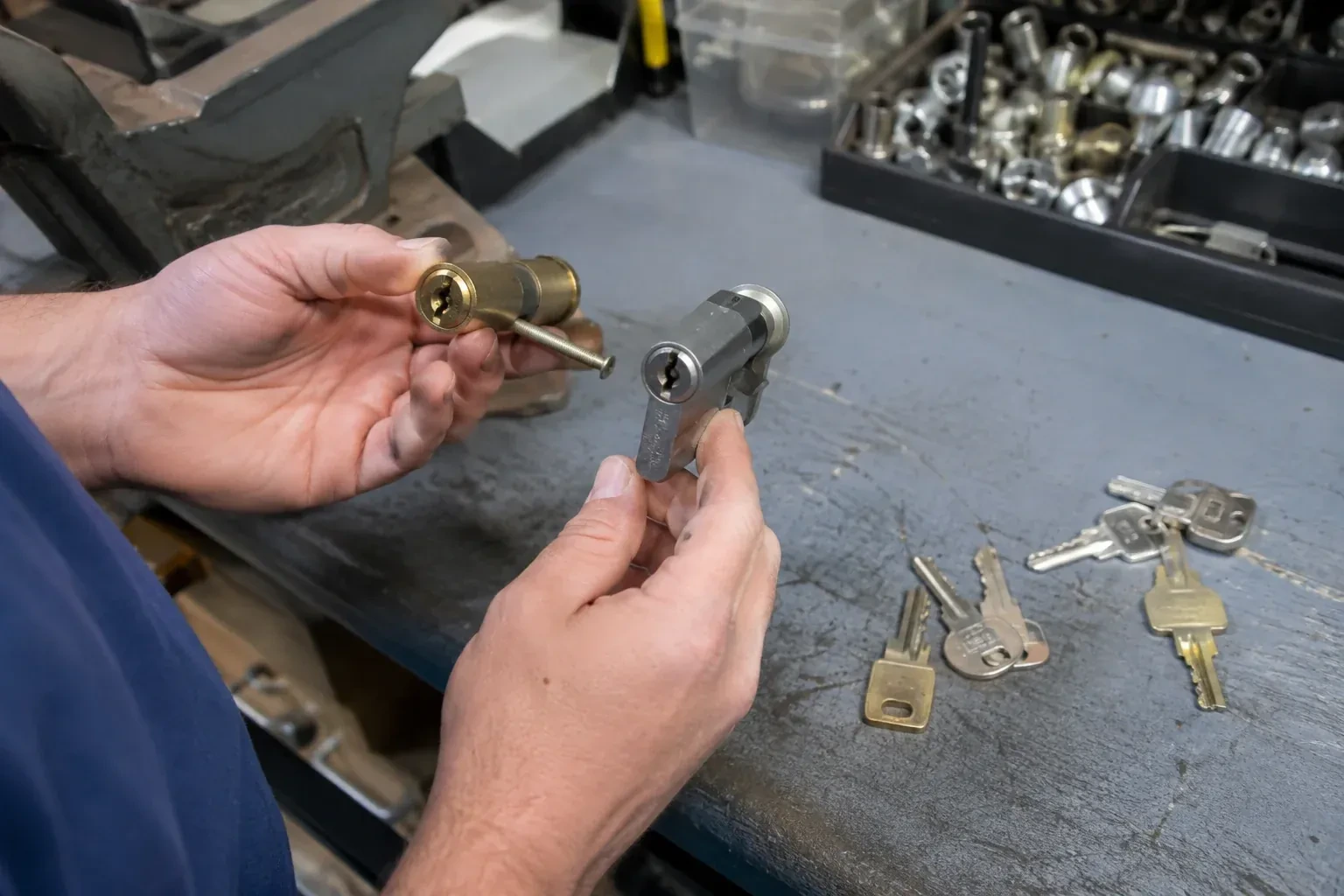
A fragment that shows above the cylinder face looks like the easy case, and it is, provided nobody pushes on it. The locksmith grips it with fine-jawed extractor pliers or needle-point tweezers made for the purpose, steadies the cylinder with the other hand, and pulls straight out along the line of the keyway. If it resists, the plug is checked for rest position rather than the pull being increased, because a piece forced against lifted pins can bend them. A trace of dry lubricant at the keyway entrance eases a tight fit. The piece comes out whole, and the lock is ready to test.
A key cut from the pattern, not the wear
You leave with a key that was cut to the lock's original specification rather than traced from the tired blade that just failed. That difference shows every time you use it: it seats fully, lifts each pin cleanly and turns without a wiggle. Two or three copies made from that fresh cut give you spares that are as good as the first. The old bent or thinning keys that shared the ring are worth retiring now, because a key that has started to bend has started to crack, and the next one to snap will be one of them.
Broken Key Extraction
In the van
Hook key extractors
Key blanks and code cutter
Replacement cylinder or deadbolt
Compressed air for the keyway
Lock de-icer
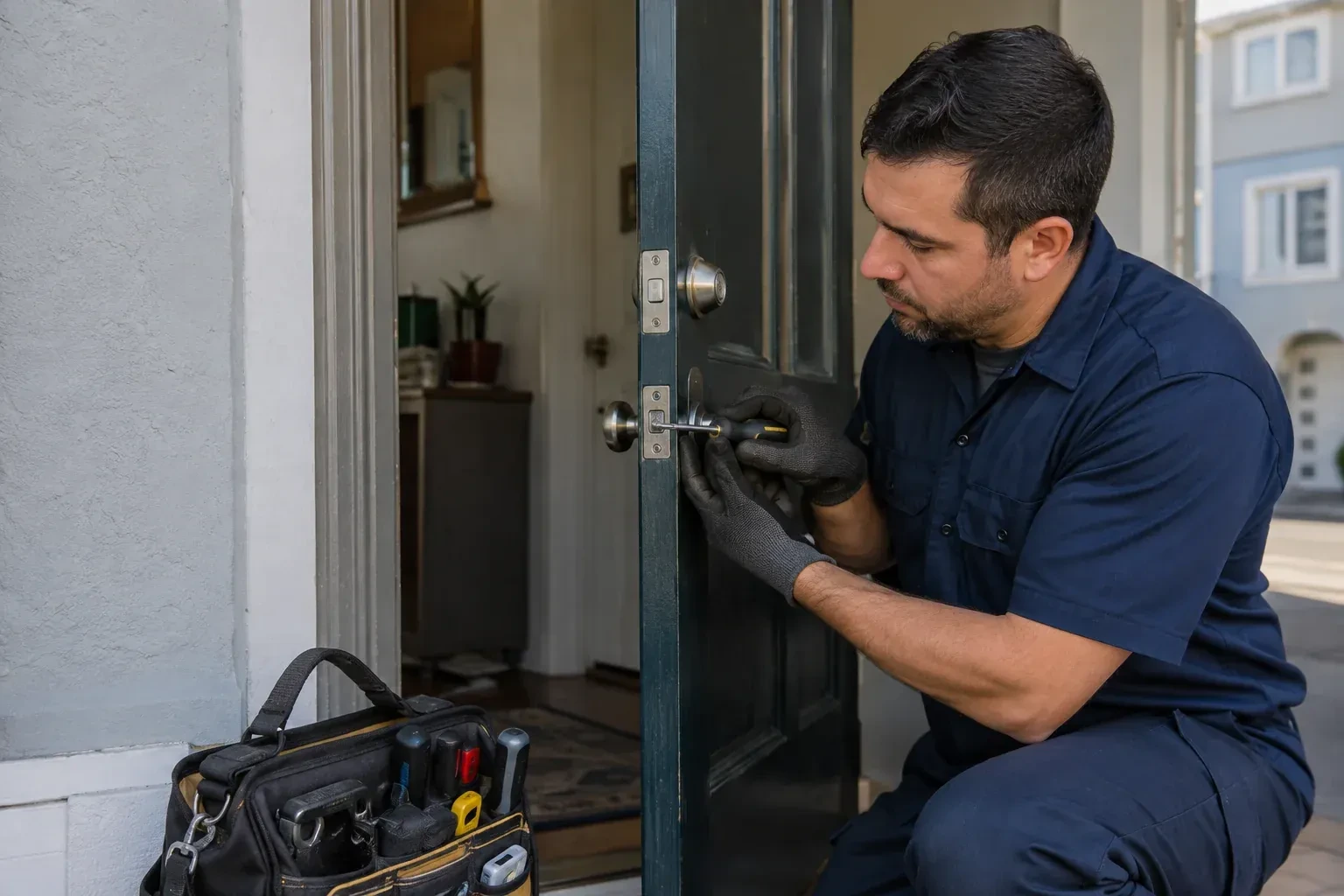
Broken Key Extraction
What affects the quote
Where the key broke
A house deadbolt, a knob, an older mortise case, a padlock, a car door and a vehicle ignition each call for different access and different care, and the quote follows the hardware.
Whether the plug turned before the break
A key that snapped mid-turn leaves the plug rotated and the pins holding the fragment. Easing the plug back to rest before extraction is an extra step in the work.
Weather on the day
A cylinder that is frozen or iced has to be thawed and dried before extraction can begin, so a call during a deep freeze carries that patient extra time.
What to have ready
- Is any part of the key still visible above the face of the lock?
- Did the key turn part of the way before it snapped?
- Would you like extra keys cut while the locksmith is there?
Broken Key Extraction: questions
QuestionsWill the lock work again once the piece is out?
In most cases yes, and it is tested in front of you with a key that fits. The inspection after extraction is where the honest answer lives: if the pins, springs and cap are sound and the keyway is clean, the cylinder goes back into service with a fresh key. If wear or damage caused the break, that is explained and a rekey or new cylinder is offered as a separate choice.
Can you extract a key from a padlock, mailbox or filing cabinet?
Yes. Small cylinders in padlocks, mailboxes, desk drawers, filing cabinets and cam locks on lockers hold a fragment the same way a door does, and the same slim hooks and spirals fit them. Their keyways are narrower, so it is finer work. Where a padlock is not worth saving, the locksmith will say so and offer a cut-off and a new padlock keyed to your preference instead.
Do you need my spare key?
It helps if there is one. A crisp spare is the ideal pattern for the replacement, better than the broken halves and far better than a worn copy. It also lets the locksmith test the cylinder the moment the fragment is out, which shows whether the pins and springs are sound. If the spare is itself bent or worn, mention that too; it is a candidate for retirement rather than a pattern.
Related services

- Business Lockout ServiceIt is ten to nine, three staff are on the sidewalk with their coffees, and the key that has opened the glass front door for six years will not turn.
- Break-In Damage Lock RepairThere is a hole where the cylinder used to be.
- Seized & Jammed Lock OpeningEvery time you pull the key out of the side door it comes away gritty.