Lockouts · Berkshire Village
Broken Key Extraction in Berkshire Village
The padlock on the shed has been stiff all summer.
In plain words
Freezing is one of the bigger seasonal causes of broken keys here. Meltwater runs into the keyway during a thaw and freezes overnight, so the plug is locked in ice, and most people respond by turning harder. The blade gives before the ice does. A winter extraction visit therefore begins with thawing: lock de-icer or gentle warmth frees the plug, then the fragment is drawn out and the cylinder is dried and given the lubricant its maker specifies. You leave with the piece out, a new key cut, and a small tube of de-icer so the next frozen morning is a pause rather than a snap.
How the visit goesYou were locking up on the way out when the key broke in the lock. Now the door is unlocked, a piece of key is jammed in the cylinder, and you were already running late for work.
Broken Key Extraction
How the visit goes
How the piece is sitting
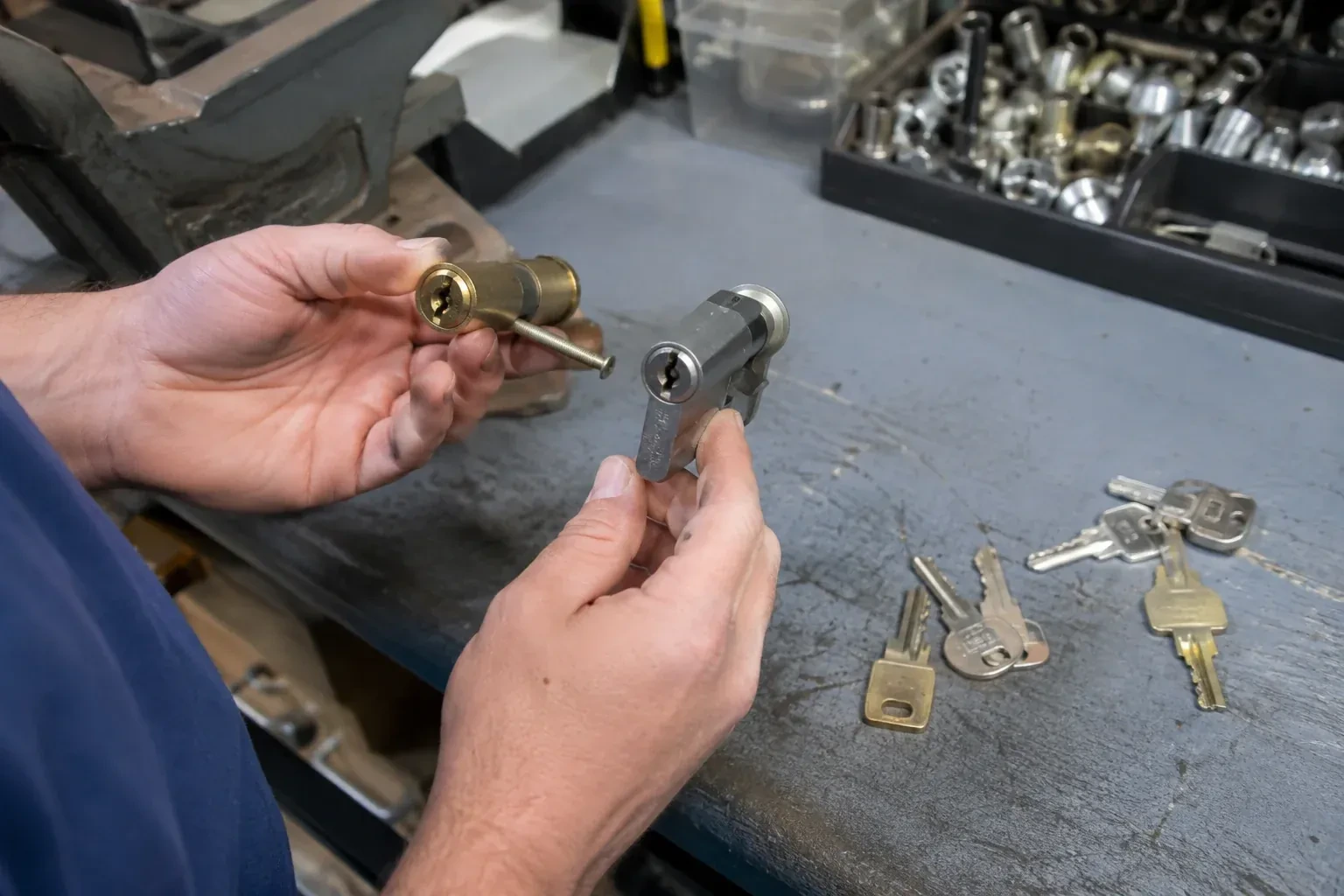
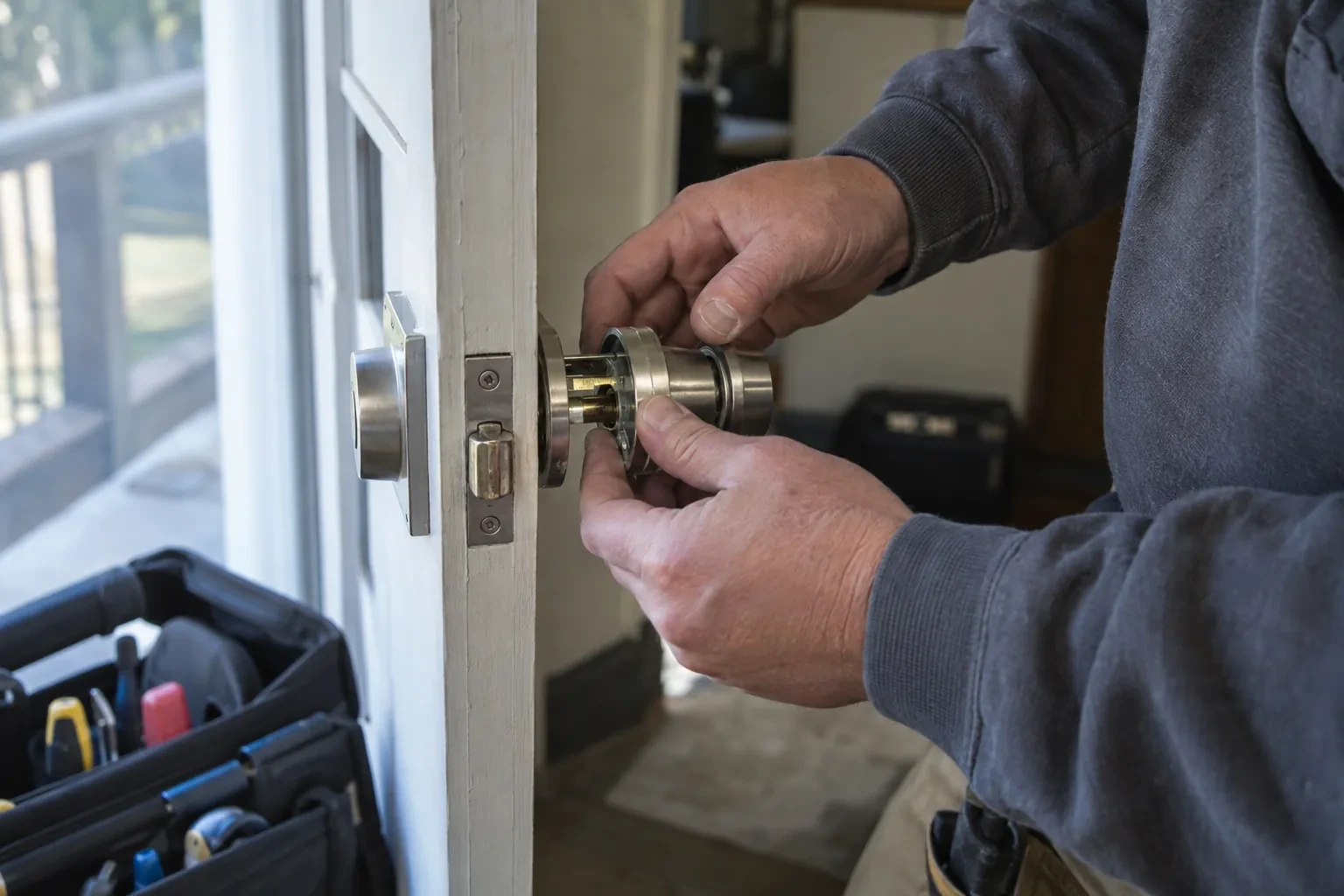
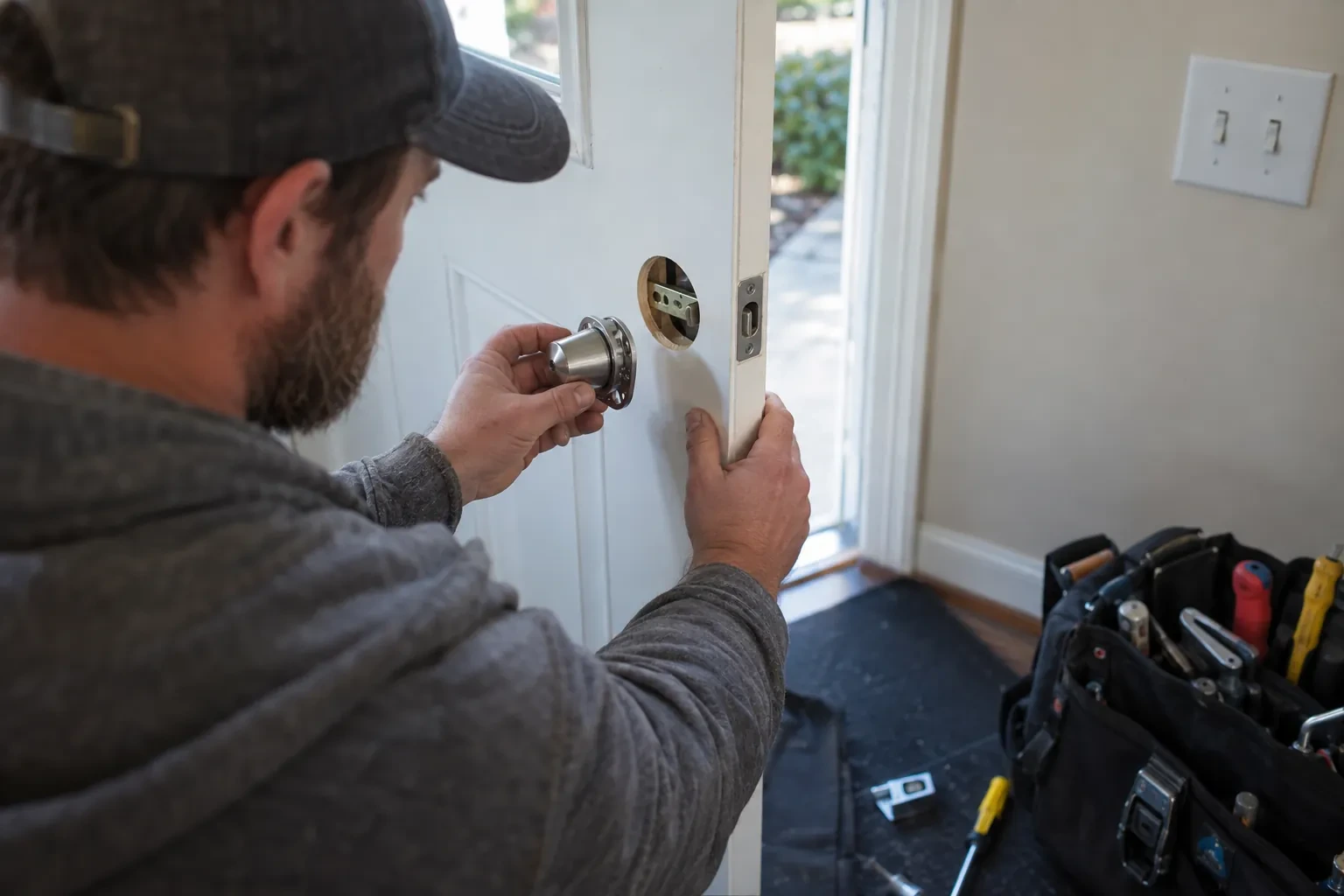
The first look is at the fragment itself, without touching it. Does any of the blade show above the cylinder face, or is it flush or deeper still? Is the plug sitting at its normal rest position, or did it stop partway round when the key gave way? A protruding piece in a resting plug is the simplest case. A fragment past the shear line in a rotated plug means the pins are holding it, and the plug has to be brought back before anything will slide. Reading this correctly decides which extractor comes out of the case and spares the keyway from needless probing.
Cutting the key you leave with
Once the lock is clear, a replacement key is made. The two halves of the broken key are laid together and the cuts are read with a key gauge, or the locksmith cuts from the key code if you have the tag or the lock's records, or from a crisp spare. What is avoided is copying a worn original, because a duplicate inherits every rounded cut and will stick and wear the same way. The new key is cut on a code machine, tried in the lock with the door open, then closed, and from both sides. Extra copies are cut from the new key while the machine is set.
A door that no longer fights the key
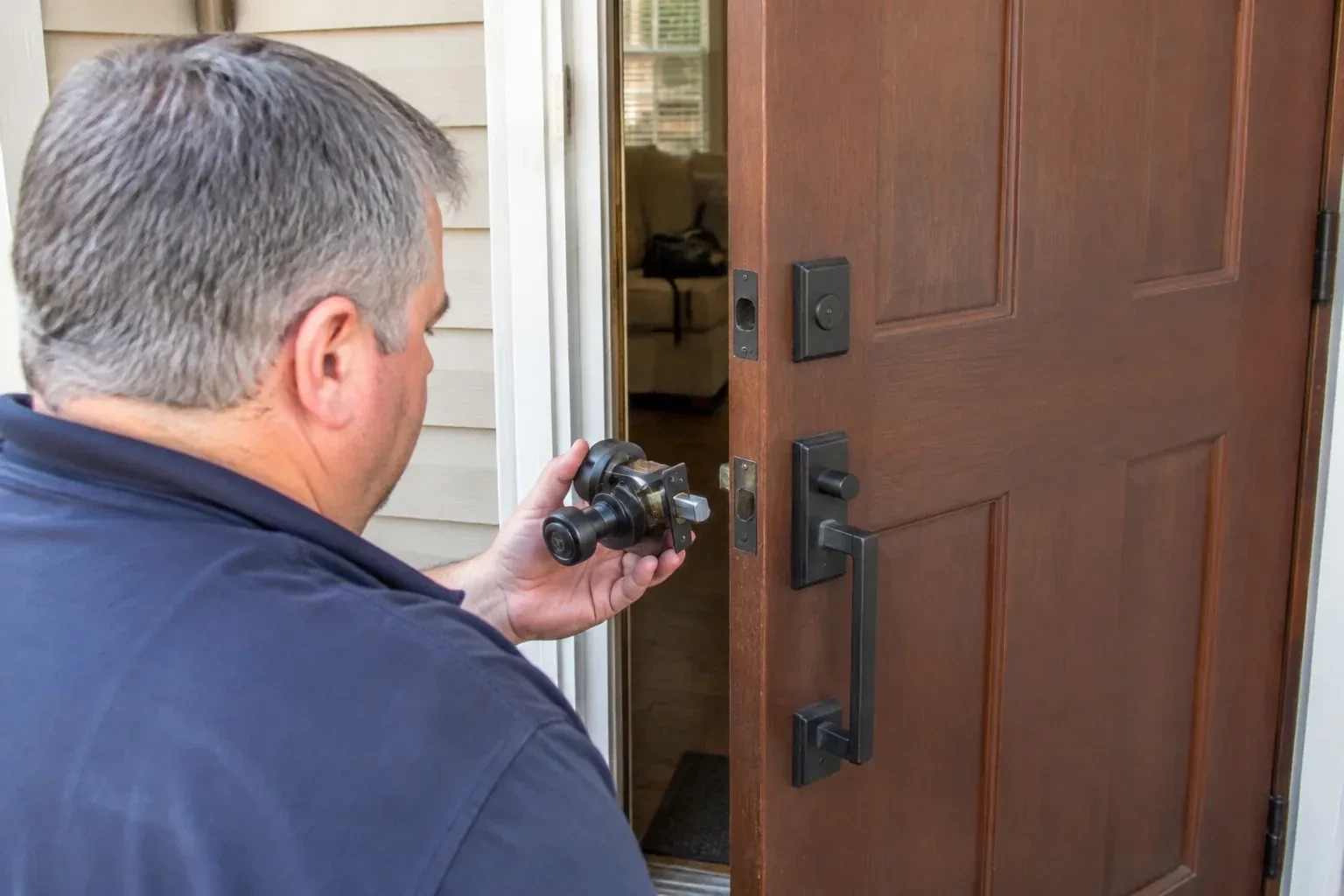
If the bolt had been dragging in its strike, that is corrected while the locksmith is there, because a bolt that binds turns every key into a lever. Dropped hinges get longer screws driven into the framing; a strike pocket that pinches the bolt is filed or shifted; a weatherstrip that was pushing the door off square is pared back. The test is simple: the thumb-turn should throw the bolt with one finger and no push on the door. Since wood swells in humid summers and shrinks in dry winter air, a seasonal glance at the screws keeps the key from taking the strain again.
Broken Key Extraction
In the van
Hook key extractors
Key blanks and code cutter
Replacement cylinder or deadbolt
Compressed air for the keyway
Lock de-icer
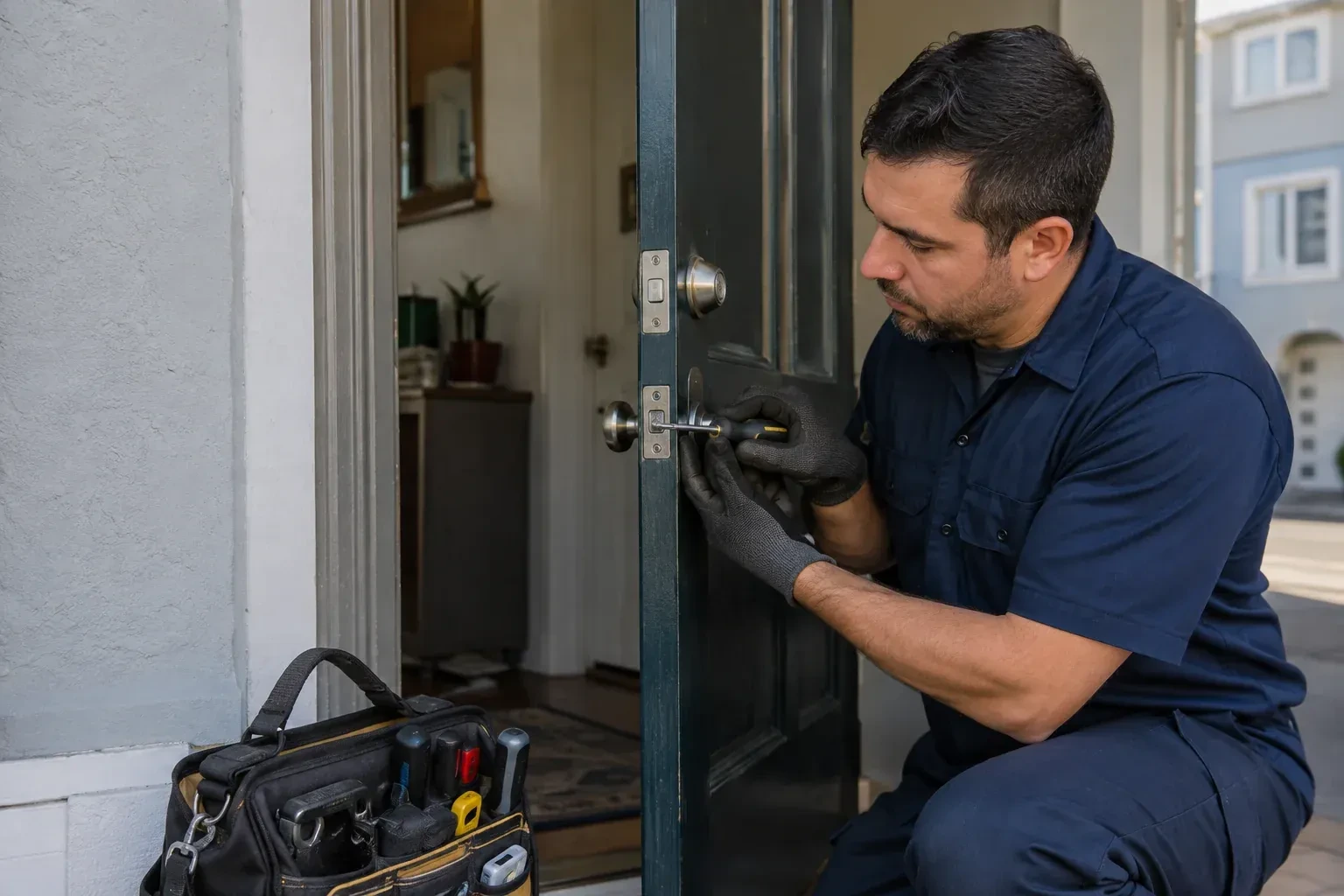
Broken Key Extraction
What affects the quote
How the new key is made
Cutting from a key code or a crisp spare, decoding the two halves with a gauge, or cutting a restricted blank from system records each take different time and stock.
When you call
Whatever hour you call about a broken key extraction — morning, evening, a weekend or a holiday — the amount is the same. Locksmiths are reachable at any time, and the exact figure is confirmed on site once the technician has seen how deep the fragment sits.
Vehicle key electronics
Fitting a new blade to a chip head, or moving the chip and remote into a new shell, is separate from the extraction and quoted as such, as is any ignition check.
What to have ready
- Is it a car key with a chip or remote buttons in the head?
- Had the key been needing extra force or a wiggle lately?
- Do you have a spare key that works, or the key code tag from the lock?
Broken Key Extraction: questions
QuestionsWill the lock work again once the piece is out?
In most cases yes, and it is tested in front of you with a key that fits. The inspection after extraction is where the honest answer lives: if the pins, springs and cap are sound and the keyway is clean, the cylinder goes back into service with a fresh key. If wear or damage caused the break, that is explained and a rekey or new cylinder is offered as a separate choice.
Can you extract a key from a padlock, mailbox or filing cabinet?
Yes. Small cylinders in padlocks, mailboxes, desk drawers, filing cabinets and cam locks on lockers hold a fragment the same way a door does, and the same slim hooks and spirals fit them. Their keyways are narrower, so it is finer work. Where a padlock is not worth saving, the locksmith will say so and offer a cut-off and a new padlock keyed to your preference instead.
Do you need my spare key?
It helps if there is one. A crisp spare is the ideal pattern for the replacement, better than the broken halves and far better than a worn copy. It also lets the locksmith test the cylinder the moment the fragment is out, which shows whether the pins and springs are sound. If the spare is itself bent or worn, mention that too; it is a candidate for retirement rather than a pattern.
Related services

- Business Lockout ServiceIt is ten to nine, three staff are on the sidewalk with their coffees, and the key that has opened the glass front door for six years will not turn.
- Break-In Damage Lock RepairThere is a hole where the cylinder used to be.
- Seized & Jammed Lock OpeningEvery time you pull the key out of the side door it comes away gritty.