Change or rekey · Berkshire Village
Gate & Building Entry Locks in Berkshire Village
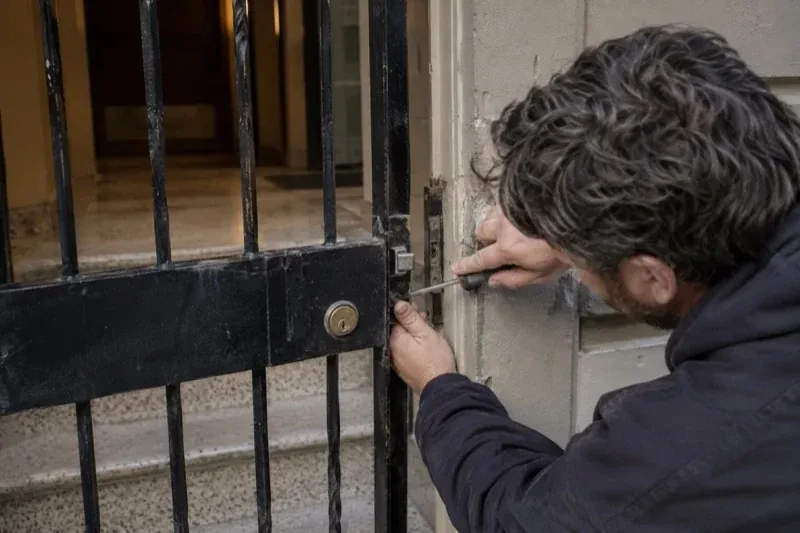
Every time the courtyard gate closes, it slams hard enough to rattle the fence panels, and the deadlatch never quite drops into the keeper before the spring yanks it the rest of the way.
In plain words
Gate & Building Entry Locks brings a property's outdoor gate hardware and its shared entrance into one visit, rather than treating the latch and the door's physical fit as separate problems. The locksmith reads how the gate or door actually moves, matches that to a lock built for outdoor use, and adjusts the closer and strike so the two agree. Where more than one household or unit relies on the same entry, the keying is planned around everyone who needs a working key, not just the person who placed the call.
How the visit goesSomeone pried at the gate latch overnight, and now the strike plate hangs by one screw and the cylinder spins loose in its housing. The gate still closes, technically, but a firm shoulder is all it would take to open it from outside.
Gate & Building Entry Locks
How the visit goes
Reading a frost-heaved or settled post
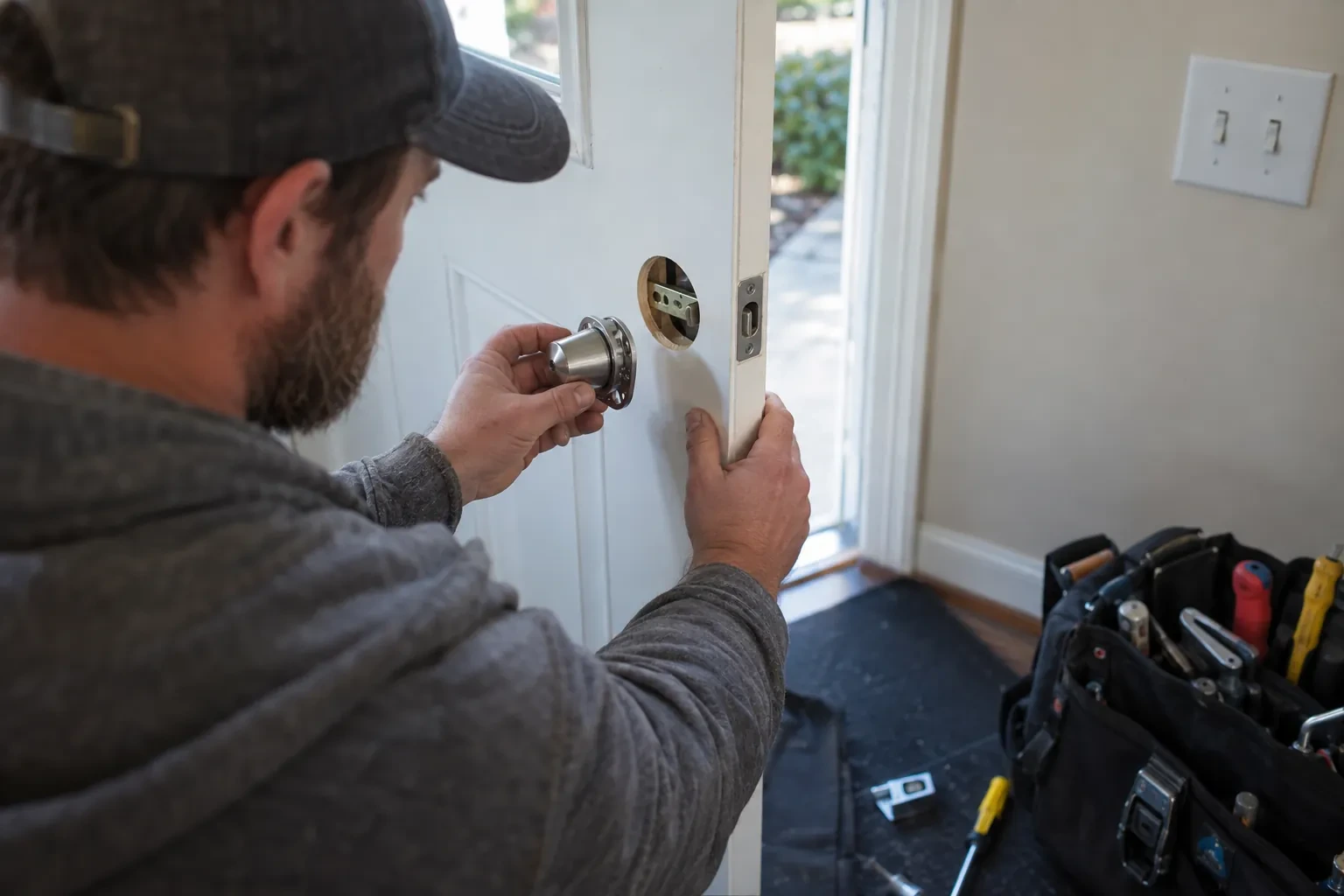
Ground movement shows up as a lock problem long before anyone thinks to blame the post. The locksmith checks whether the gate post has lifted, tilted or settled relative to the latch post it is supposed to line up with, and by how much, since a small seasonal shift is different from a post that has genuinely moved for good. This distinction decides whether the fix is resetting the strike position for now or addressing the post itself, and it keeps the same misalignment from returning with the next frost.
Working on the cylinder itself
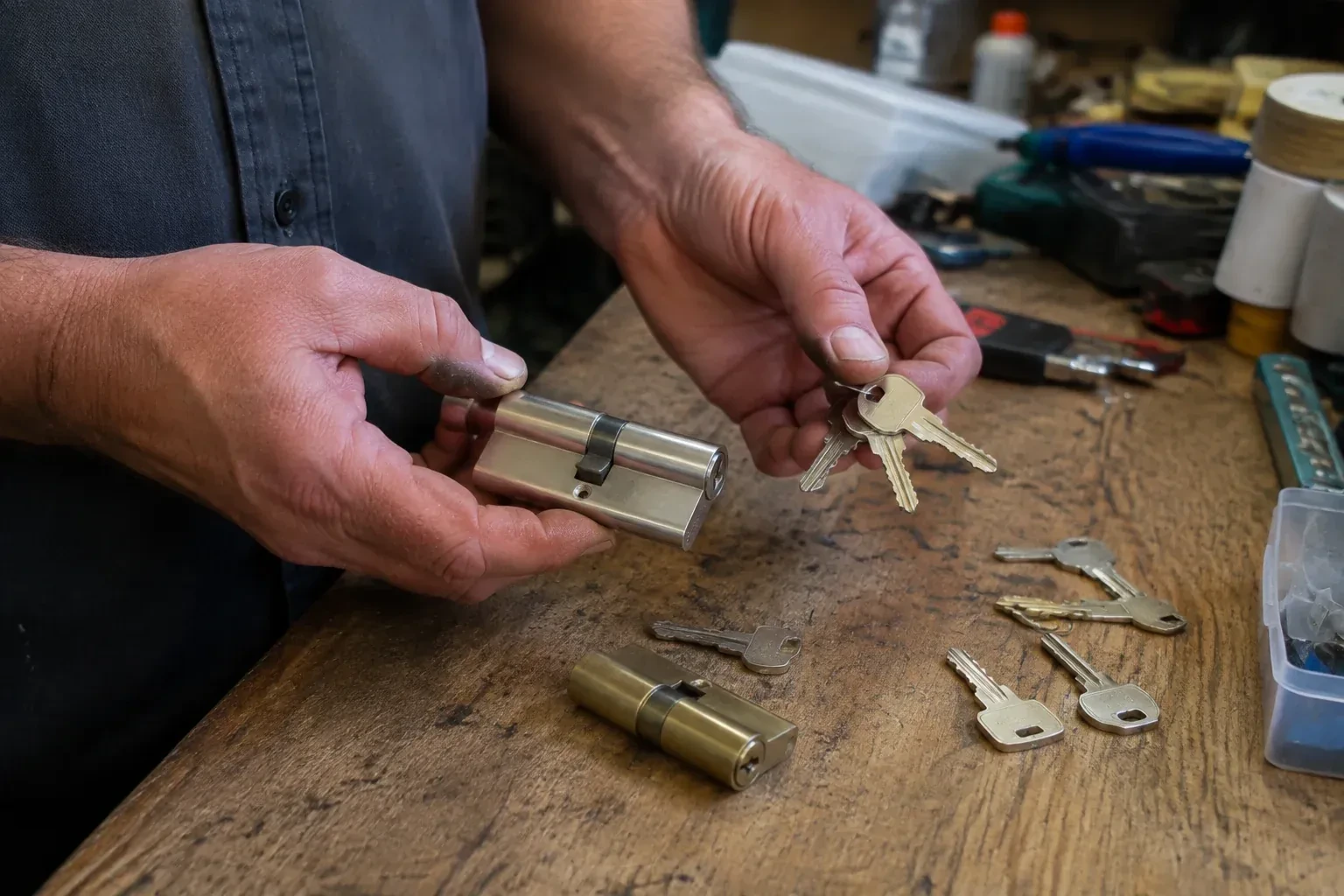
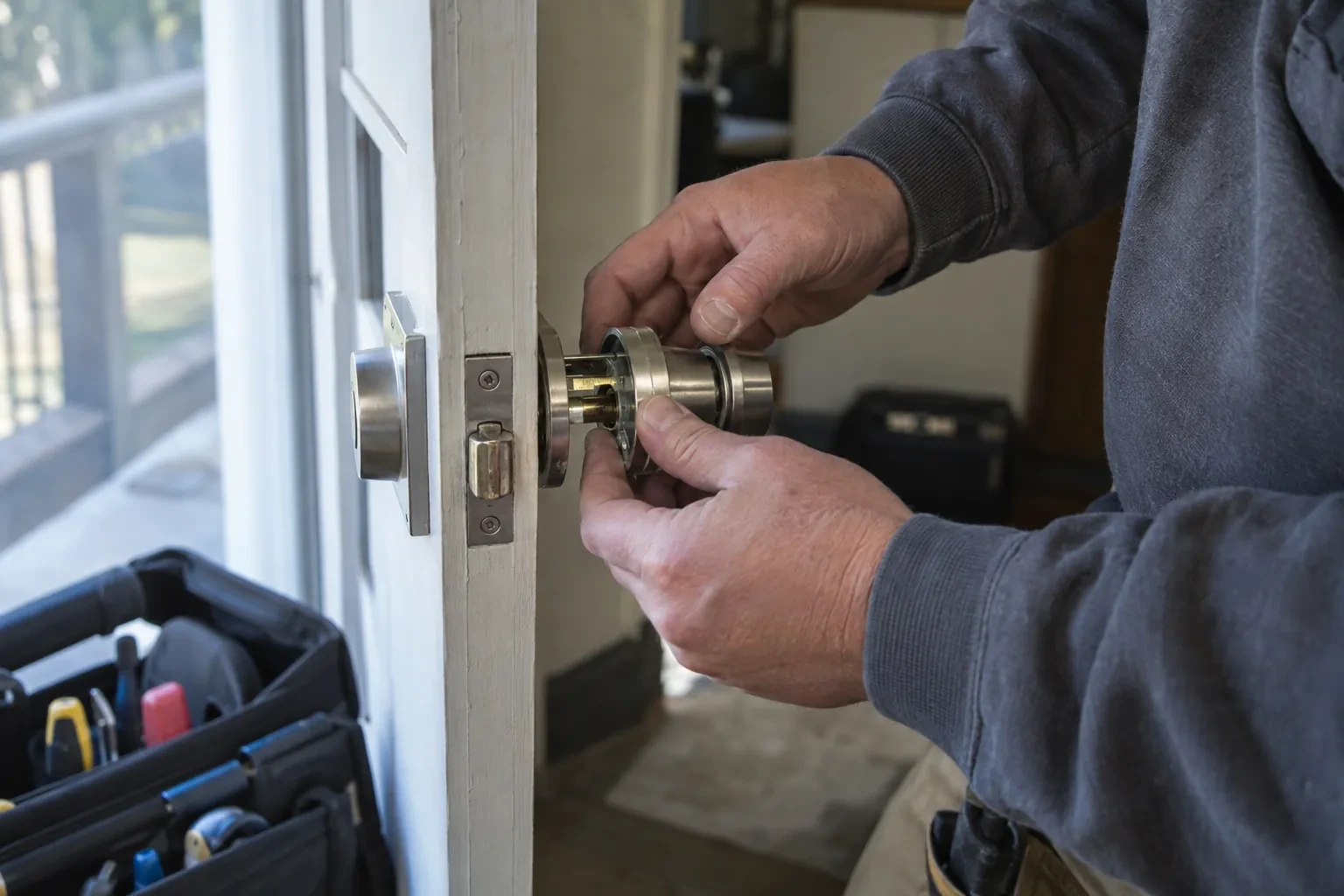
Depending on what the assessment found, the cylinder is either rekeyed, replaced with a weather-rated unit, or decoded so a fresh key can be cut to match it. Rekeying removes the existing pin combination and sets a new one, so old keys stop working while the same housing stays on the gate. A full replacement suits a housing that is worn, pitted or the wrong grade for outdoor use. Either way, the new or updated cylinder is cycled repeatedly with the new key, from both sides where the hardware has two, before it is considered finished.
A record for the owner or property manager
You leave with a plain account of what changed: which cylinders were rekeyed or replaced, how many new keys were cut and to whom, whether any gate was brought onto a shared key or deliberately kept separate, and what was adjusted on the closer, strike or post. For a rental or a condo, this note is worth passing to whoever manages the building, since it settles later questions about who currently holds a working key without anyone having to guess or ask around.
Gate & Building Entry Locks
In the van
Dry graphite or PTFE lubricant
Voltage tester for electric strikes
Key blanks and code cutter
Cylinder decoder and pick set
Weather-rated cylinders
Gate & Building Entry Locks
What affects the quote
Whether keys need coordinating across doors
Rekeying a single lock is one task. Bringing several gates or a shared entry onto one common key, or setting up a master key arrangement across a property, adds planning and cylinder work beyond a single rekey.
Any damage from a prior forced entry
Where pry marks, a bent strike or a cut hasp are found, repairing or replacing that damaged hardware is additional to a routine lock adjustment, and the locksmith points out what was already there before quoting it.
Whether the post or frame needs correction
When the underlying cause is a leaning post or a shifted frame rather than the lock itself, resetting, packing or bracing that structure is quoted as its own item alongside the lock work.
What to have ready
- Are there other gates on the property that should share a key?
- Is the gate wood, metal, aluminum or vinyl?
- Does the entry have a buzzer, keypad or electric strike?
Gate & Building Entry Locks: questions
QuestionsWhat is a good option for a gate that delivery drivers or a maintenance crew need occasional access to?
A keypad or a lockbox with a rotating code works well there, since access can be shared without handing out a physical key that has to come back later. A weather-rated cylinder with a separate access key is another option if the property already runs on a keyed system. The locksmith can talk through how often the code should change and who on site should know it, so the gate stays convenient without staying open to everyone.
Should every gate on my property share one key, or is it better to keep them separate?
Either can make sense, and the choice usually comes down to who uses which gate and how often. A household that walks through the front and side gates daily generally prefers one key for both, while a gate that only a landscaper or utility worker uses is sometimes kept on its own key deliberately, so lending it out does not hand over access to everything else. The locksmith can lay out both options once every gate on the property has been looked at.
How do you decide whether to repair a gate lock or replace it?
The decision follows what the assessment actually finds rather than the age of the hardware alone. A cylinder that is only stiff or slightly worn is usually serviced and left in place, while one that is pitted, cracked or built to a grade unsuited to its exposure is replaced. The same logic applies to a closer or hinge: adjustment first, replacement only once the part itself has genuinely failed. You are told which category the hardware fell into and why before any work proceeds.
Related services
- Deadbolt InstallationThe old deadbolt has grown lazy.
- Lock Replacement & UpgradeThe house is fifteen years old and every exterior door still wears the light hardware the builder fitted: a short bolt, a thin strike held by two small screws, and a knob lock that never suited a street entrance.
- Vintage Mortise Lock ServiceThe old skeleton key still fits the keyhole, but it now needs a jiggle, a lean on the door and a little luck before the bolt moves.