Commercial
Commercial Locks
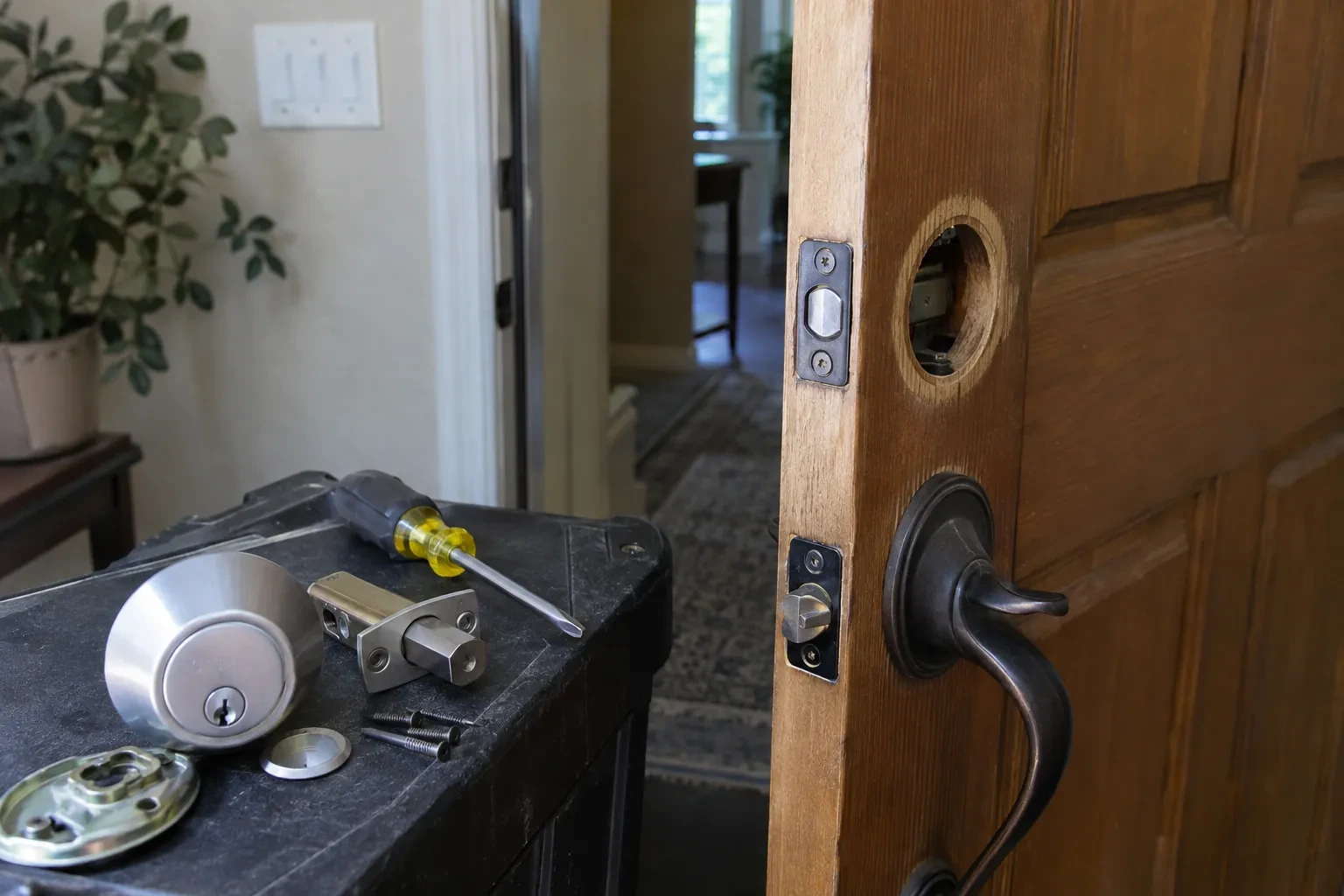
Commercial doors carry more hardware than most people notice: cylinders, exit devices, closers, strikes, keypads. When one part fails the door stops behaving. We service and replace all of it and set up key systems that survive staff changes.
Which one do I need?
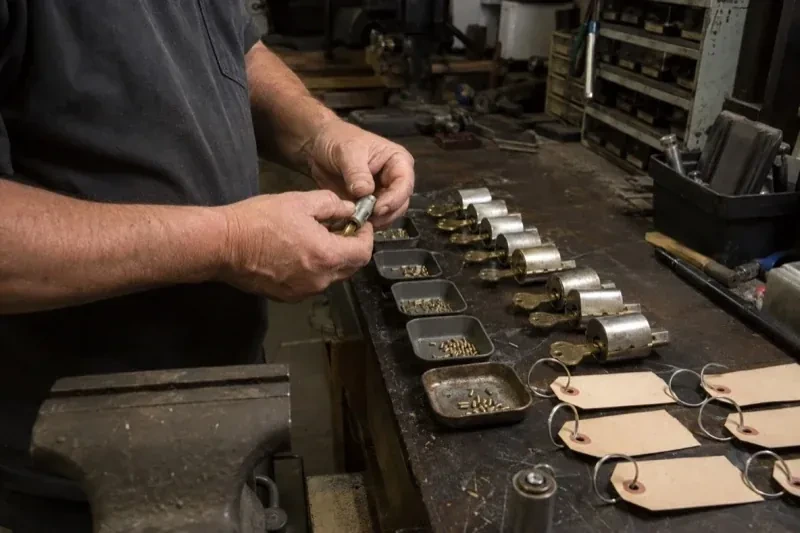
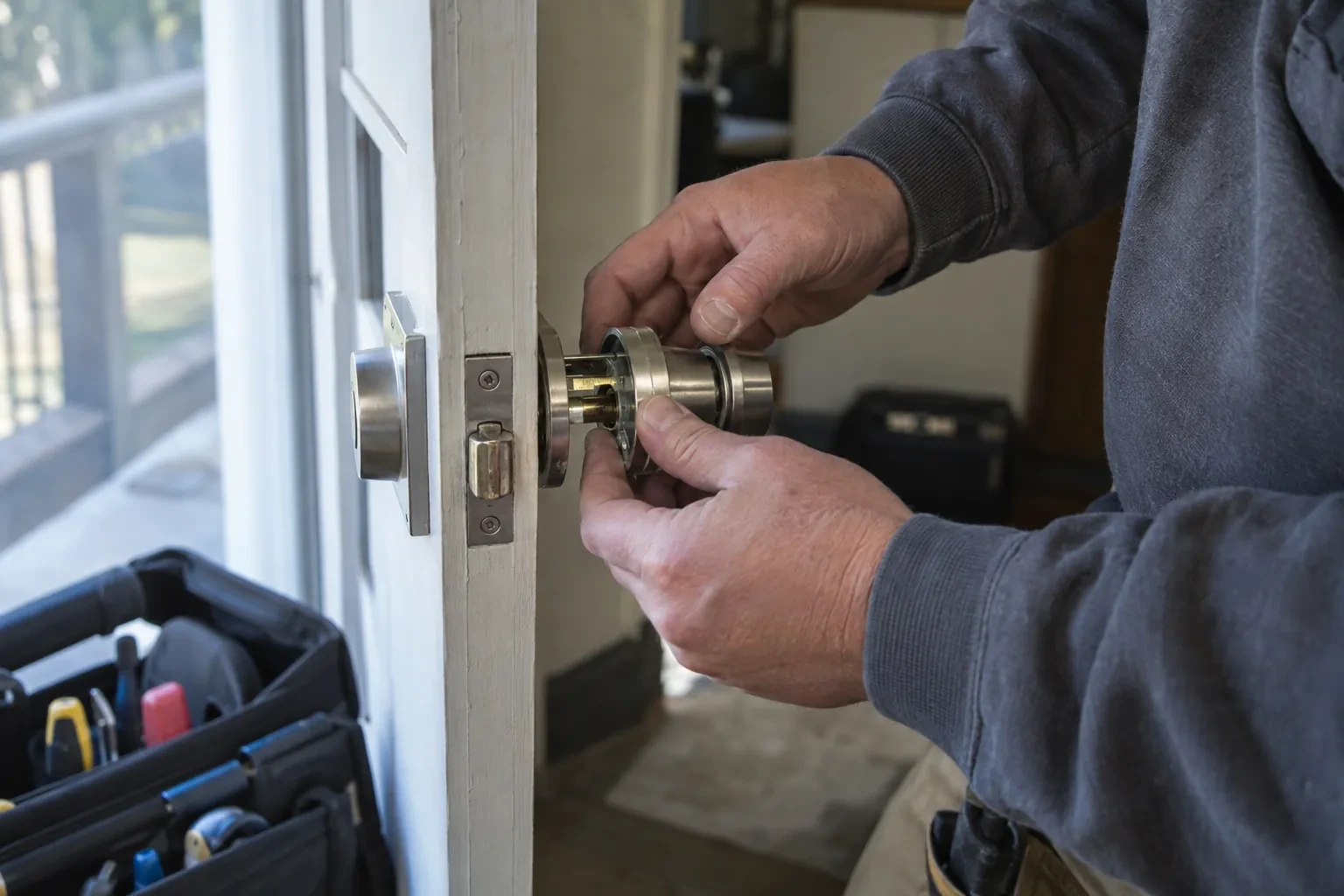
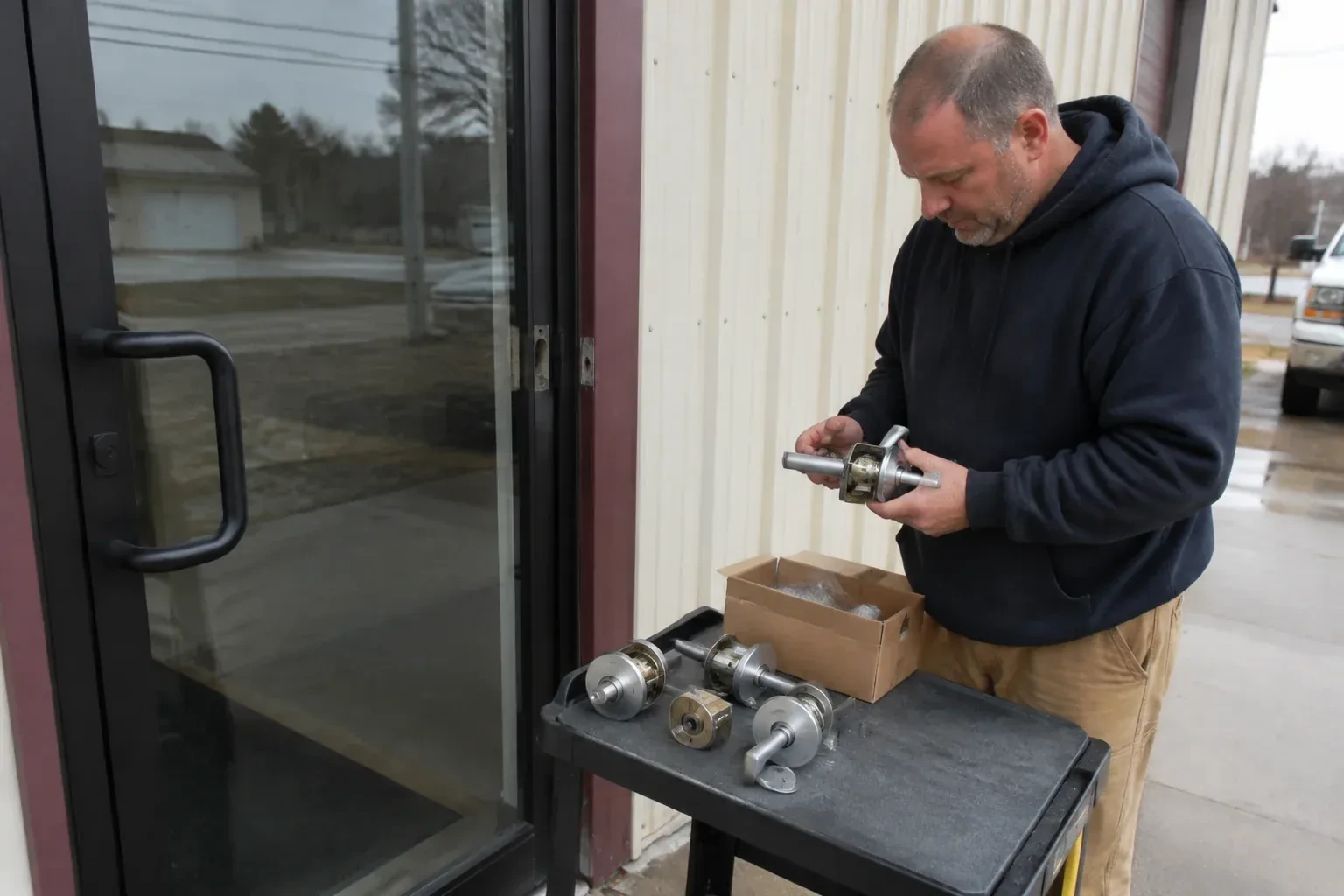
- The office has been reshuffled twice since the locks were last touched.Commercial Rekeying
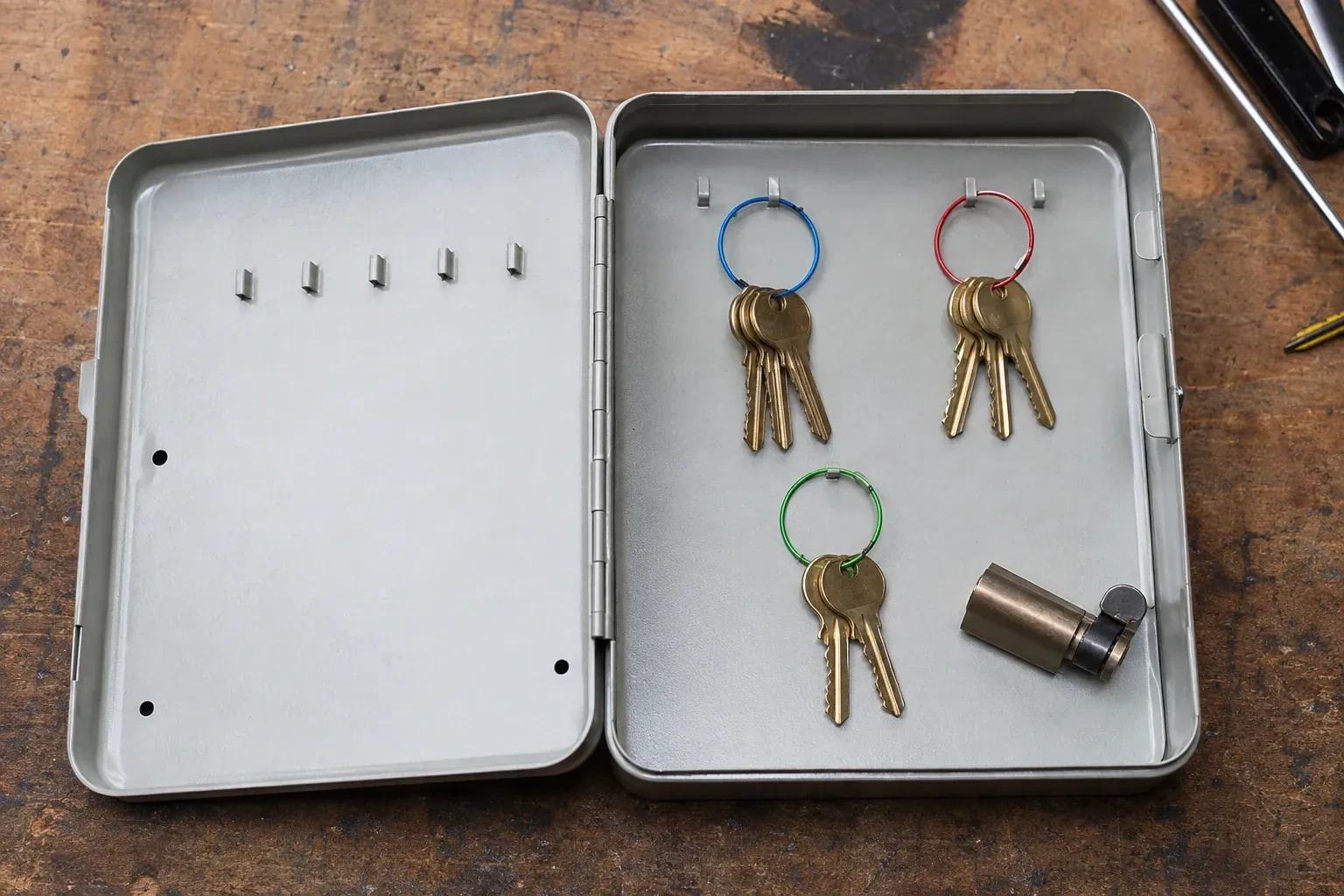
- The new wing was built with its own brand of cylinder, so the two-year-old keys from the original building do not open a single door in the addition.Master Key System Design
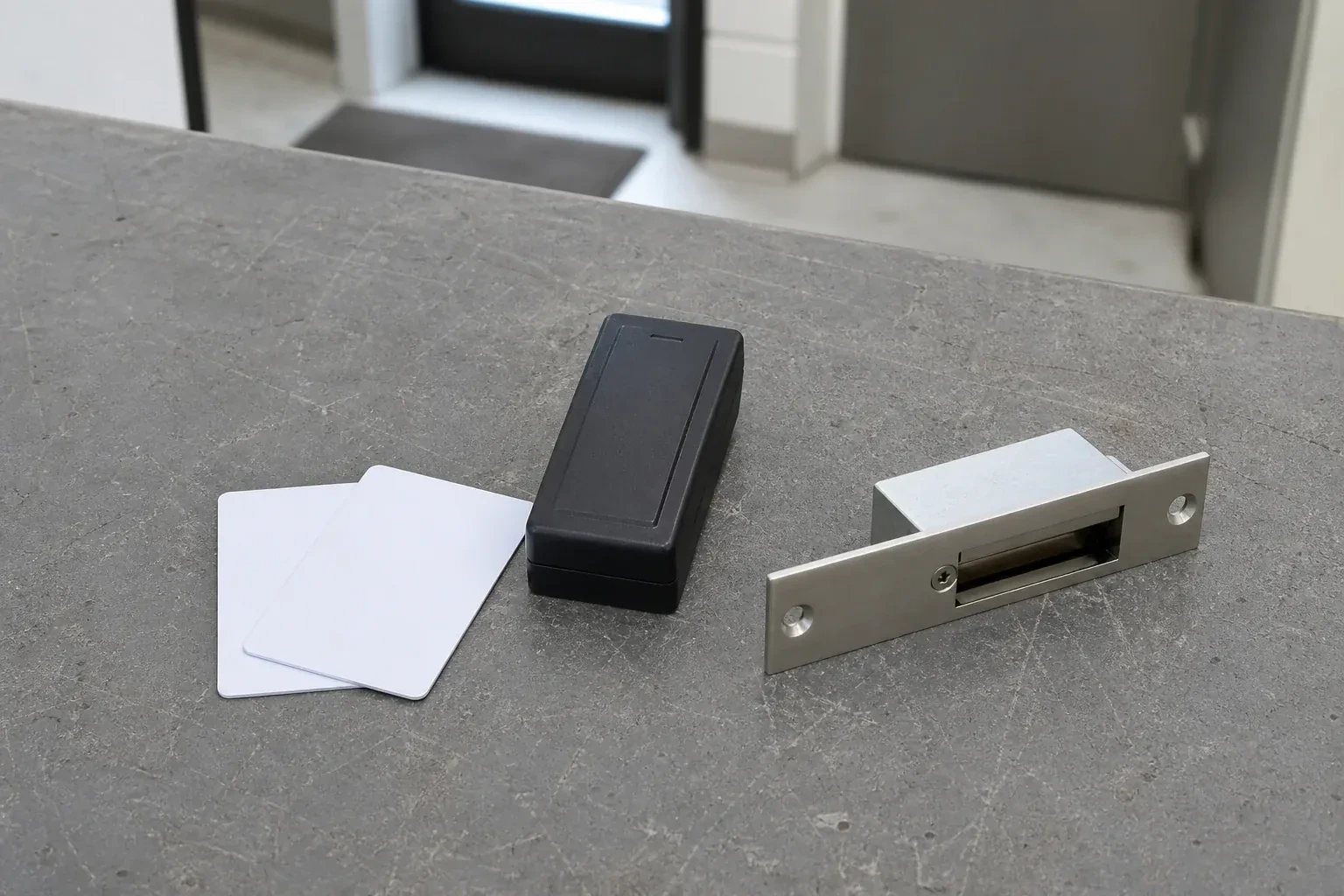
- The keypad on the side door has started sticking on cold mornings, codes get shared instead of reset, and half the staff still remember a code you meant to retire two hires ago.Access Control Installation
- The new access-control reader at the staff entrance works fine going in, but nobody has sorted out the door's exit side, and right now a card reader and a pushbar exist as two separate ideas.Panic & Exit Hardware
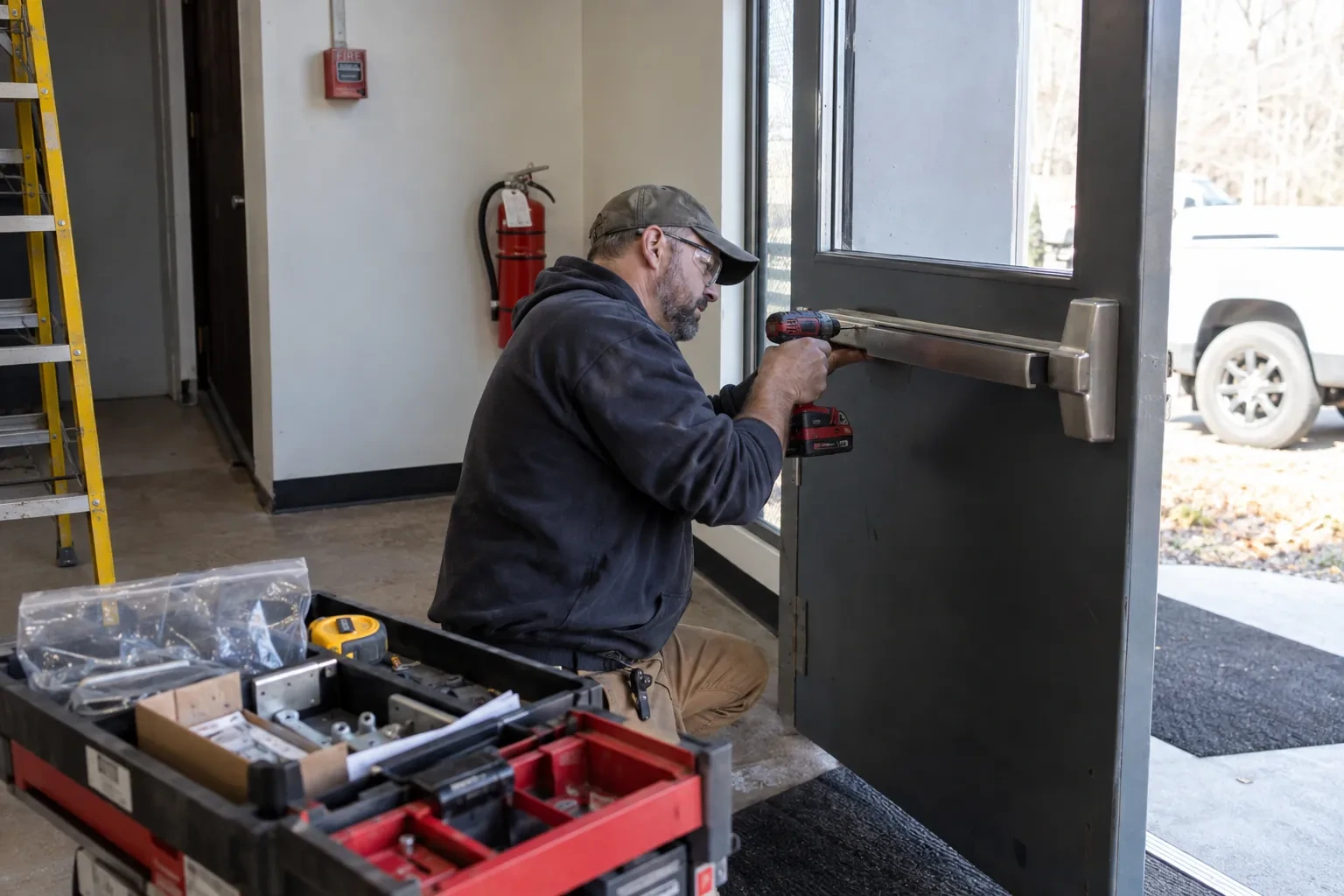
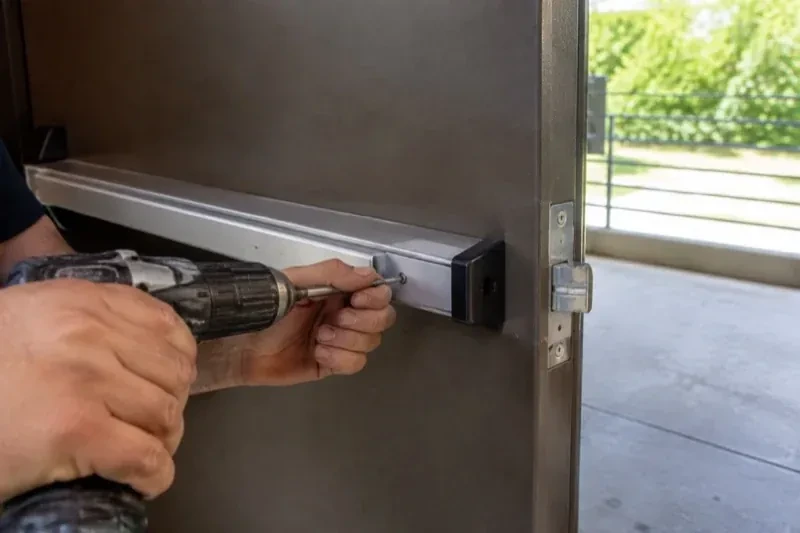
- An inspection report flagged the rear exit as needing hardware that opens with one motion and no key, and that door currently has an ordinary keyed knob on the inside.Commercial-Grade Lock Replacement
Commercial Locks
Locks for shops, offices and buildings: rekeying at turnover, commercial-grade hardware, exit devices, master key systems and access control.
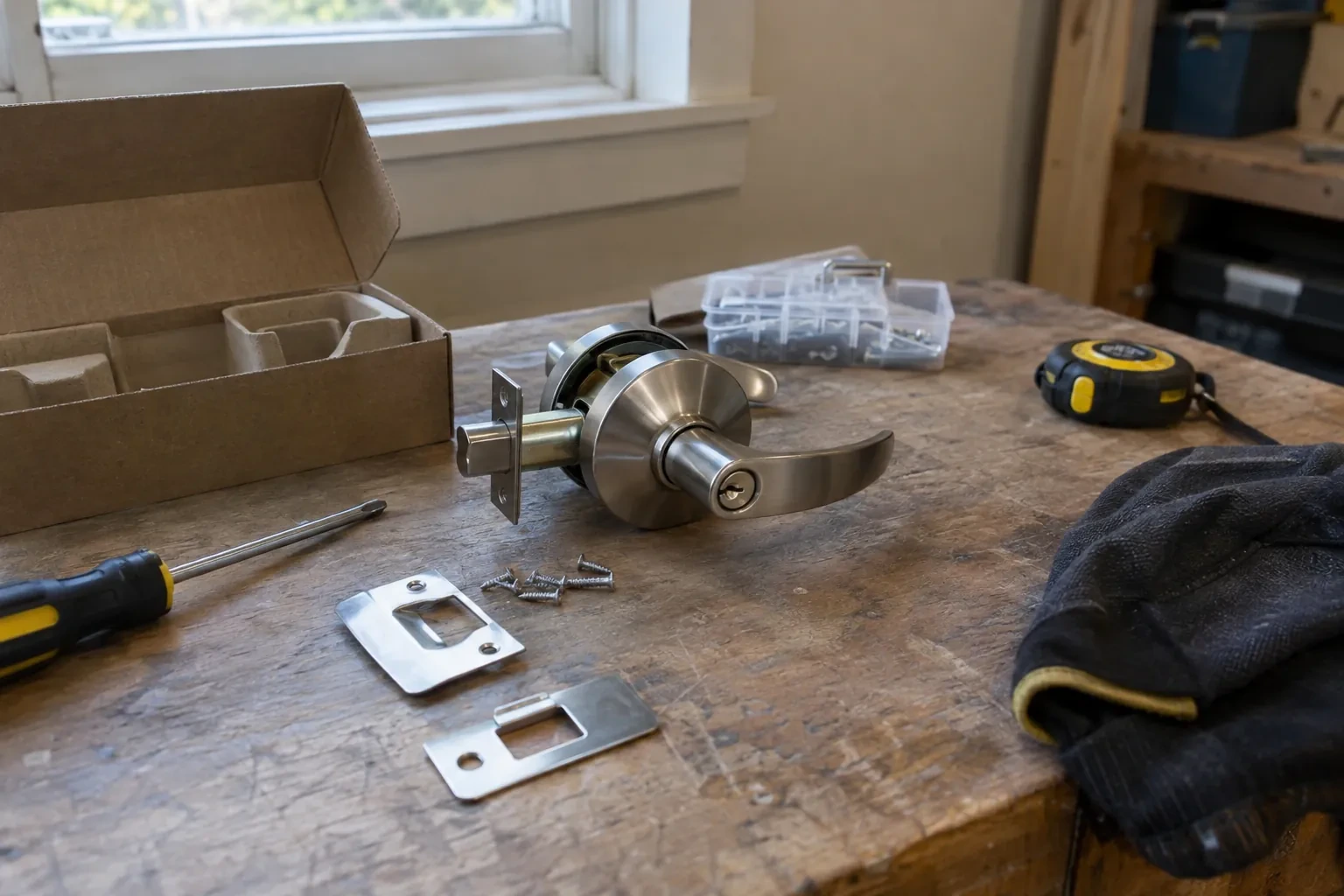
Commercial Rekeying
Choosing the window and the order of doors
The last part of the assessment is practical: when can the work happen, and in what order. A retail shop may prefer the hour after closing; a restaurant, the mid-morning lull; a warehouse, the gap between the last outbound truck and the night shift. The locksmith also asks about deliveries, the cleaning crew, the alarm monitoring company and anyone else who holds a key and needs a new one before their next visit.
From this comes a sequence, typically the doors staff use least first and the main entrance last, so there is always a working, lockable way in and out while the cylinders are being changed.