Lockouts · Southcrest Estates
Broken Key Extraction in Southcrest Estates
The padlock on the shed has been stiff all summer.
In plain words
A car key that breaks in the door or the ignition is handled with the same extraction tools, with one difference. On most vehicles the plastic head of the key carries the transponder chip and the remote buttons, and that half is usually intact in your hand. Once the blade is drawn out of the lock, a new blade can often be cut and fitted to the existing head, so the chip keeps talking to the car without reprogramming. The ignition wafers are checked for disturbance and the steering lock is confirmed free. Proof of ownership is asked for before work begins.
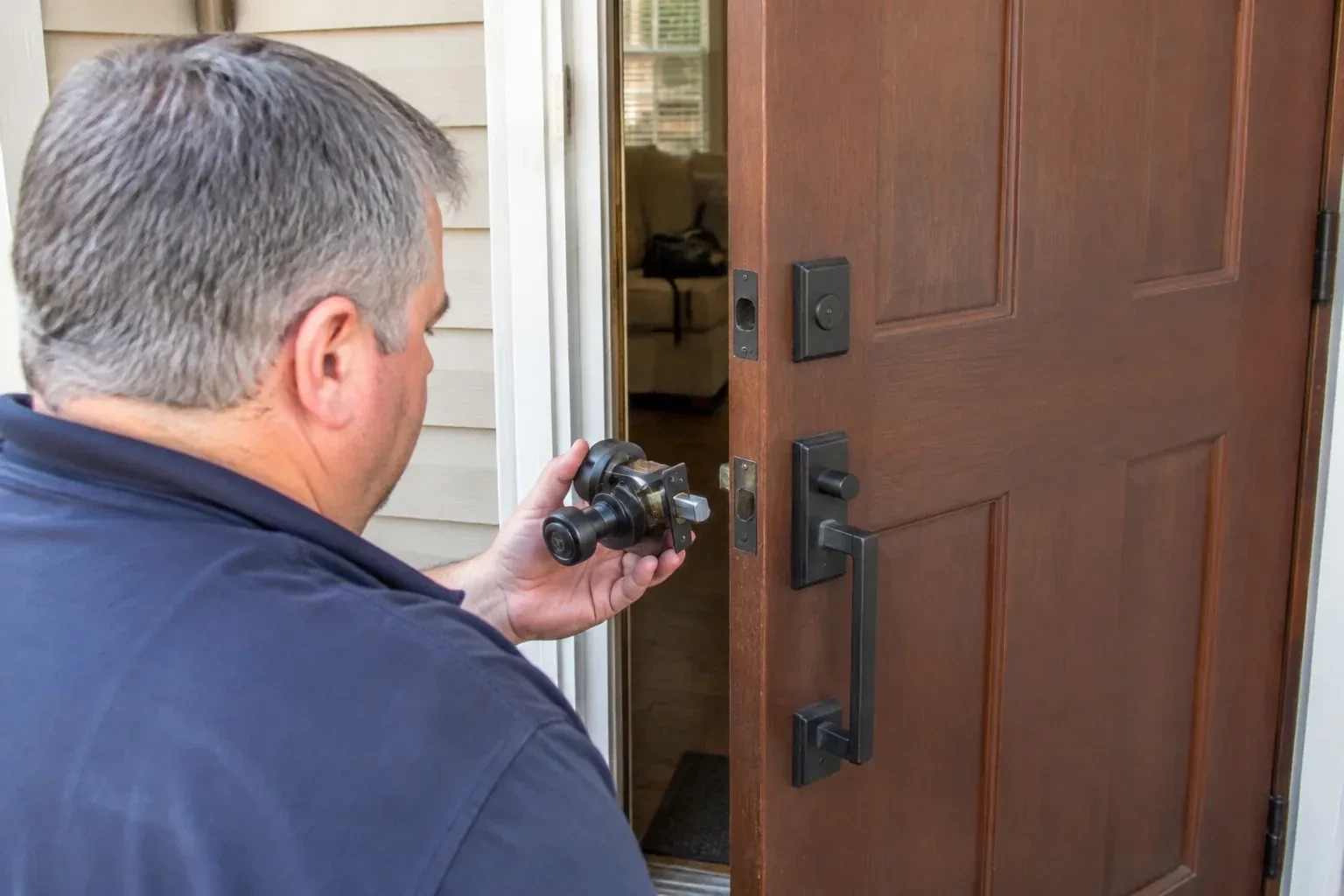
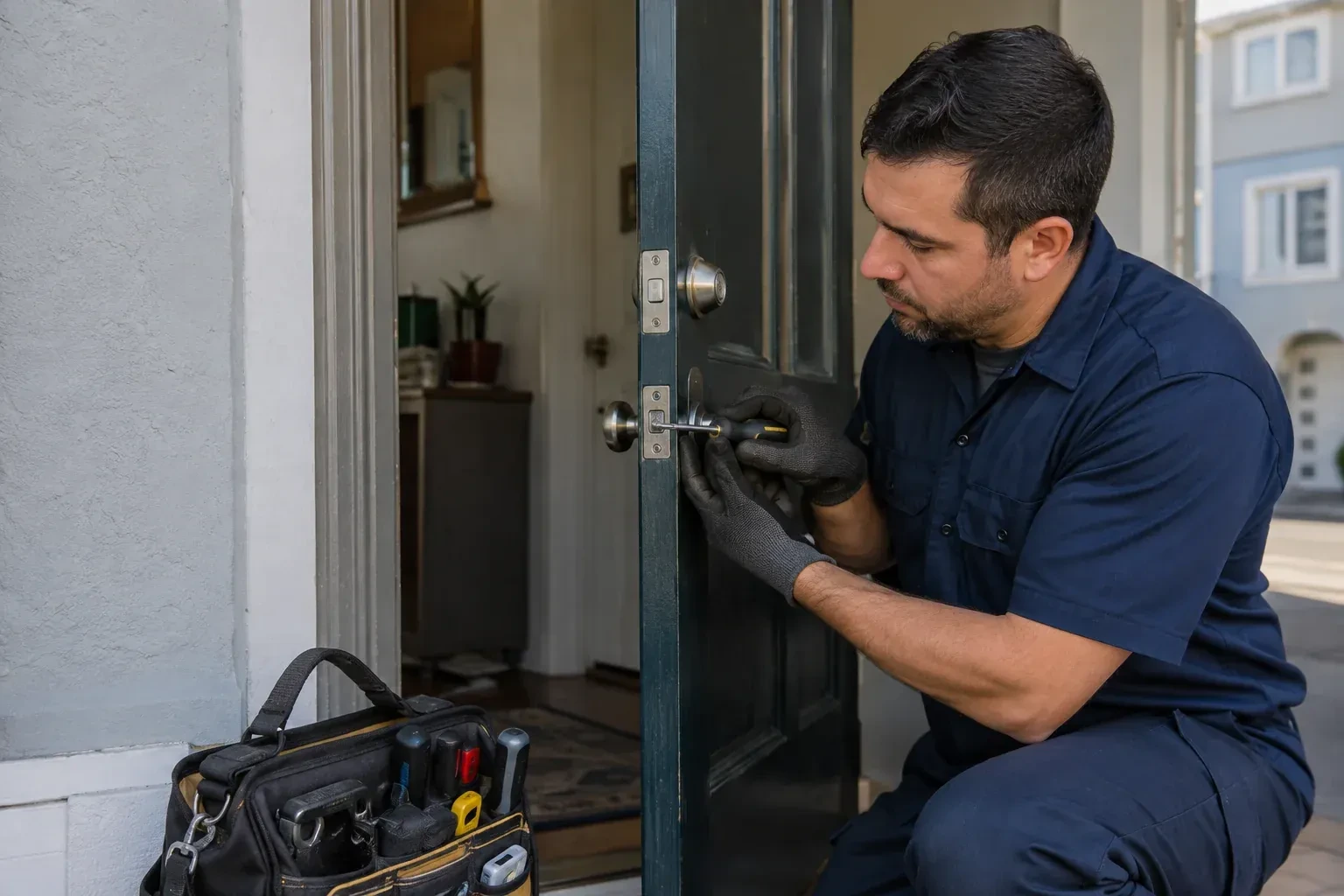
How the visit goesYou were locking up on the way out when the key broke in the lock. Now the door is unlocked, a piece of key is jammed in the cylinder, and you were already running late for work.
Broken Key Extraction
How the visit goes
How the piece is sitting
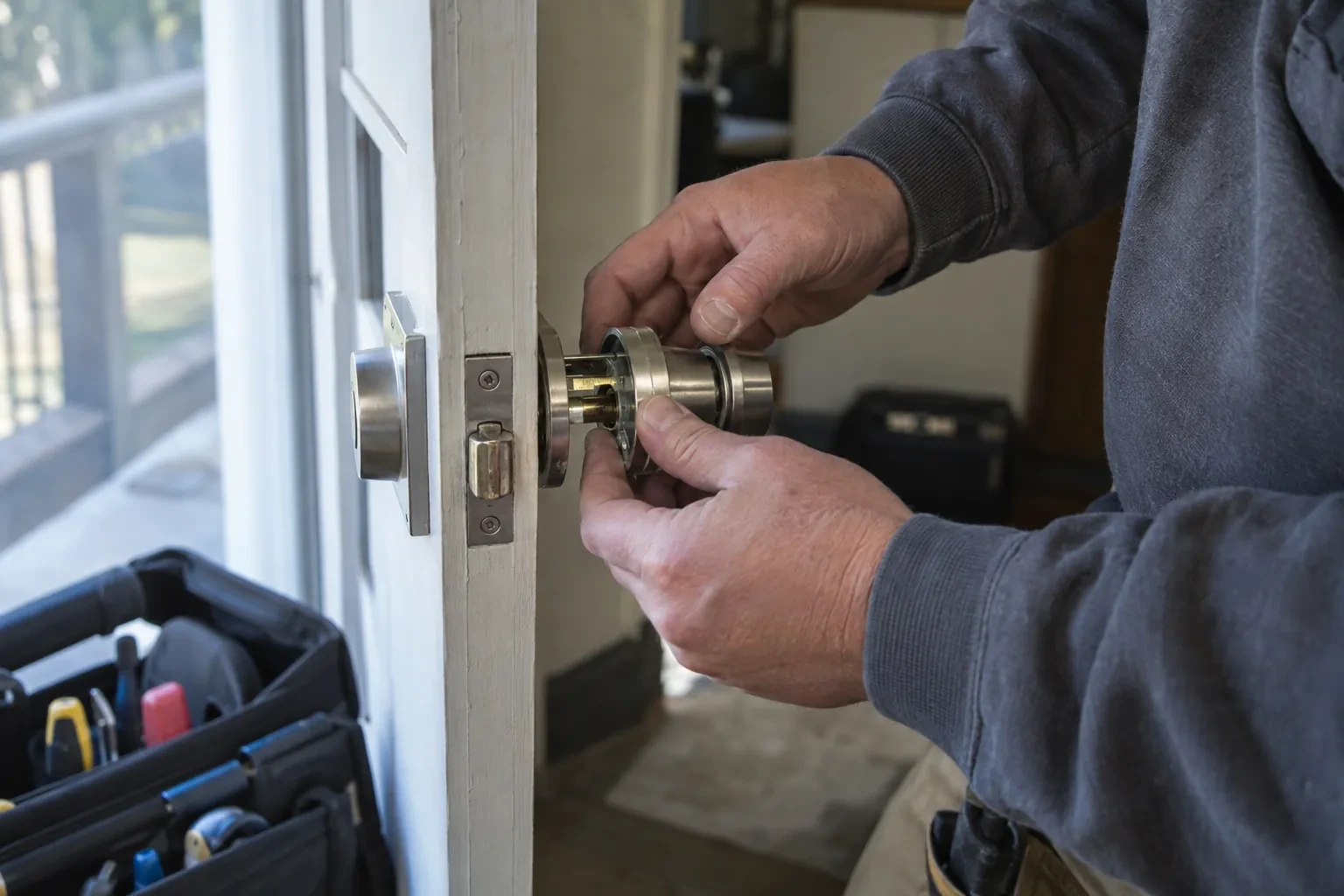
The first look is at the fragment itself, without touching it. Does any of the blade show above the cylinder face, or is it flush or deeper still? Is the plug sitting at its normal rest position, or did it stop partway round when the key gave way? A protruding piece in a resting plug is the simplest case. A fragment past the shear line in a rotated plug means the pins are holding it, and the plug has to be brought back before anything will slide. Reading this correctly decides which extractor comes out of the case and spares the keyway from needless probing.
Taking the cylinder apart to free it
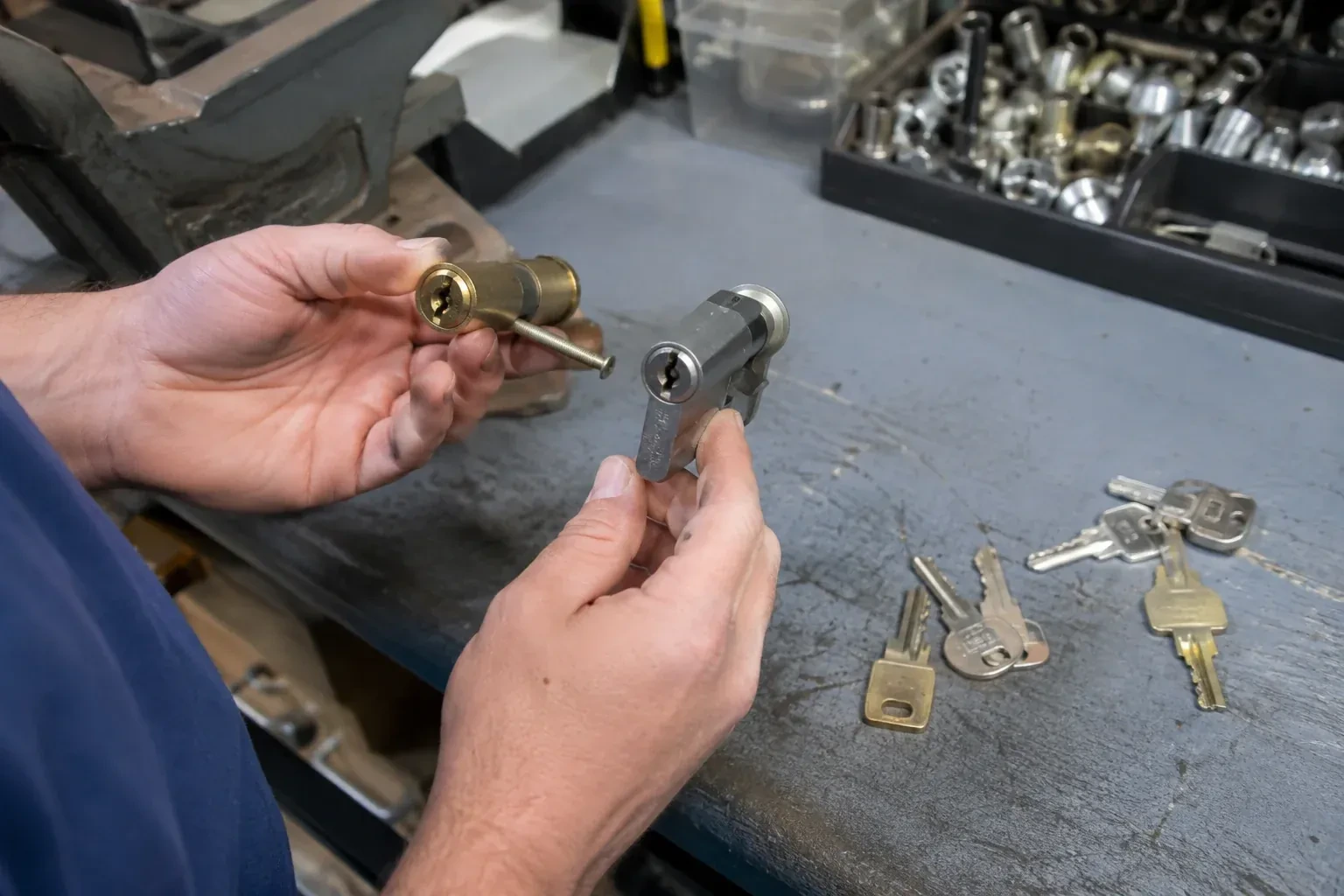
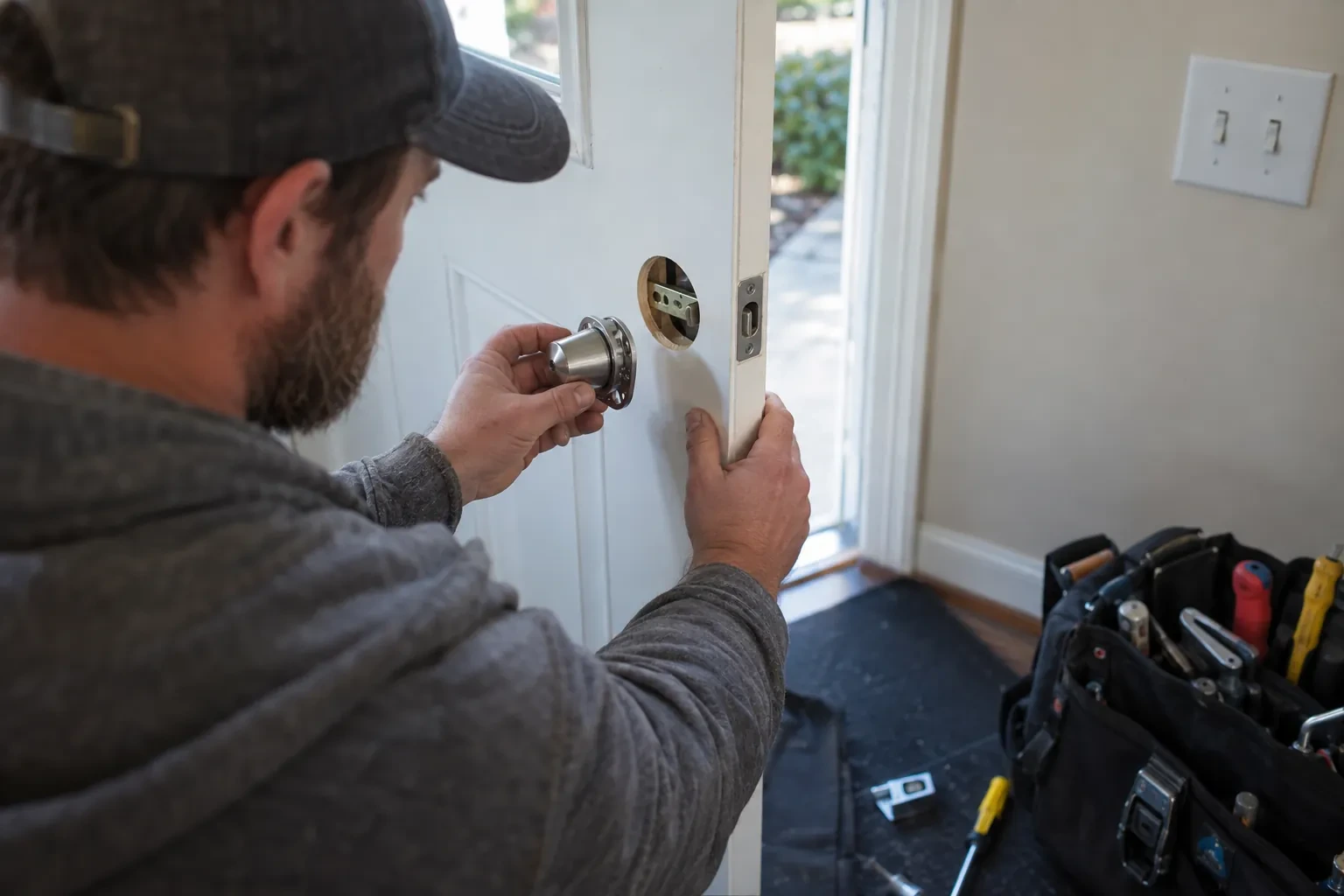
Occasionally a piece is too deep, glued in, or wedged past the pins where no extractor can reach. On a serviceable, removable cylinder, the lock is serviced from behind: removed from the door or padlock (a rekeyable padlock is normally unlocked first), its cap or retaining clip taken off, and a plug follower used to push the plug out while the top pins and springs stay in place. With the plug in hand the fragment is tapped out from the rear, the pins inspected, and everything cleaned before reassembly. Where the cylinder is non-rekeyable, damaged or will not free this way, a replacement cylinder is the alternative, explained first.
A lock that turns like it should
The visit closes with the lock proving itself. The new key goes in fully, turns through its full travel and comes out without a catch, from both sides, first with the door swung open, then with it shut against the strike. The bolt is watched seating fully in its pocket. You are shown the fragment that came out and told what condition the cylinder was in. Anything the locksmith noticed, a strike screw backing out or a hinge that has dropped, is pointed out so it is not a surprise later. The door is locked with your own new key as the last act of the visit.
Broken Key Extraction
In the van
Hook key extractors
Key blanks and code cutter
Replacement cylinder or deadbolt
Compressed air for the keyway
Lock de-icer
Broken Key Extraction
What affects the quote
Number of keys cut
Copies are counted individually. One replacement for a single occupant and four for a household are different lines, and you choose the number on the spot.
How deep the fragment sits
A piece standing above the cylinder face is the simplest case. One flush with the face or deep behind the pins takes longer, finer work with hooks and spirals, and the quote reflects that.
How the new key is made
Cutting from a key code or a crisp spare, decoding the two halves with a gauge, or cutting a restricted blank from system records each take different time and stock.
What to have ready
- Is it a car key with a chip or remote buttons in the head?
- Do you still have the other half of the key?
- Is the door or vehicle locked or unlocked right now?
Broken Key Extraction: questions
QuestionsWill the lock work again once the piece is out?
In most cases yes, and it is tested in front of you with a key that fits. The inspection after extraction is where the honest answer lives: if the pins, springs and cap are sound and the keyway is clean, the cylinder goes back into service with a fresh key. If wear or damage caused the break, that is explained and a rekey or new cylinder is offered as a separate choice.
Can you extract a key from a padlock, mailbox or filing cabinet?
Yes. Small cylinders in padlocks, mailboxes, desk drawers, filing cabinets and cam locks on lockers hold a fragment the same way a door does, and the same slim hooks and spirals fit them. Their keyways are narrower, so it is finer work. Where a padlock is not worth saving, the locksmith will say so and offer a cut-off and a new padlock keyed to your preference instead.
Do you need my spare key?
It helps if there is one. A crisp spare is the ideal pattern for the replacement, better than the broken halves and far better than a worn copy. It also lets the locksmith test the cylinder the moment the fragment is out, which shows whether the pins and springs are sound. If the spare is itself bent or worn, mention that too; it is a candidate for retirement rather than a pattern.
Related services

- Business Lockout ServiceIt is ten to nine, three staff are on the sidewalk with their coffees, and the key that has opened the glass front door for six years will not turn.
- Break-In Damage Lock RepairThere is a hole where the cylinder used to be.
- Seized & Jammed Lock OpeningEvery time you pull the key out of the side door it comes away gritty.