Lockouts · Manor Park
Broken Key Extraction in Manor Park
The padlock on the shed has been stiff all summer.
In plain words
Keys break for a reason, and finding that reason is half the visit. A brass key wears thinnest at its deepest cut, and after years of turning it fatigues there until a cold morning or a stiff bolt finishes it. Sometimes the lock is the culprit: grit in the keyway, a loose cap, worn pins, or a door that has dropped so the bolt binds and the key takes the strain. The extraction removes the piece; the inspection that follows tells you whether the lock needs a clean and lubricant, an adjustment, or a new cylinder, so it does not happen again next month.
How the visit goesIn the parking lot your car key snapped in the driver's door. You are holding the plastic head with the buttons on it, the metal blade is inside the lock, and the spare is on a hook at home.
Broken Key Extraction
How the visit goes
Reading the cylinder for the cause
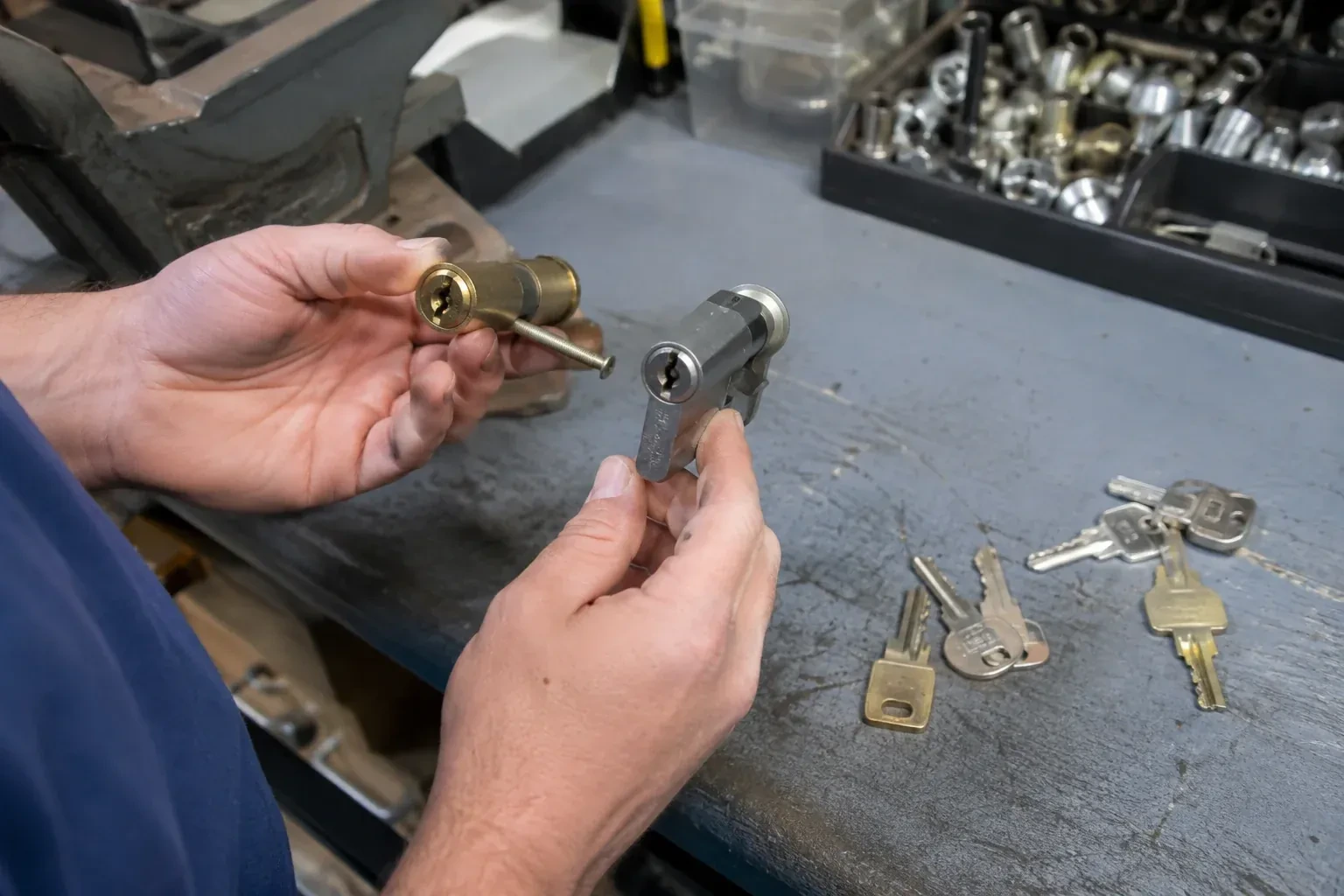
Even a lock in good order can break a key that was already worn, bent or fatigued, so the cylinder is examined for a contributing cause all the same. The locksmith looks for grit and salt crust in the keyway, a cylinder cap that has loosened and let the plug shift, pins that have worn flat so the key needs force to lift them, springs that have weakened, and burrs at the mouth of the keyway that drag on the blade. On an exterior door the strike and hinges are checked as well, since a bolt that binds in its pocket makes the key carry the load. Each finding shapes the advice given once the fragment is out.
Thawing first on a frozen lock
A cylinder that broke a key because it was frozen needs the ice dealt with before the fragment will move. The locksmith works lock de-icer into the keyway, or holds gentle heat near the cylinder, until the ice inside liquefies and the plug loosens. Boiling water from the kettle stays indoors: it refreezes inside the keyway and can split a cold cylinder. With the plug free and at rest, the extraction proceeds as normal. Afterwards the cylinder is dried thoroughly and given a water-repelling dry lubricant rather than one that traps moisture, so the same morning is far less likely to repeat.
A key cut from the pattern, not the wear
You leave with a key that was cut to the lock's original specification rather than traced from the tired blade that just failed. That difference shows every time you use it: it seats fully, lifts each pin cleanly and turns without a wiggle. Two or three copies made from that fresh cut give you spares that are as good as the first. The old bent or thinning keys that shared the ring are worth retiring now, because a key that has started to bend has started to crack, and the next one to snap will be one of them.
Broken Key Extraction
In the van
Hook key extractors
Key blanks and code cutter
Replacement cylinder or deadbolt
Compressed air for the keyway
Lock de-icer
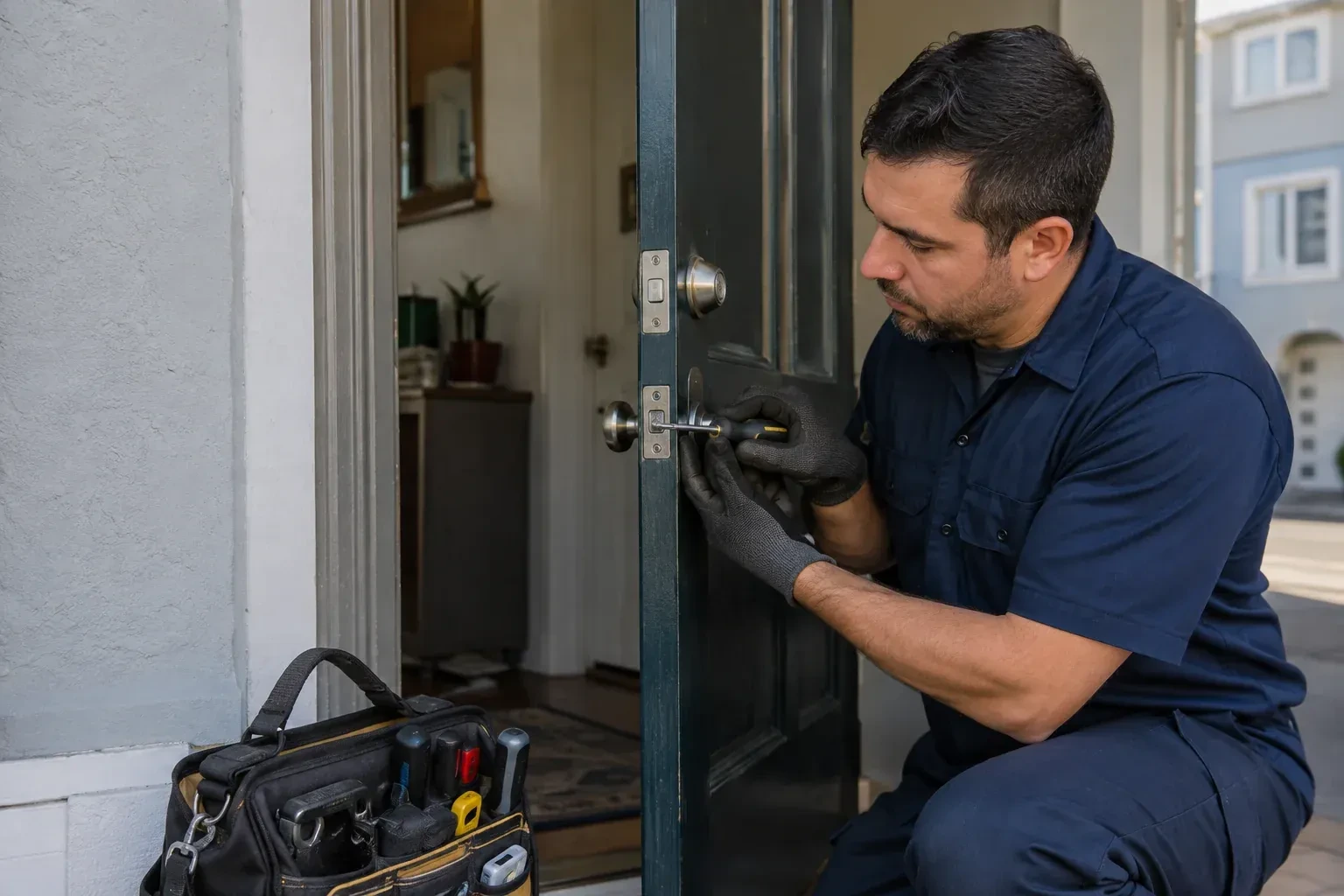
Broken Key Extraction
What affects the quote
Weather on the day
A cylinder that is frozen or iced has to be thawed and dried before extraction can begin, so a call during a deep freeze carries that patient extra time.
When you call
Whatever hour you call about a broken key extraction — morning, evening, a weekend or a holiday — the amount is the same. Locksmiths are reachable at any time, and the exact figure is confirmed on site once the technician has seen how deep the fragment sits.
Number of keys cut
Copies are counted individually. One replacement for a single occupant and four for a household are different lines, and you choose the number on the spot.
What to have ready
- Is the door or vehicle locked or unlocked right now?
- Do you have a spare key that works, or the key code tag from the lock?
- Do you still have the other half of the key?
Broken Key Extraction: questions
QuestionsWill the lock work again once the piece is out?
In most cases yes, and it is tested in front of you with a key that fits. The inspection after extraction is where the honest answer lives: if the pins, springs and cap are sound and the keyway is clean, the cylinder goes back into service with a fresh key. If wear or damage caused the break, that is explained and a rekey or new cylinder is offered as a separate choice.
Can you extract a key from a padlock, mailbox or filing cabinet?
Yes. Small cylinders in padlocks, mailboxes, desk drawers, filing cabinets and cam locks on lockers hold a fragment the same way a door does, and the same slim hooks and spirals fit them. Their keyways are narrower, so it is finer work. Where a padlock is not worth saving, the locksmith will say so and offer a cut-off and a new padlock keyed to your preference instead.
Do you need my spare key?
It helps if there is one. A crisp spare is the ideal pattern for the replacement, better than the broken halves and far better than a worn copy. It also lets the locksmith test the cylinder the moment the fragment is out, which shows whether the pins and springs are sound. If the spare is itself bent or worn, mention that too; it is a candidate for retirement rather than a pattern.
Related services

- Business Lockout ServiceIt is ten to nine, three staff are on the sidewalk with their coffees, and the key that has opened the glass front door for six years will not turn.
- Break-In Damage Lock RepairThere is a hole where the cylinder used to be.
- Seized & Jammed Lock OpeningEvery time you pull the key out of the side door it comes away gritty.