High security · Westmount
Safe Opening & Combination Change in Westmount
A customer's rifle safe at the range has a dial that simply will not respond to the combination written on the sales receipt from years ago.
In plain words
A safe that arrives with no history at all, through an estate, an auction or a property changing hands, gets treated as an unknown until the locksmith reads it directly: the data plate, the lock type, the dial or keypad style, and any wear that hints at its age. From there the opening proceeds exactly as it would for a known safe, and afterward a fresh combination replaces whatever was set by owners nobody can ask.
How the visit goesThe bookkeeper who set the office safe's code retired in a hurry, and the float cash for tomorrow's registers is sitting behind a keypad nobody else in the building can operate.
Safe Opening & Combination Change
How the visit goes
Confirming who has the authority to open it
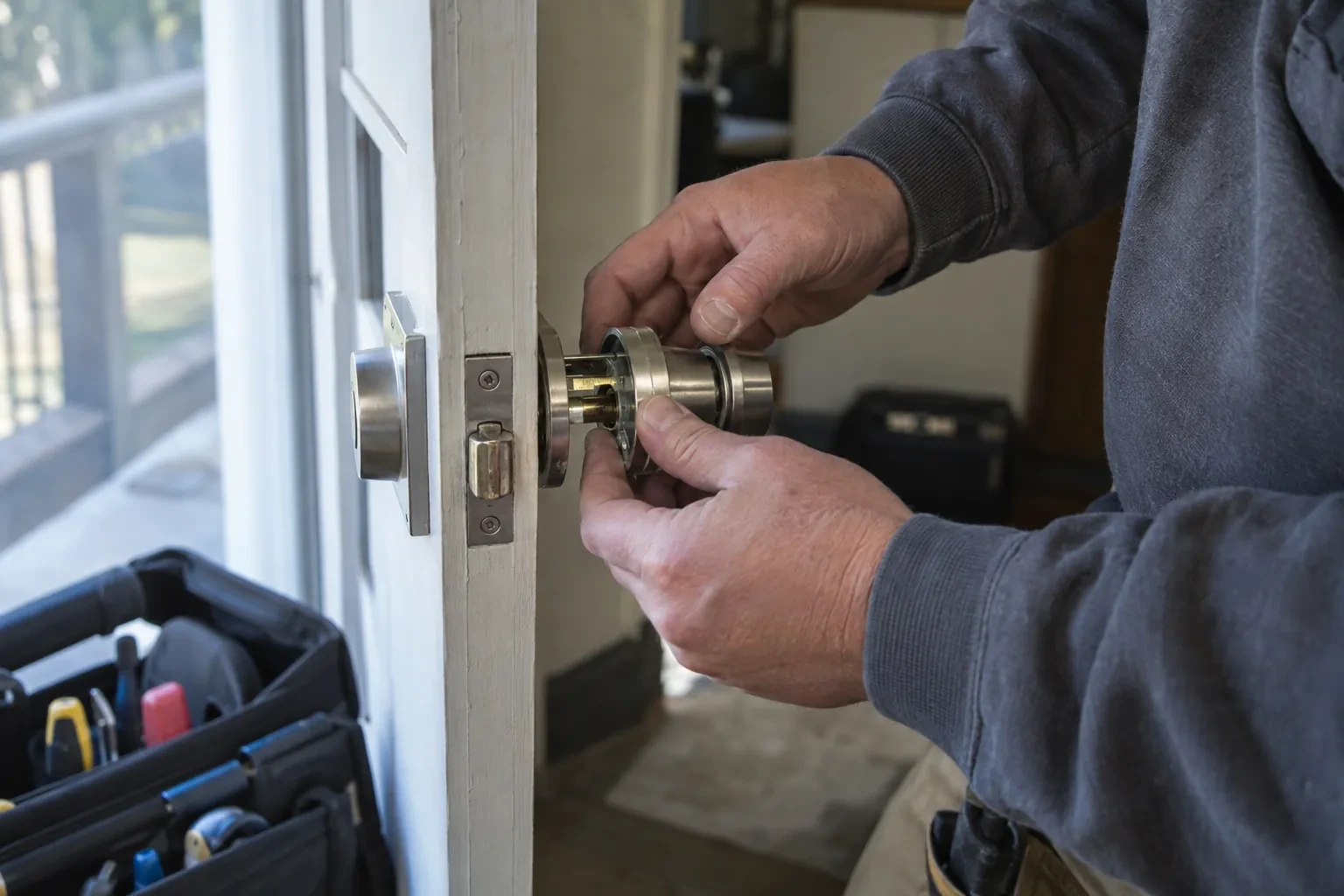
Before any tool touches the safe, the locksmith establishes who has the right to be inside it. For a business this is usually straightforward: an owner, manager or authorized employee identifies themselves and their connection to the account. For an estate, a secondhand purchase or a change of ownership, proof such as a bill of sale, a property transfer or an executor's documentation fills the same role. This step is treated as routine good practice rather than an obstacle, because it protects the current owner from a later dispute over who authorized access to a safe's contents just as much as it protects anyone else with an interest in it.
Least invasive first, on every safe
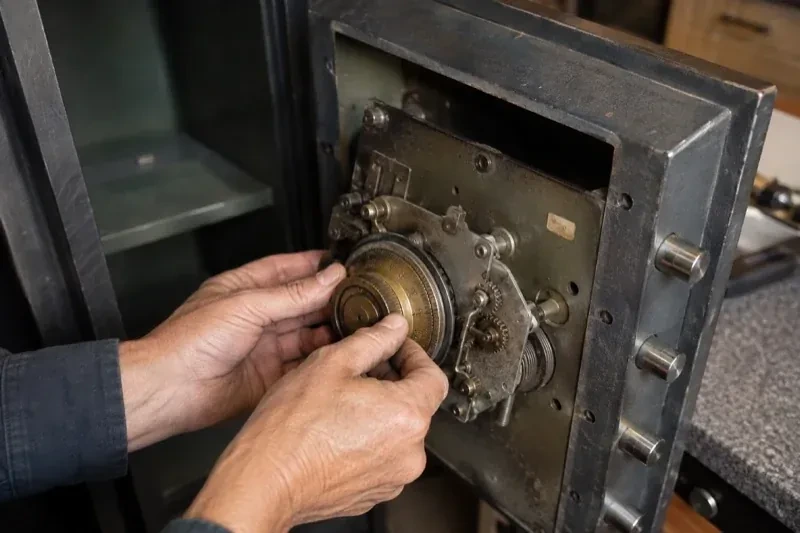
Opening a safe is planned around the specific lock, its condition and what recovery options it actually has: manipulation or decoding for a mechanical dial, a manufacturer reset or override path for an electronic keypad where one exists, and drilling where the gentler routes are unavailable or exhausted. This order exists because a safe's lock, dial ring and case finish are the hardest parts to replace cleanly, so any method that leaves them intact is worth the extra time it takes. Working through the ladder in order, rather than jumping to the most direct option, is what keeps the great majority of safes leaving the visit with their original lock still in place.
Giving more than one person a way in
Many electronic locks support more than one user code, which means a manager and a designated backup employee can each be set up with their own working code during the same visit, rather than the business depending on a single person again. A mechanical dial cannot offer separate codes the same way, but a documented plan for who holds the combination and how it changes when staff do serves the same purpose. Either way, the point is the same: this reset should be the last one caused by a single departure catching everyone else by surprise.
Safe Opening & Combination Change
In the van
Replacement wheel pack
Manipulation and tension tools
Replacement dial and ring
Dial decoding instrument
Drill rig and carbide bits
Safe Opening & Combination Change
What affects the quote
Multiple safes or vaults at one site
A property with more than one safe, such as a retail floor safe and a separate office unit, is quoted as a longer visit covering each one in turn.
Security rating of the existing lock
A higher-rated lock, such as a UL Group 1 mechanical lock, generally takes longer to manipulate or decode than a basic Group 2 lock, and that time is reflected in the visit.
Where the safe is located
A safe bolted to a floor, built into a wall, or set in a tight closet or basement corner takes more time to work around than one standing freely in an open room.
What to have ready
- What brand and model is the safe, if you know it?
- Do you own the safe, or manage it for someone else?
- Has the safe been through a fire, flood or break-in attempt?
Safe Opening & Combination Change: questions
QuestionsDo you need to see proof that I own the safe before opening it?
Yes, and it is meant as a protection rather than a hurdle. For a business, identifying yourself as the owner, manager or an authorized employee is usually enough. For an estate, a secondhand purchase or a change of ownership, a bill of sale, transfer document or executor's paperwork fills the same role. This step protects whoever actually has a claim on what is inside the safe, which includes you.
Can a mechanical dial safe be opened without drilling it?
Most of the time, yes. Manipulation reads the wheel pack through the dial by feel, and decoding tools built for a specific lock family read the gate positions directly, both without any lasting effect on the lock. Whether either works depends on the lock's own security rating and condition, since a high-security Group 1 lock resists these methods far longer than an older Group 2 one, but drilling is only used once both routes are ruled out.
Is a mechanical dial or an electronic keypad the better choice for a business safe?
Each suits a different way of working. A mechanical dial has no battery to fail and a long service life, but only ever holds one combination at a time. An electronic keypad allows separate codes for different staff and an audit trail on some models, at the cost of needing battery changes. Either can be fitted with a genuinely high security rating; the choice usually comes down to how many people need independent access.