Lockouts · Westmount
Home Lockout Service in Westmount
You stepped out to grab the recycling bin and the door swung shut behind you.
In plain words
Where your key is decides most of what happens after the door opens. If it is sitting on the counter inside, the job is simply to open the door and hand the house back to you with the lock untouched. If the key has been lost somewhere in town, opening the door solves tonight but leaves a working key in circulation, so the sensible follow-up is to rekey the cylinder to a new key while the locksmith is already there. Either way the service begins with confirming you belong at that address and ends with a door that locks and unlocks normally.
How the visit goesThe moving truck has left, half the boxes are inside, and the single key the previous owner handed over turns the knob but not the deadbolt. Someone locked it on the way out, and nobody has a key that fits it.
Home Lockout Service
How the visit goes
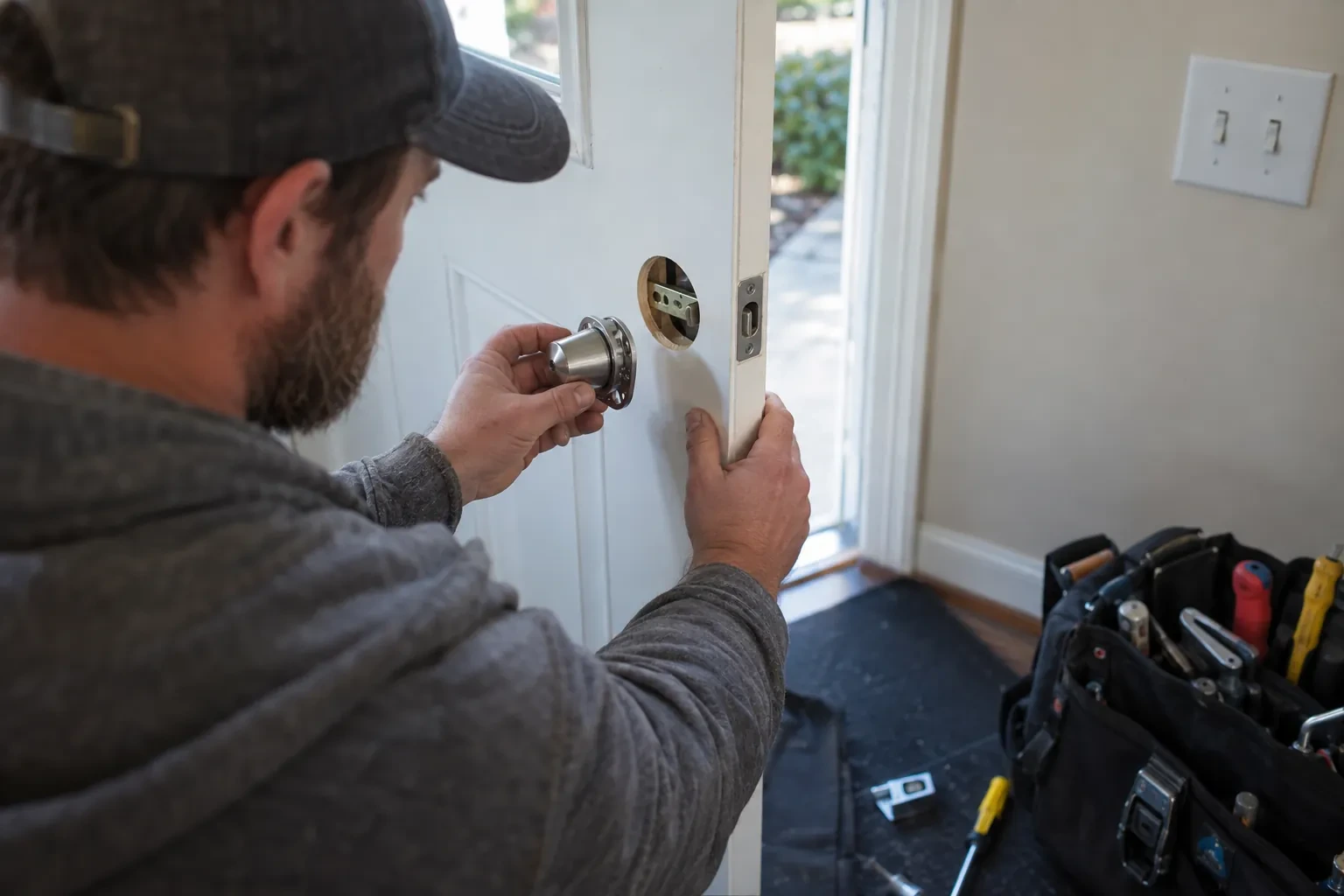
Is it the lock or the door?
A surprising number of lockouts are really door problems. The locksmith checks how the door sits in its frame: whether it has dropped on tired hinges, swollen with summer humidity, or shrunk in dry winter air so that the bolt no longer lines up with its pocket in the strike plate. A hand on the door while the key is turned often reveals the bolt binding against the strike rather than a failed cylinder. Sorting this out first matters because a door that is pinched in its frame needs pressure relieved, not a lock picked, and the fix afterwards is a strike adjustment or a hinge screw rather than new hardware.
Opening a latched knob or lever
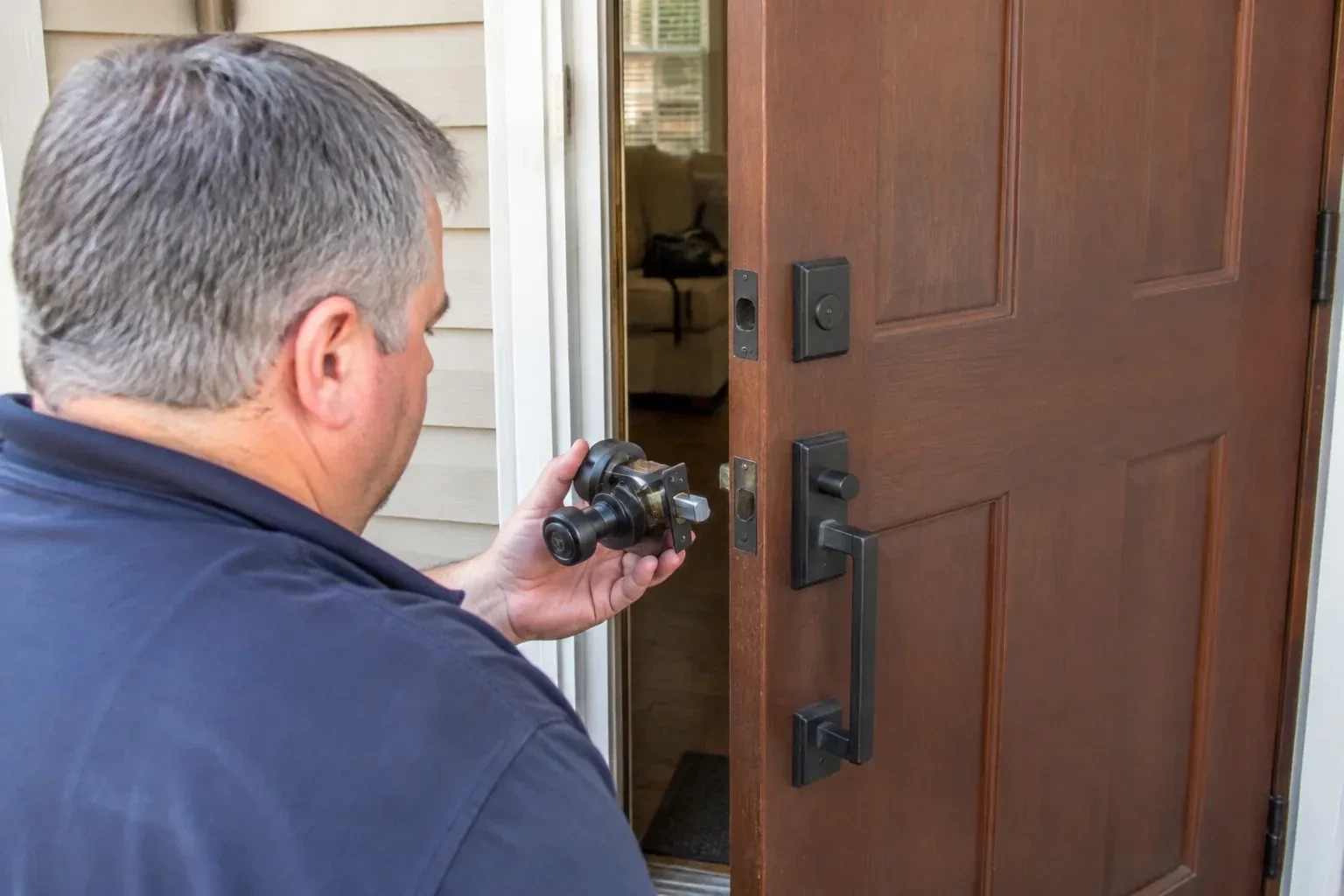
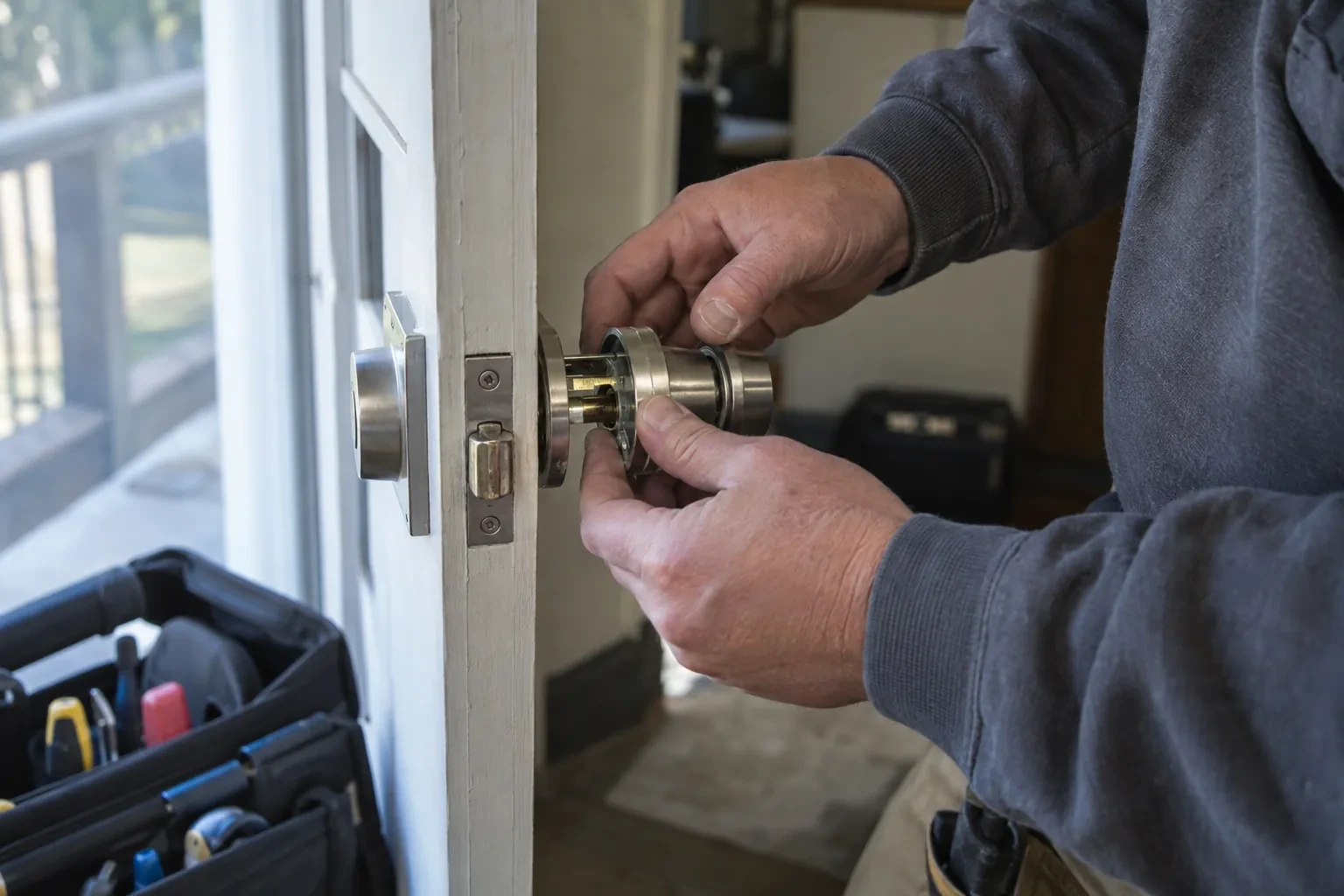
When the door has simply latched behind you and the deadbolt was never thrown, the job is often the gentlest one a locksmith does. A spring latch is bevelled so the door can close on it, and without an engaged auxiliary deadlatch that bevel lets a latch tool ease it back without touching the keyed cylinder; a properly engaged deadlatch resists that and needs a different approach. Where the door-frame gap is tight, or a guard plate covers the latch, the locksmith picks the knob cylinder instead, routine work on standard residential hardware. The knob is then checked for a loose spindle or sagging latch, since a door that catches unexpectedly is often telling you the latch is worn.
Looking after the cylinder afterwards
A lock that has just been opened deserves a little care so it keeps turning sweetly. Twice a year, follow your lock's own maintenance guidance: many residential cylinders take a puff of dry graphite or PTFE lubricant into the keyway, some a specified liquid product instead; general-purpose oil sprays attract dust and gum the pins. Wipe grit off your keys before using them, and retire a key that has worn thin or bent, cutting a new one from the code or from a crisp original rather than from a tired copy. If the key starts to need a wiggle to turn, that is the cylinder asking for attention early, while it is still an easy fix rather than a lockout.
Home Lockout Service
In the van
Nine-volt battery for smart locks
Pick and tension tools
Dry graphite or PTFE lubricant
Plug follower and repinning kit
Key blanks and key cutter
Home Lockout Service
What affects the quote
Interior door or exterior door
A bathroom privacy lock or a bedroom door is generally a lighter job than an exterior deadbolt, and an old keyed interior mortise lock sits somewhere between. The quote follows the hardware, not the room.
Door and frame adjustment
When the lockout was really a swollen or sagging door, fixing the cause means work on hinges, strike plate or weatherstrip. That adjustment is quoted as its own item alongside the opening.
Distance to your door
Travel is part of every call-out. A house across town and a rural property at the end of a long road involve different driving time, and the quote reflects the trip as well as the work.
What to have ready
- Is the key inside the house, lost, broken in the lock, or turning without opening?
- Does the same key open other doors on the property?
- Is the door swollen, sagging or hard to close even when it is unlocked?
Home Lockout Service: questions
QuestionsDo I have to show identification before you open my door?
Yes, and it is a reassuring step rather than a hurdle. Photo identification that matches the address settles it in seconds. When your identification still carries a previous address, other proof does the job: a tenancy agreement, a recent bill, a piece of addressed mail, or a word with your building manager. Locksmiths take this seriously because it protects every home they are asked to open, including yours.
I am a landlord. Can you open a unit my tenant is living in?
A locksmith will want to understand the situation first, because a tenant's right to their home is protected and a lockout of a tenant is something only a sheriff enforcing a Landlord and Tenant Board order may carry out. Legitimate reasons do come up: a tenant has asked you to let them in, a vacated unit needs securing, or an emergency requires access. Bring ownership records and be ready to explain the circumstances, and the locksmith will help you handle it properly.
My key turns but the door stays locked. What is going on?
A key that spins freely without moving the bolt usually means the connection between the cylinder and the bolt has failed: the tailpiece or cam at the back of the cylinder has broken or slipped, or the internal parts of an older mortise lock have worn. The good news is that this is a hardware fault rather than a lost key, so once the door is opened the fix is a repaired or replaced cylinder and your keys keep working.