Lockouts · Oxford Park
Home Lockout Service in Oxford Park
You stepped out to grab the recycling bin and the door swung shut behind you.
In plain words
A home lockout service is a visit whose whole purpose is to get you back inside your own home when the door is locked against you. The locksmith first confirms you have the right to be there, usually by matching photo identification to the address or seeing a lease, deed or property-management record. Then the lock is identified and opened with the gentlest method the hardware allows, so the door and the lock itself are usually kept in working order. Once you are inside, any further step such as rekeying or a new cylinder is discussed as its own decision.
How the visit goesSomeone pushed the privacy button on the bathroom door and pulled it shut behind them, leaving the room locked and empty. The little emergency slot on the outside is stripped, and the tiny release key that came with the handle disappeared years ago.
Home Lockout Service
How the visit goes
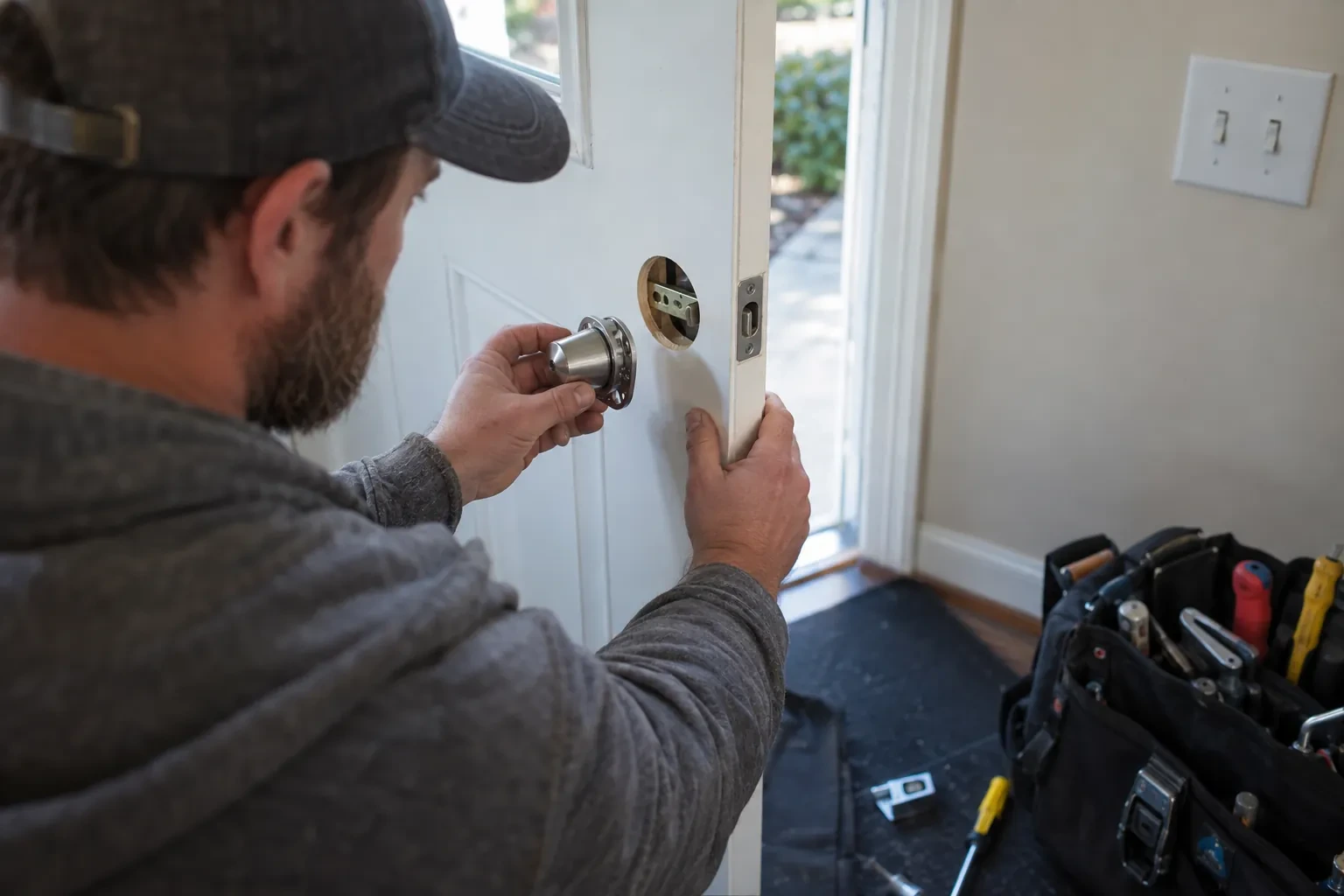
Checking a smart or keypad lock before opening it
Electronic locks get their own set of questions. Is the keypad completely dead or just refusing the code? Are there battery contacts on the outside that accept a nine-volt battery for a temporary boost? Is there a mechanical override cylinder behind a cover, and does anyone hold the key for it? Is the lock paired to an app that could unlock it from a phone, and has the phone been factory reset lately? These checks decide whether the door can be opened by simply restoring power, by using the override cylinder, or by treating it like any other lock. It also tells the locksmith what to reset once you are inside.
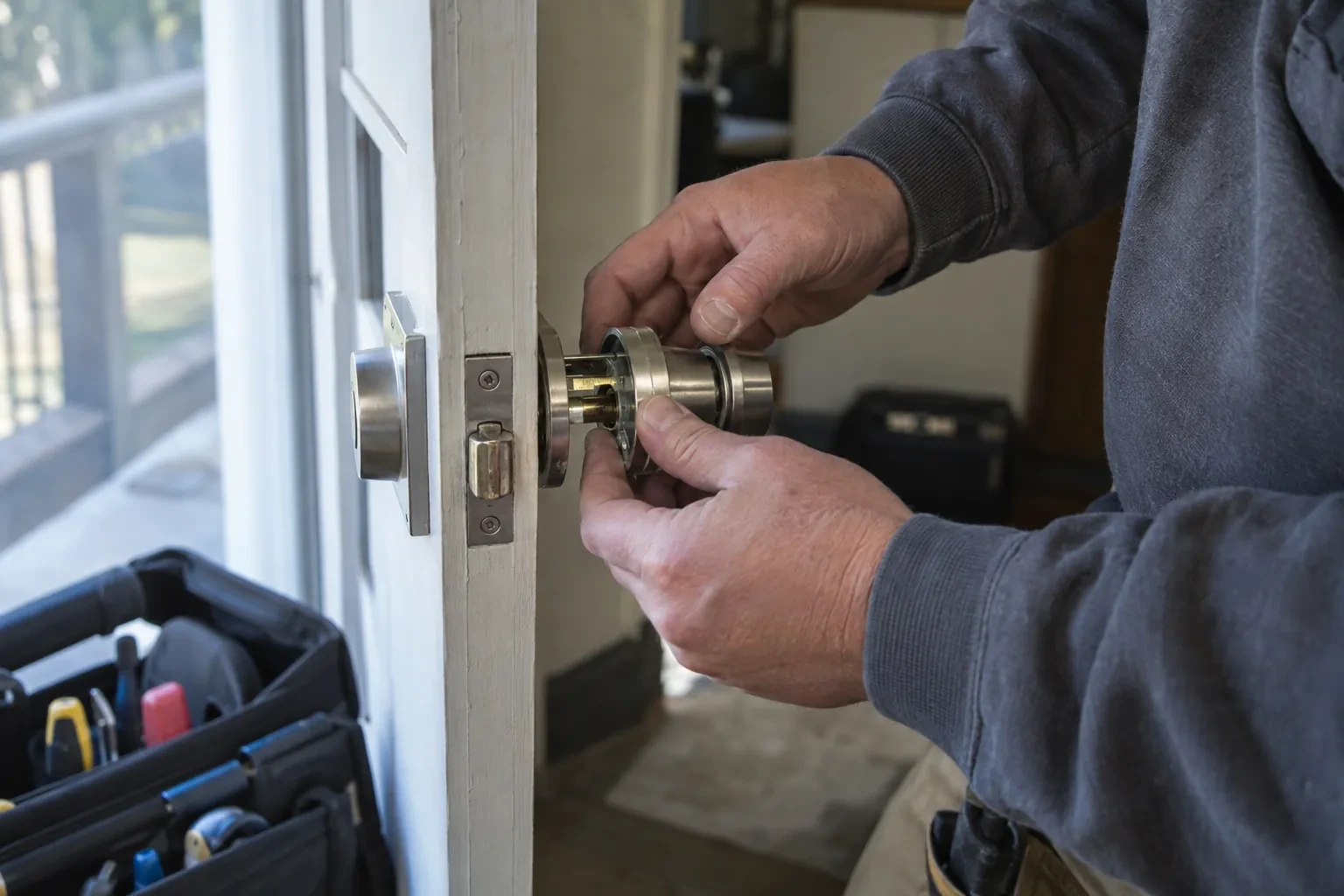
Opening a latched knob or lever
When the door has simply latched behind you and the deadbolt was never thrown, the job is often the gentlest one a locksmith does. A spring latch is bevelled so the door can close on it, and without an engaged auxiliary deadlatch that bevel lets a latch tool ease it back without touching the keyed cylinder; a properly engaged deadlatch resists that and needs a different approach. Where the door-frame gap is tight, or a guard plate covers the latch, the locksmith picks the knob cylinder instead, routine work on standard residential hardware. The knob is then checked for a loose spindle or sagging latch, since a door that catches unexpectedly is often telling you the latch is worn.
Ready for the next cold snap
After a winter lockout you leave with a cylinder that has been dried and dressed with a moisture-shedding lubricant, and usually a small tube of lock de-icer for the glove box or coat pocket. Keeping the storm door closed shields the main lock from freezing rain, and a simple keyhole cover on an exposed side door stops meltwater getting in during a thaw. If the door itself was frozen to its seal, the weatherstripping has been cleared and a light silicone wipe on it stops it bonding to the door again. These small habits carry most households through a whole season of freeze and thaw without another stuck morning.
Home Lockout Service
In the van
Nine-volt battery for smart locks
Pick and tension tools
Dry graphite or PTFE lubricant
Plug follower and repinning kit
Key blanks and key cutter
Home Lockout Service
What affects the quote
Distance to your door
Travel is part of every call-out. A house across town and a rural property at the end of a long road involve different driving time, and the quote reflects the trip as well as the work.
Damage from earlier attempts
A latch bent by a credit card or a cylinder scarred by a screwdriver may need repair or replacement in addition to the opening. The locksmith points out what was already there before quoting that part.
Weather on the day
A cylinder frozen solid or a door iced to its frame takes patient thawing before any opening can begin, so a winter call in a cold snap is quoted with that extra time in mind.
What to have ready
- Has anyone already tried to open the door with a card or tool?
- Is anyone, including a child or pet, inside the home right now?
- Do you have photo identification with you, or is it inside?
Home Lockout Service: questions
QuestionsDo I have to show identification before you open my door?
Yes, and it is a reassuring step rather than a hurdle. Photo identification that matches the address settles it in seconds. When your identification still carries a previous address, other proof does the job: a tenancy agreement, a recent bill, a piece of addressed mail, or a word with your building manager. Locksmiths take this seriously because it protects every home they are asked to open, including yours.
I am a landlord. Can you open a unit my tenant is living in?
A locksmith will want to understand the situation first, because a tenant's right to their home is protected and a lockout of a tenant is something only a sheriff enforcing a Landlord and Tenant Board order may carry out. Legitimate reasons do come up: a tenant has asked you to let them in, a vacated unit needs securing, or an emergency requires access. Bring ownership records and be ready to explain the circumstances, and the locksmith will help you handle it properly.
My key turns but the door stays locked. What is going on?
A key that spins freely without moving the bolt usually means the connection between the cylinder and the bolt has failed: the tailpiece or cam at the back of the cylinder has broken or slipped, or the internal parts of an older mortise lock have worn. The good news is that this is a hardware fault rather than a lost key, so once the door is opened the fix is a repaired or replaced cylinder and your keys keep working.