Change or rekey · Oxford Park
Vintage Mortise Lock Service in Oxford Park
The old skeleton key still fits the keyhole, but it now needs a jiggle, a lean on the door and a little luck before the bolt moves.
In plain words
Servicing the original lock is usually the better choice for an older home, for practical reasons as much as sentimental ones. Cutting a period door for a modern cylindrical lockset means boring a large hole through the stile and leaves the old mortise to be filled; a repaired mortise case avoids all of that. Where the home is a designated heritage property, keeping the hardware may also be what the municipality expects. The service treats the door as something to preserve: minimal disturbance, parts matched to the original, a strike adjusted rather than replaced, and the old lock left running smoothly for decades to come.
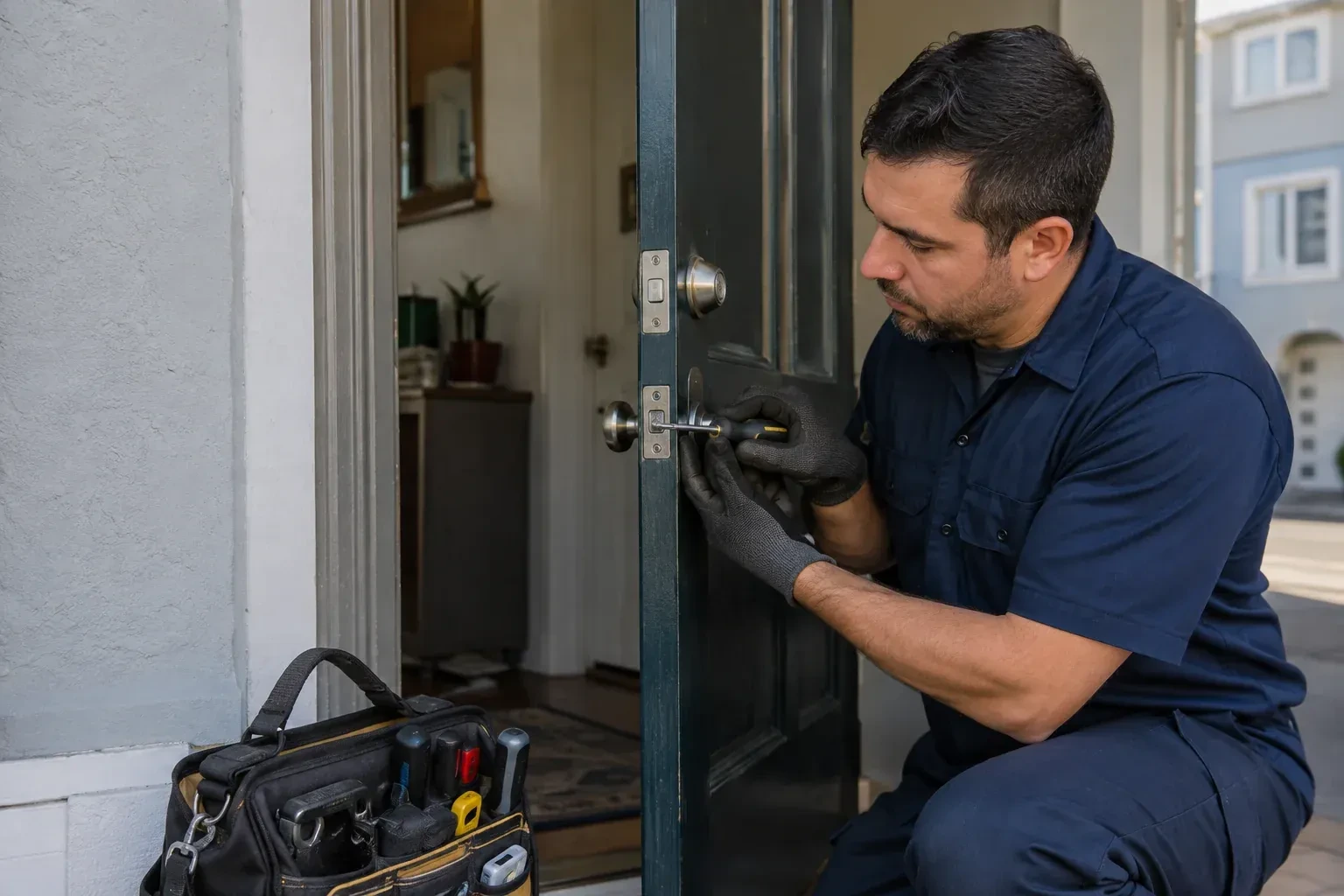
How the visit goesSomeone painted the door years ago without removing the hardware. The faceplate, the strike and the little thumb-turn are all under several coats, the deadbolt scrapes when it moves, and the knob is stiff enough to leave marks on your hand.
Vintage Mortise Lock Service
How the visit goes
Reading the faceplate
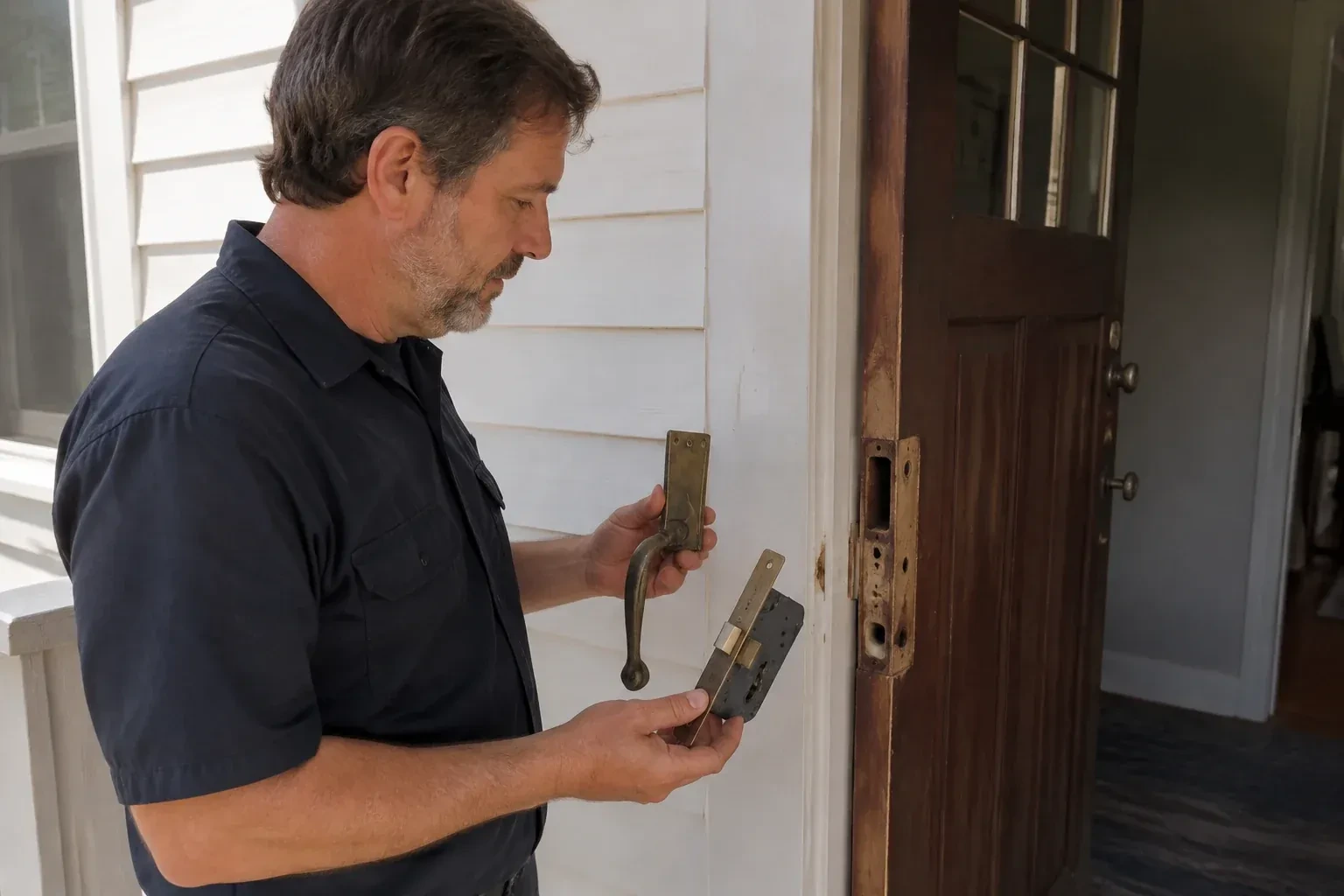
Standing at the open door, the locksmith looks at the narrow brass or steel plate in the door edge. Its height, the spacing of its screws, any maker's stamp, and whether it shows one bolt or two tell a good deal about what is inside: a latch-only case for an interior door, a latch and deadbolt case for an entry, or a privacy function with a turn button. The distance from the door edge to the centre of the knob, the backset, is measured, along with the spindle size. These figures decide which springs, followers and, if it comes to that, which replacement case will fit, so they are written down before the lock is disturbed.
Springs, levers and followers
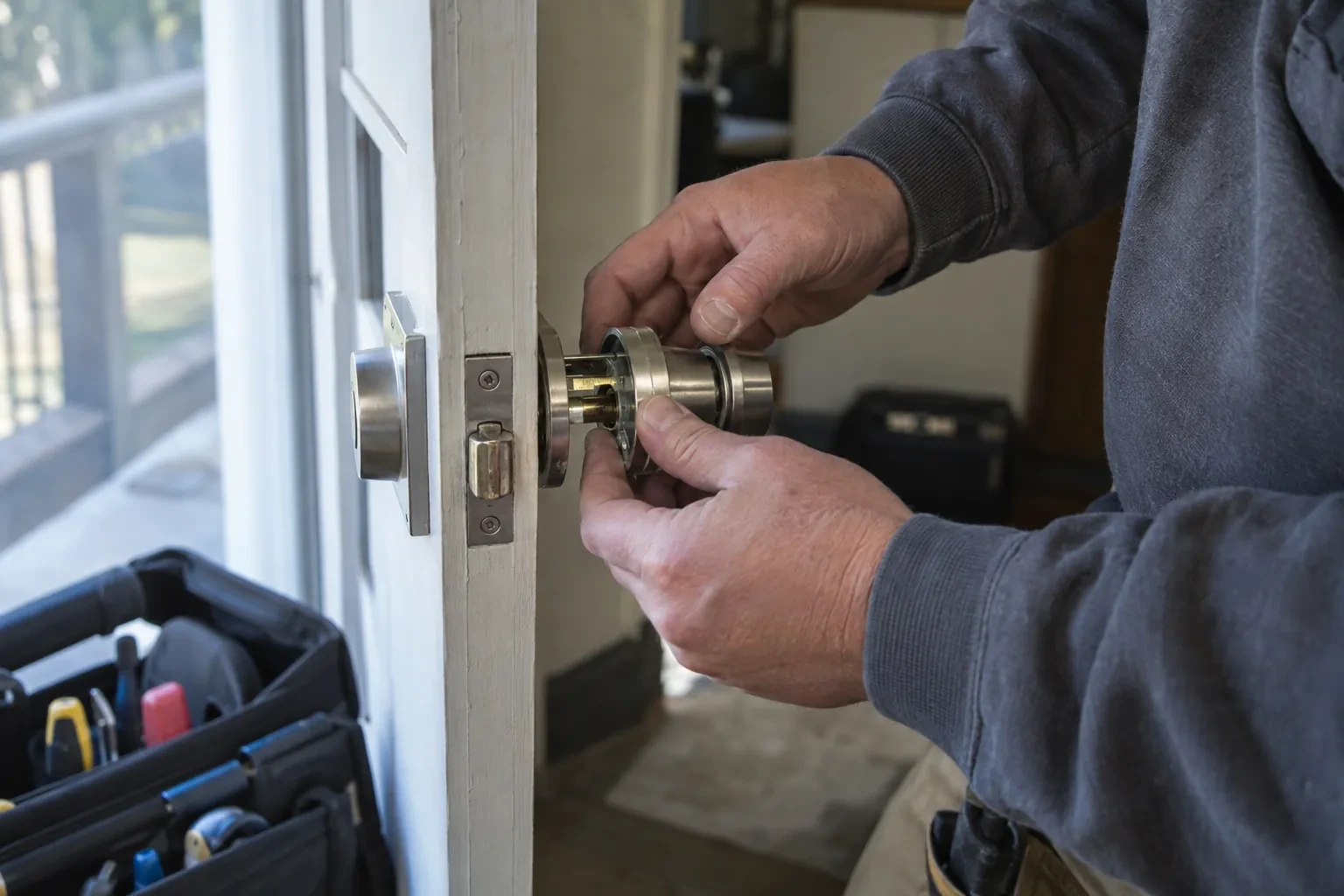
Springs are the usual culprits and the easiest fix. Broken coil and flat springs are matched from stock by length, wire gauge and shape, and fitted so the latch snaps out and the knob returns to level. A worn or cracked lever is matched from a donor case where one exists; where it does not, a replacement is filed from stock to the original's profile, which is slow, careful bench work rather than magic. A rounded hub is replaced or bushed. When every part moves as it should, the case is closed and cycled by hand with the cover on until the action is smooth and even in both directions.
A clear way out
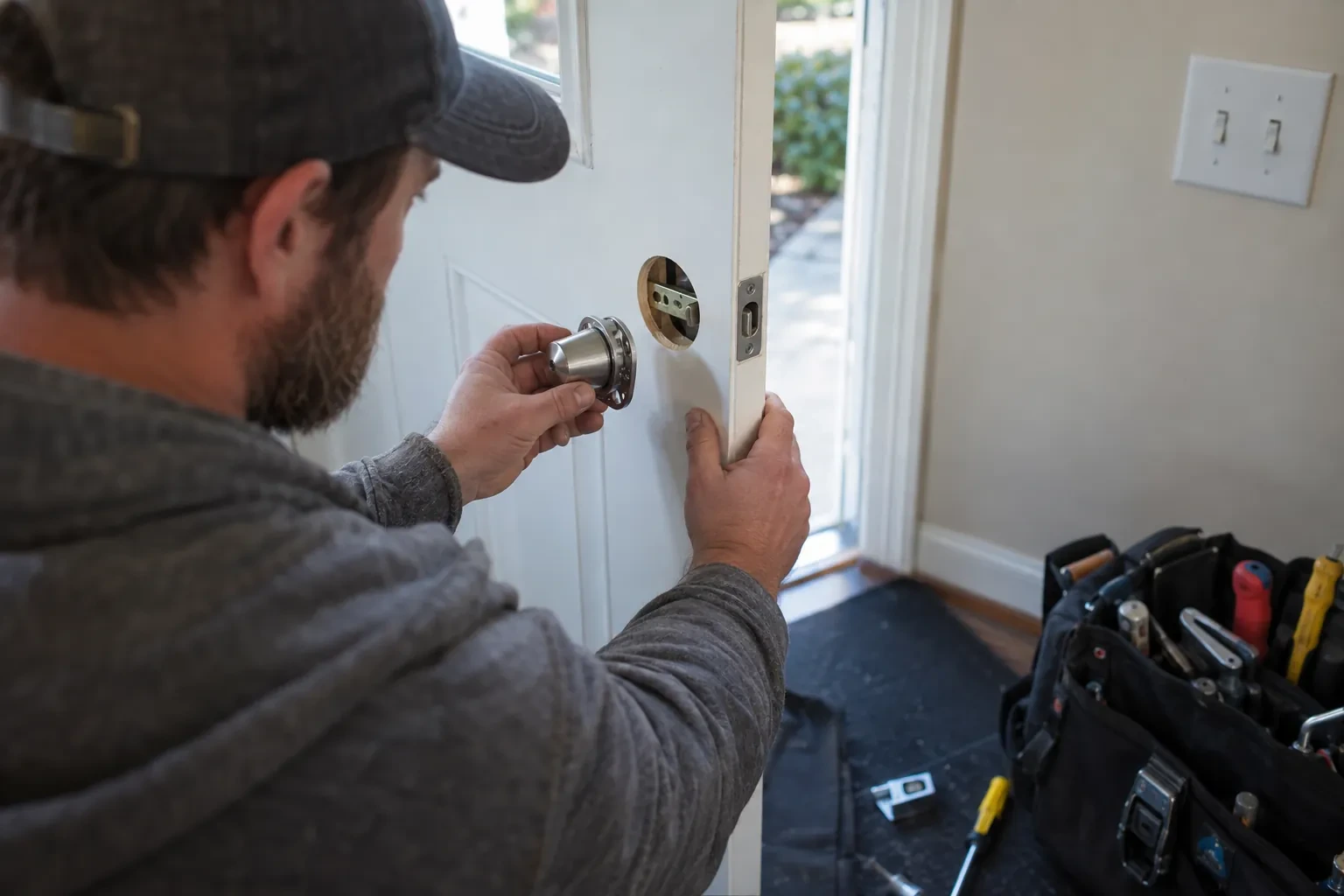
If the entry door's deadbolt was keyed from both sides, the service leaves the inside operable without a key: a thumb-turn fitted to the bolt tail, or a knob function that releases the latch from inside. This is simply good sense for a door people use to leave the home, so nobody is stuck hunting for a key inside their own house. You are shown how the inside release works and asked to try it, and everyone in the household should know it too, especially anyone who grew up with the old habit of leaving the key in the door on the inside.
Vintage Mortise Lock Service
In the van
Hub followers and lever packs
Spindle and knob set screws
Light lock oil
Dry graphite or PTFE lubricant
Reproduction mortise case
Vintage Mortise Lock Service
What affects the quote
Bit key or cylinder lock
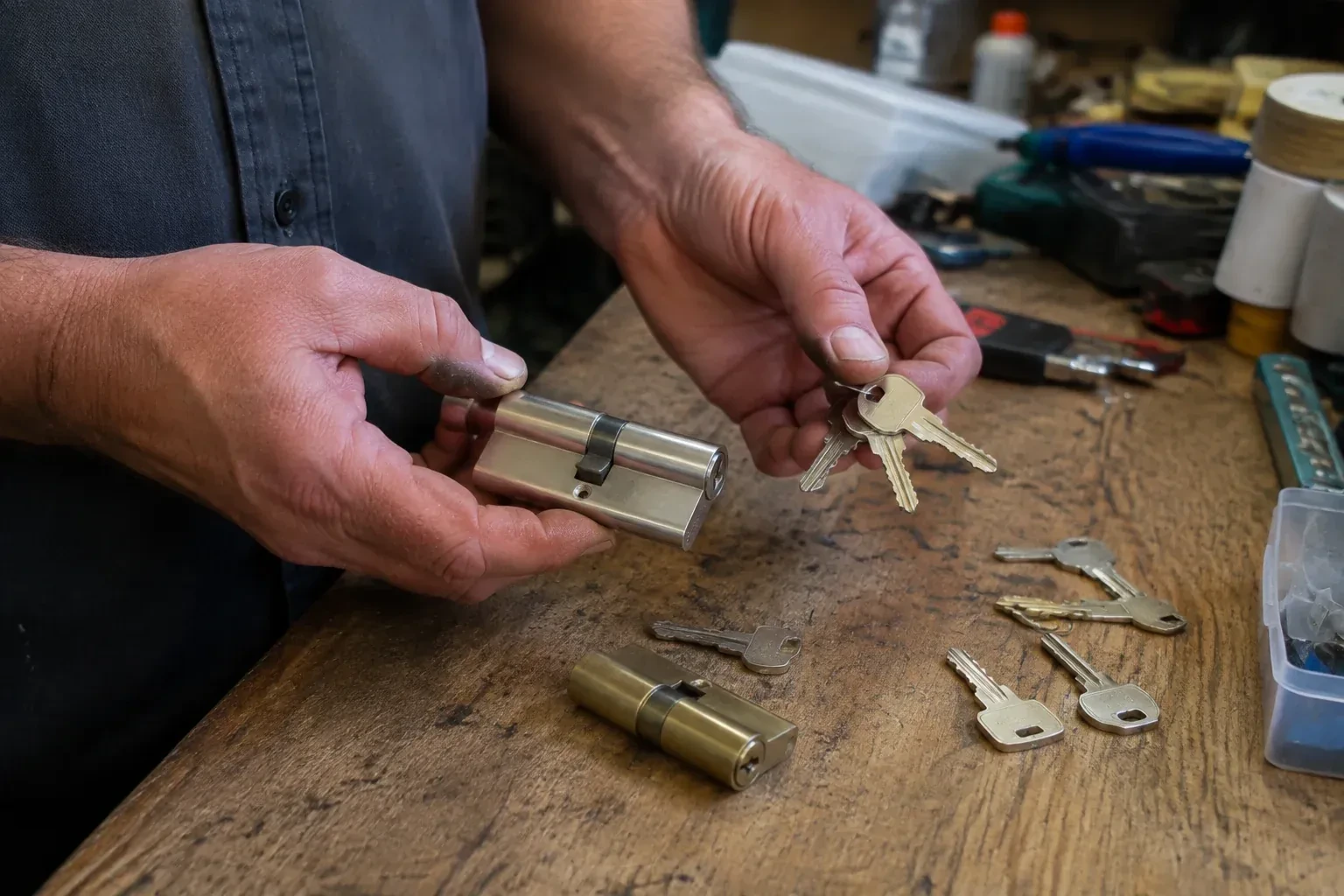
A bit-key case has keys filed by hand on the bench, while a cylinder lock is rekeyed or fitted with a new cylinder on a key machine. The two take different time and materials, and the quote follows.
Condition of the wood
Stripped screw holes, a loosened pocket or a split at the door edge need dowelling, shimming or gluing before the case can be trusted. That woodwork is quoted once the locksmith has seen the pocket empty.
Keying doors alike
Bringing several interior locks onto one bit key, or several cylinders onto one flat key, is extra bench work per lock and is simplest to arrange while all the cases are out on the same visit.
What to have ready
- Is the property designated as a heritage building?
- Does the deadbolt throw fully with the key or the thumb-turn?
- Do you own the home or rent it, and who should receive the keys?
Vintage Mortise Lock Service: questions
QuestionsCan a modern cylinder be fitted to my old mortise lock?
Often, on cases that already take a threaded cylinder. Mortise cylinders are made in standard thread sizes and lengths with different cam shapes, and a new one is selected to match the case and the door thickness. That gives you keys cut on a machine and the option of keying the door alike with the rest of the house. A bit-key case has no cylinder to swap; its keys are made on the bench instead.
The key turns all the way round but the bolt stays put. What is wrong?
On a cylinder mortise lock this points to the cylinder rather than the case. The set screw that holds the cylinder in the door has loosened or stripped so the whole cylinder rotates, or the cam on the back of the cylinder has worn or is the wrong shape and no longer catches the bolt lever. Both are fixed by resetting or replacing the cylinder and its set screw, and the case itself is usually fine.
Why does the deadbolt scrape or need a shove to throw?
Two causes cover most cases. Either paint has built up on the faceplate, the bolt or the strike so the bolt drags across it, or the door has dropped so the bolt is entering the strike pocket at an angle and rubbing its edge. Occasionally a bent deadbolt lever inside the case adds friction. Cleaning the paint back, adjusting the strike and checking the lever all happen as part of the service.
Related services
- Deadbolt InstallationThe old deadbolt has grown lazy.
- Lock Replacement & UpgradeThe house is fifteen years old and every exterior door still wears the light hardware the builder fitted: a short bolt, a thin strike held by two small screws, and a knob lock that never suited a street entrance.
- Smart Lock InstallationThe deadbolt is a stiff double-cylinder model that needs a key from both sides, and in the dark hallway finding it is a nuisance.