Change or rekey · Oxford Park
Deadbolt Installation in Oxford Park
The old deadbolt has grown lazy.
In plain words
The right deadbolt for a door depends on how the door is used and where it sits. A front door that a family goes through twenty times a day needs a durable mechanism and a finish that shrugs off salt spray and sun; a side door in a laneway wants a heavy bolt and a strike that reaches the framing. Residential deadbolts carry letter grades for security, durability and finish, and heavier commercial-pattern bolts carry numbered grades, so there is a plain way to compare. The locksmith talks through those options, then fits the one you choose with the same care whichever grade it is.
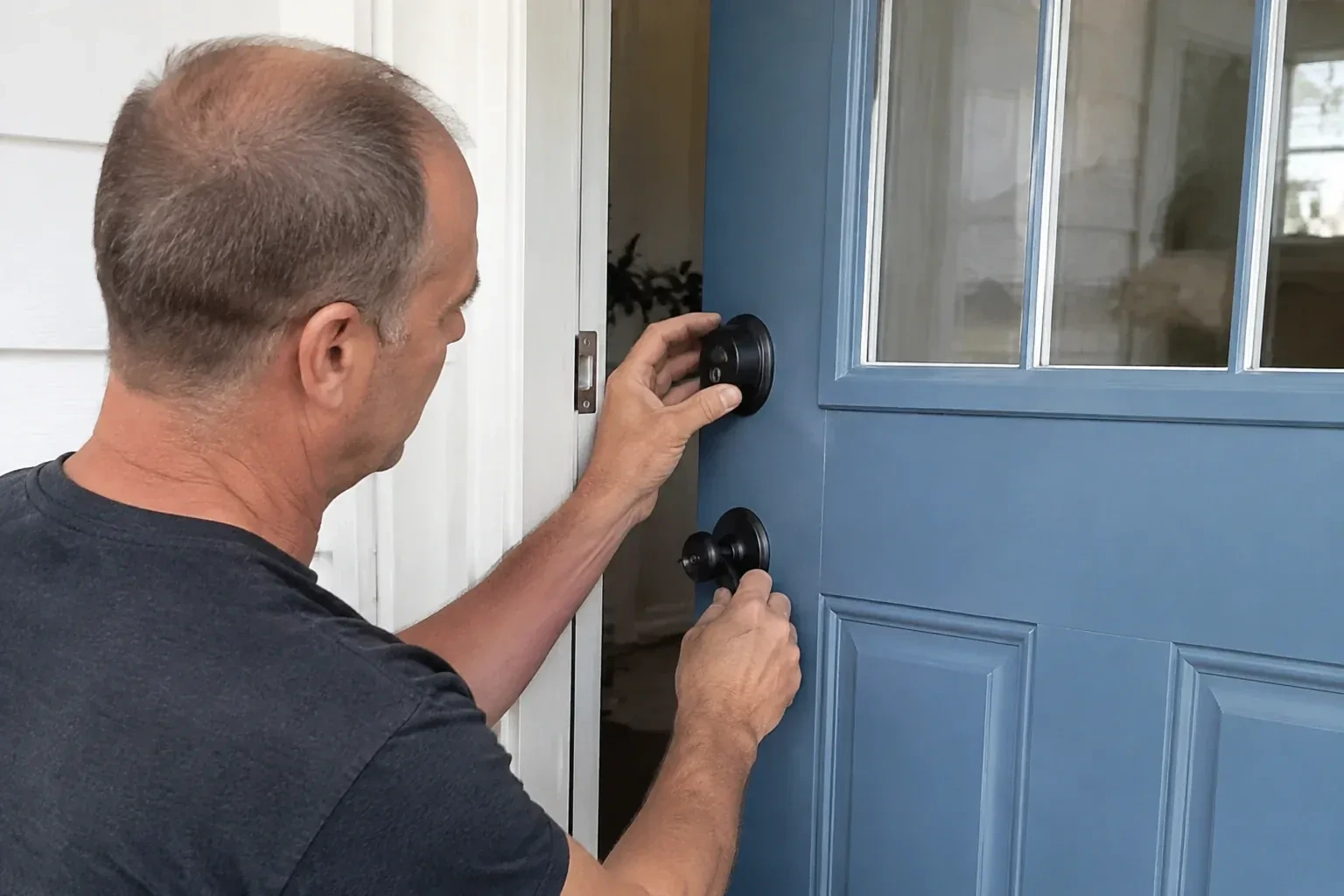
How the visit goesThe back door has a deadbolt in name only: a short bolt, a thin brass strike held by two little screws, and a jamb you can flex with your palm. It was fine for a builder's showing. It is not fine for a laneway.
Deadbolt Installation
How the visit goes
What the door is made of
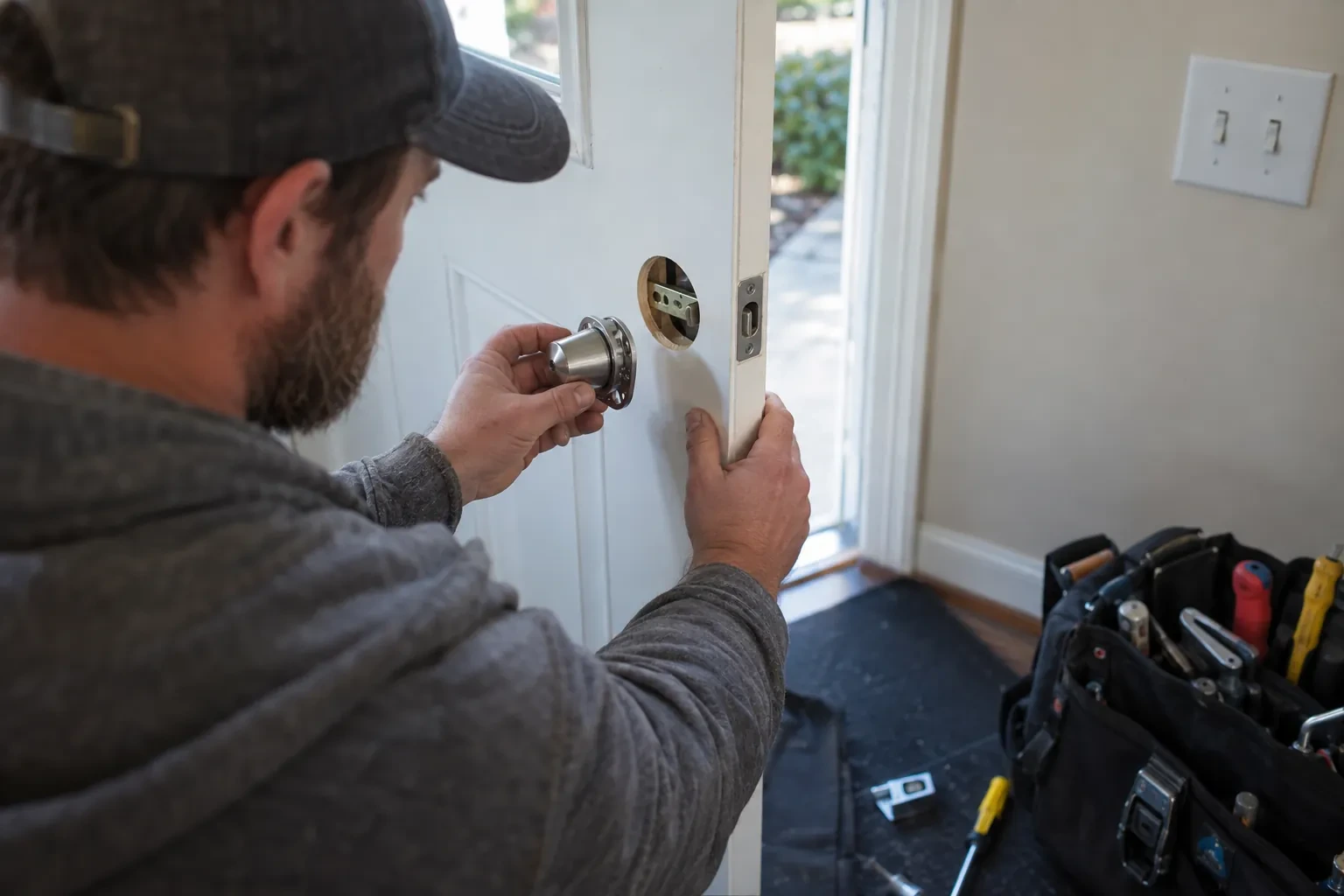
The first thing the locksmith reads is the door itself, because it decides how the holes get cut. A solid wood slab in a century home bores cleanly but can split at the edge if the mortise is rushed. A steel-clad insulated door has a thin metal skin over foam, sometimes with a wood block at lock height, and needs a metal-cutting hole saw run slowly. Fibreglass behaves like a hard plastic and chips if the bit grabs. Thickness matters too: most exterior doors are 44 mm, some older ones 35 mm, and the deadbolt's screws and collar have to suit that. Ten seconds with a tape and a knuckle on the face answer all of this.
Swapping an old deadbolt in place
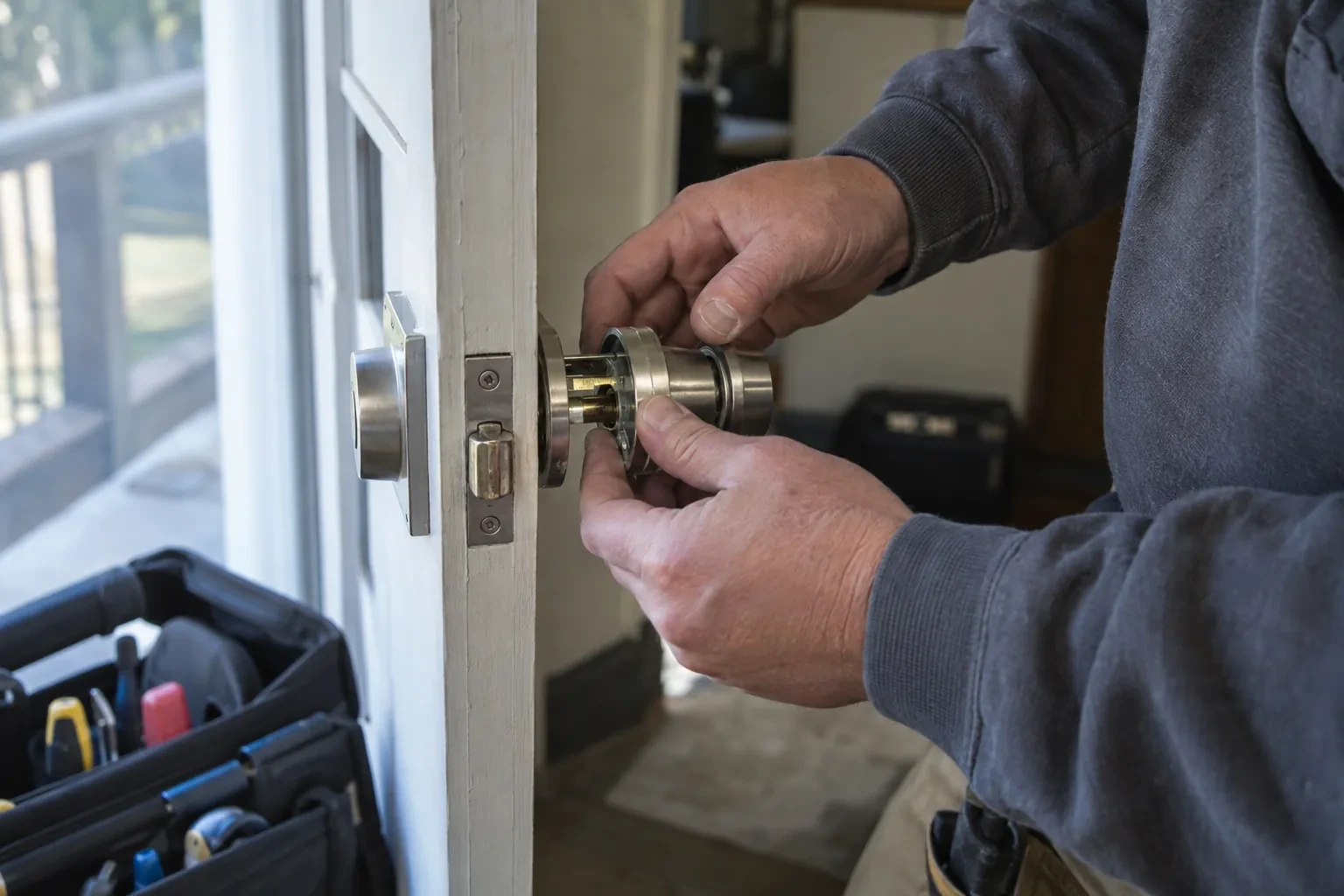
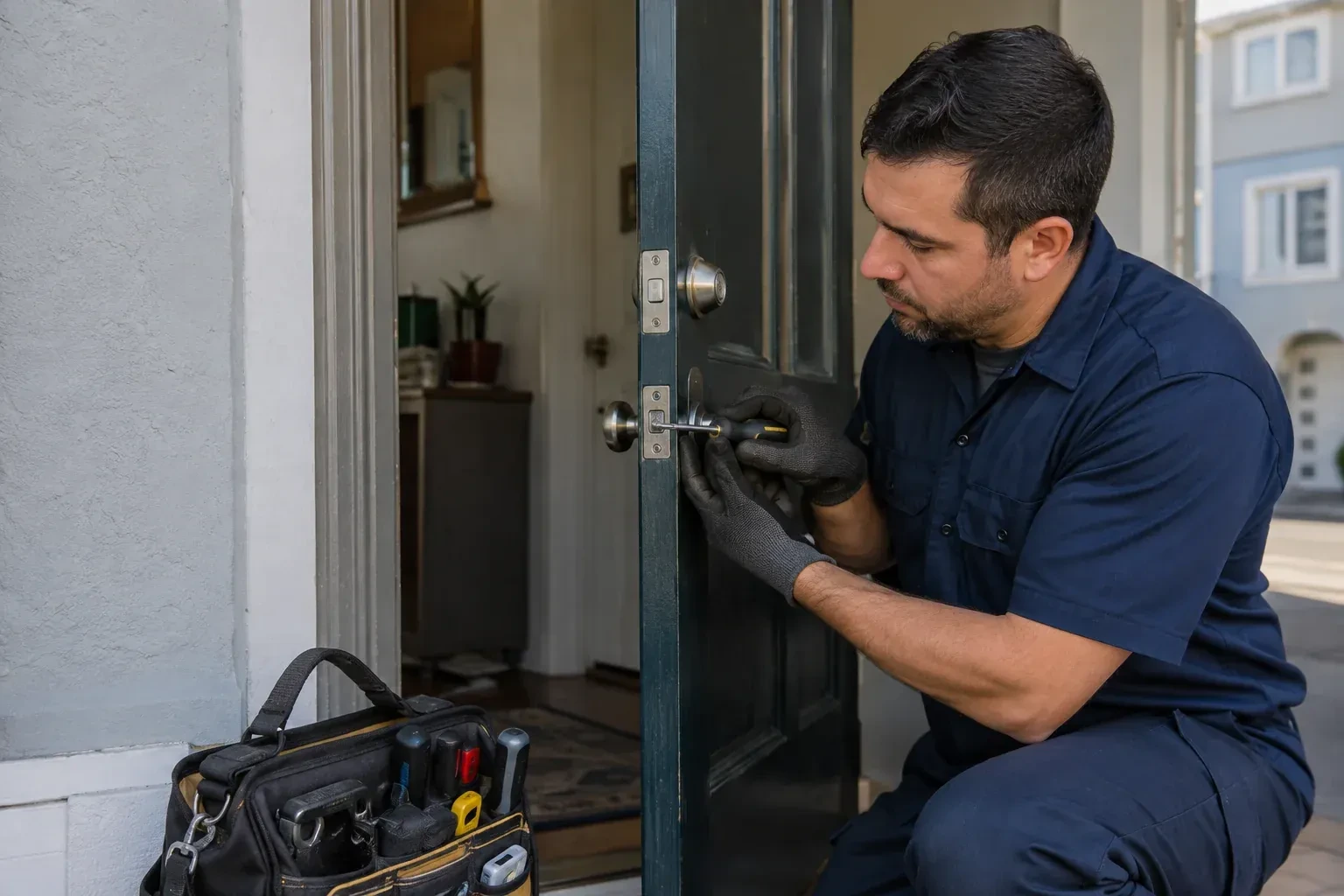
When an existing bolt is being replaced, the work starts by backing out the two inside screws and lifting off both housings, then removing the bolt from the edge. The bore and backset are measured against the new hardware, and any difference is dealt with before the new bolt goes in: a larger bore for a smart deadbolt, a different faceplate shape, or a spacer for a thinner door. The new bolt, cylinder and thumb-turn go on in the usual order. The old strike comes off too, the pocket is deepened if needed, and a reinforced strike with long screws replaces it, so the upgrade happens on both sides of the gap.
Keys that open what they should
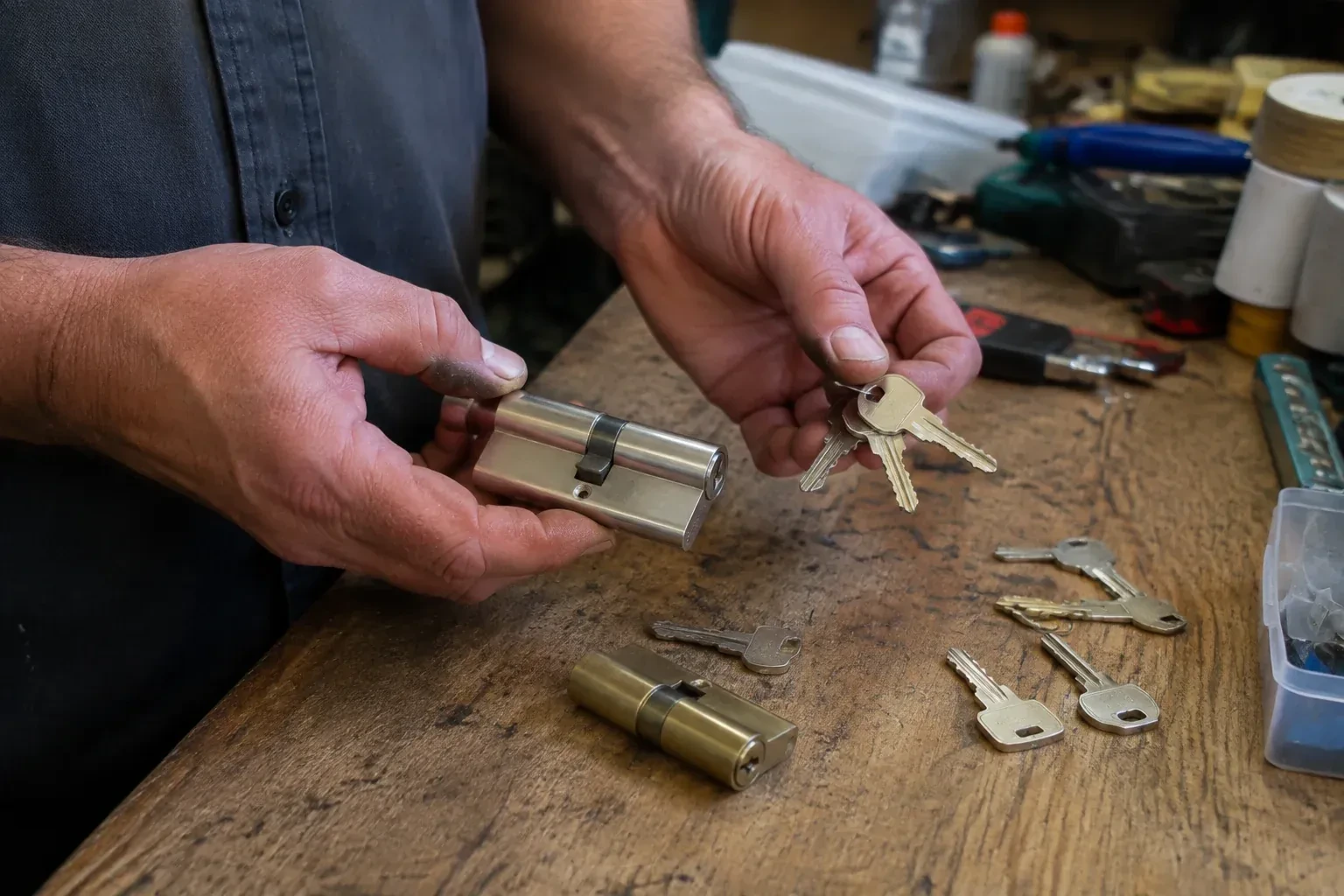
You leave with the keys sorted, whichever way you chose. If the new cylinder was pinned to your existing key, every ring in the house still works and the new door has simply joined the set. If it was set to a fresh key, you have a small bundle of new keys, cut from the pins rather than copied from a worn original, and a clear idea of which old keys no longer matter. Count them, decide who carries one, and test each in the new bolt before the locksmith leaves. A spare kept with a trusted neighbour or in a small lockbox is worth arranging on the same afternoon.
Deadbolt Installation
In the van
Boring jig and 54 mm hole saw
Jamb reinforcer
Strike box
75 mm (3 in) strike screws
25 mm auger bit
Deadbolt Installation
What affects the quote
New bore or replacement into existing holes
Boring a door that has never had a deadbolt takes more time and tooling than dropping a new bolt into holes that are already there, and the quote reflects which of the two your door needs.
Strike and frame reinforcement
A reinforced strike with long screws is standard; a full-length jamb reinforcer, a strike box or repairs to a split jamb after a forced entry are extra items quoted on their own.
Grade and type of deadbolt
A builder-grade bolt, a residential model with a high security grade, and a heavy commercial-pattern deadbolt sit at different points in the hardware part of the quote, and the locksmith explains the differences.
What to have ready
- Does anyone in the household have trouble with small knobs or stiff thumb-turns?
- Is the door solid wood, steel-clad or fibreglass, and roughly how thick is it?
- Do you want the new deadbolt to work on the same key as your other doors?
Deadbolt Installation: questions
QuestionsI just moved in. Should the new deadbolt be keyed to a new key?
It is a good moment for it. Nobody knows how many copies of a previous owner's key exist, so pinning the new bolt, and the rest of the exterior doors, to one fresh key retires all of them at once. Lock manufacturers list a move as one of the main reasons to rekey. You come away with a known number of keys, each tested in every door it is meant to open.
How do I look after a deadbolt once it is installed?
Very little is needed. Each spring and autumn, lock the door from inside and feel whether the bolt still goes home without the door being pulled; if it hesitates, the door has moved with the season and a small strike adjustment restores it. Whatever lubricant the lock's own maker specifies keeps it smooth, often a dry PTFE or graphite type in the keyway and along the bolt, though some cylinders are meant to be serviced with oil. In winter, wipe road salt off the outside trim to protect the finish.
What do backset and bore mean, and why does the locksmith ask?
Two measurements decide whether a deadbolt fits your door. Bore is the diameter of the big hole through the face, 54 mm on most current hardware. Backset is how far the centre of that hole sits from the door's edge, 60 mm or 70 mm on nearly all residential doors. A replacement must match both to use the existing holes, and a fresh installation is cut to match the knob below, so knowing them ahead puts the right hardware on the van.
Related services
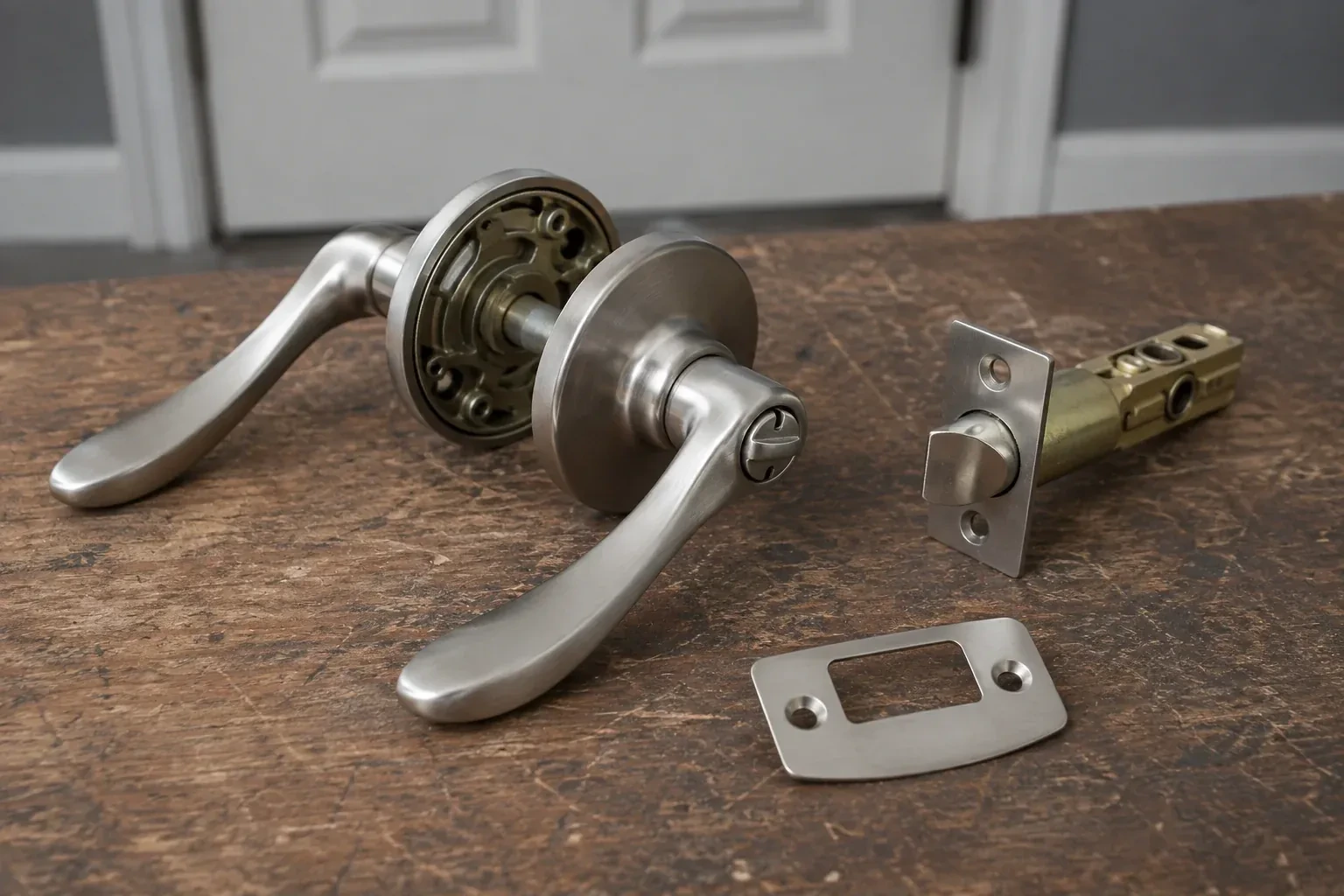
- Lock Replacement & UpgradeThe house is fifteen years old and every exterior door still wears the light hardware the builder fitted: a short bolt, a thin strike held by two small screws, and a knob lock that never suited a street entrance.
- Vintage Mortise Lock ServiceThe old skeleton key still fits the keyhole, but it now needs a jiggle, a lean on the door and a little luck before the bolt moves.
- Smart Lock InstallationThe deadbolt is a stiff double-cylinder model that needs a key from both sides, and in the dark hallway finding it is a nuisance.