Lockouts · Westmount
Seized & Jammed Lock Opening in Westmount
Every time you pull the key out of the side door it comes away gritty.
In plain words
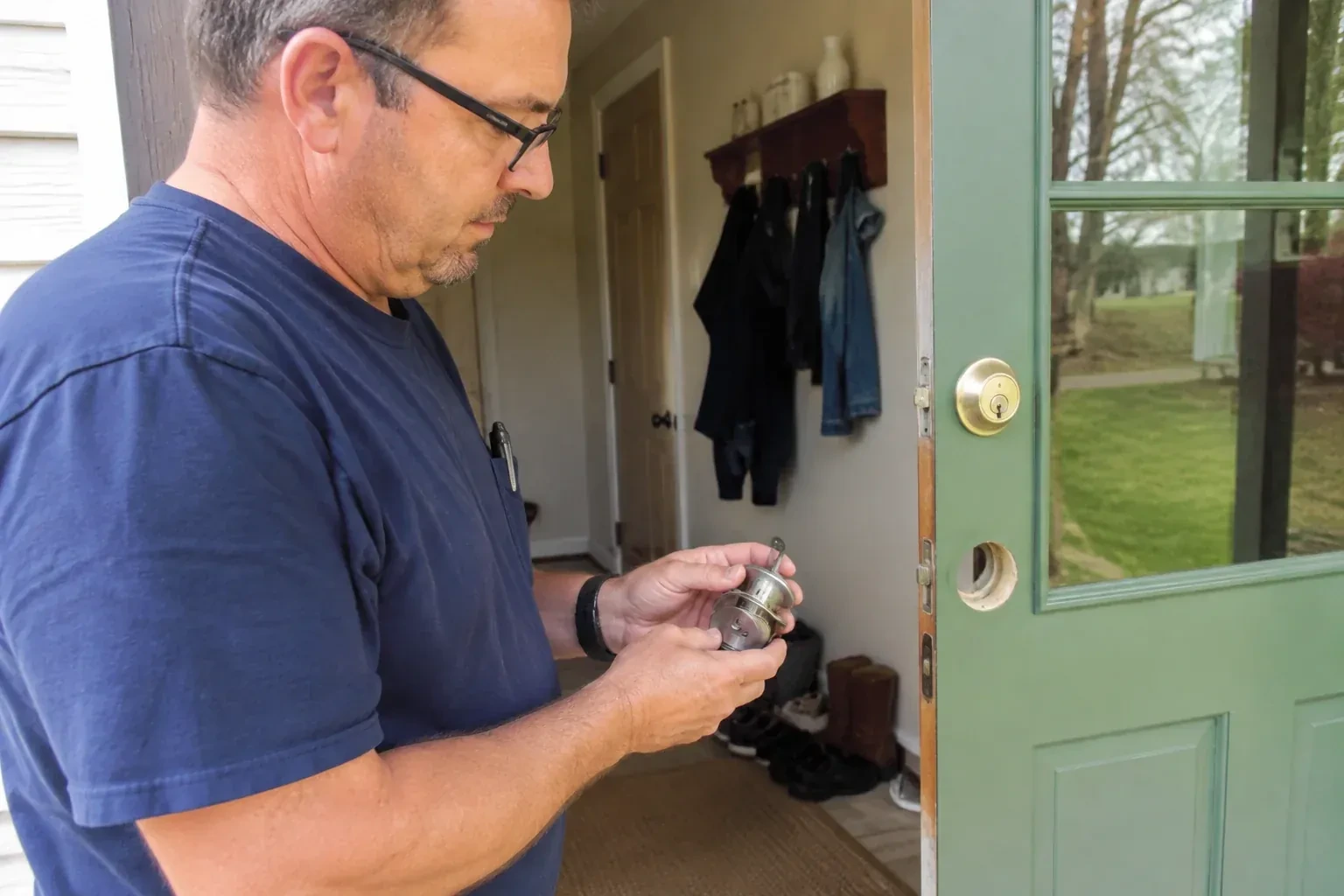
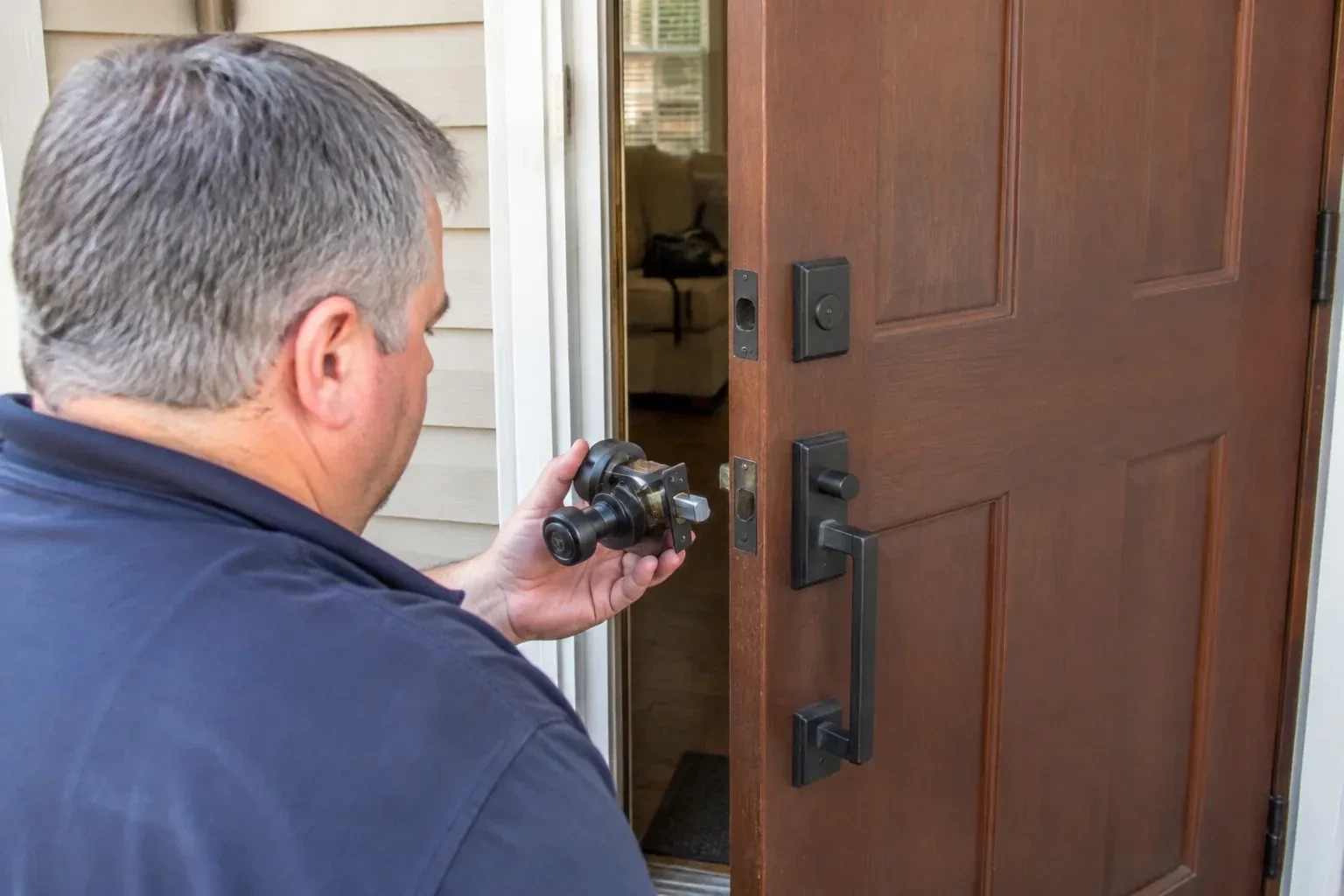
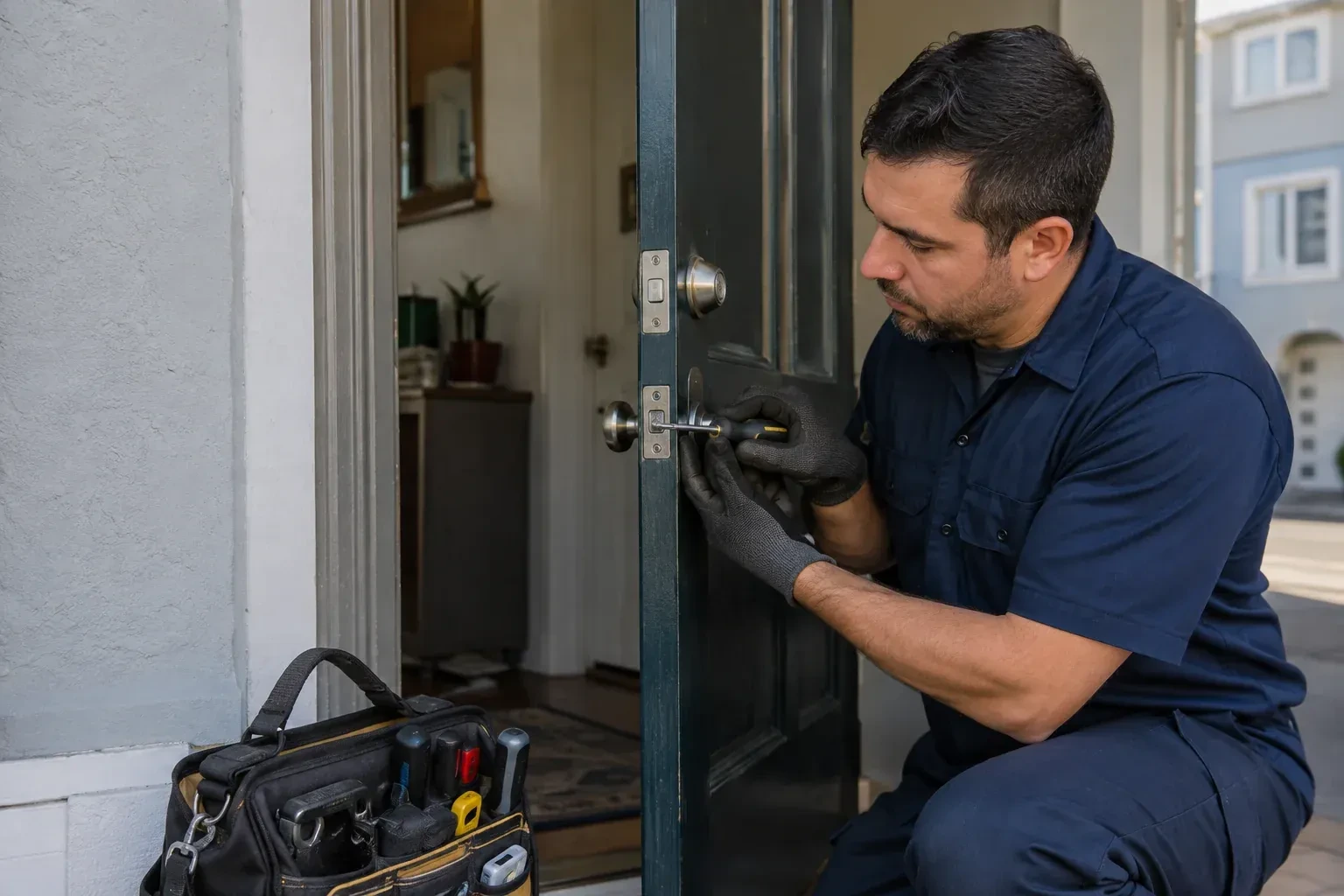
The visit runs in a set order. On the phone you describe what the key does: refuses to turn, spins freely, or works only when the door is pushed. That description tells the locksmith what to bring. At the door, identification and your connection to the property are confirmed. The key, keyway, door fit and strike are examined before anything is forced. The opening uses the least disruptive method the condition allows. Then the failed part is serviced or replaced, the door is adjusted if it caused the jam, and the lock is tested open and closed with every key before the locksmith leaves.
How the visit goesThe key slides all the way in, exactly as it has for years, and then refuses to turn in either direction. Yesterday it needed a small wiggle. This morning it feels set in concrete, and pushing harder only makes the key flex.
Seized & Jammed Lock Opening
How the visit goes
Strike plate, bolt pocket and seal
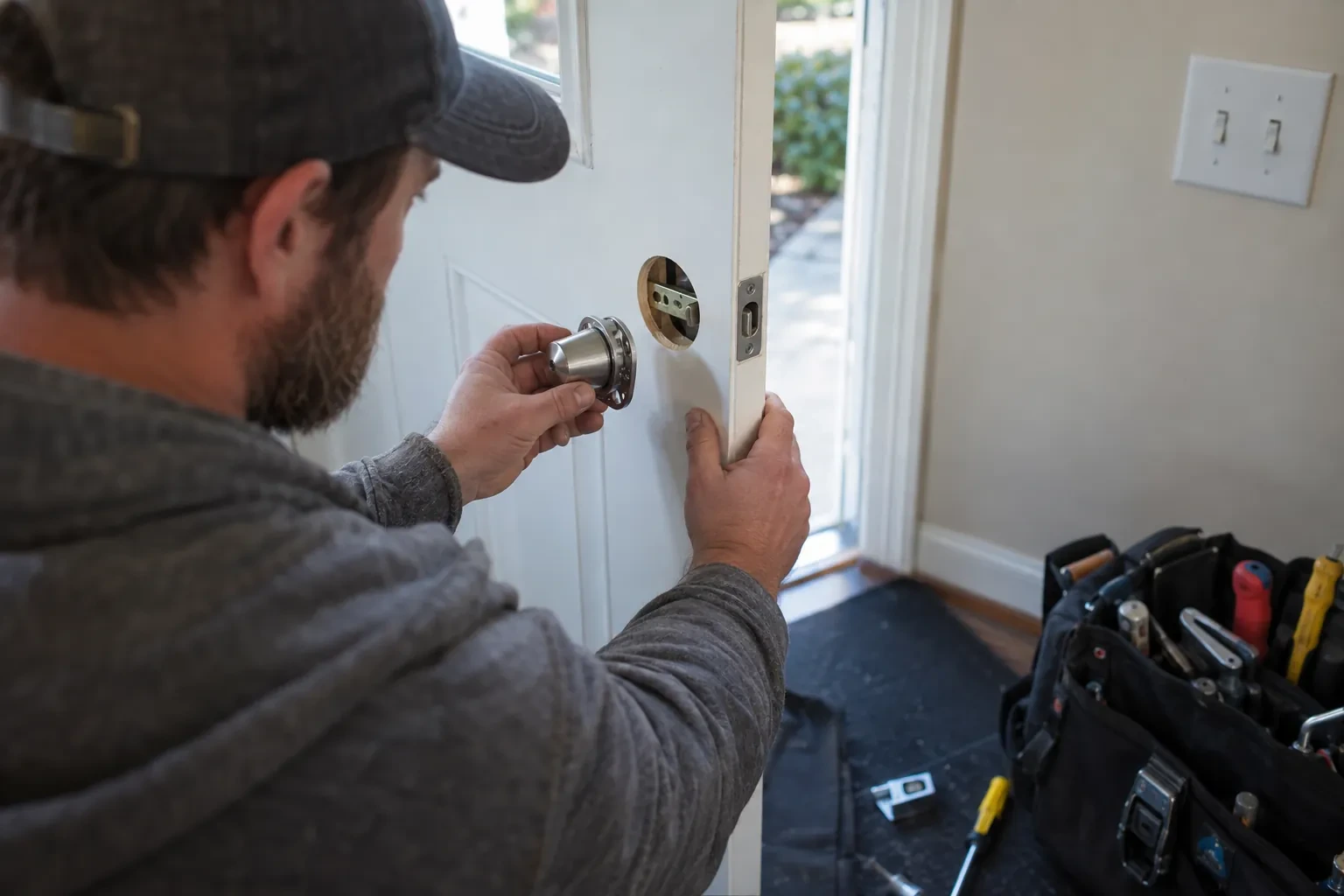
The frame side gets as much attention as the door side. The locksmith looks at where the bolt meets the strike plate: scuff marks on the plate's edge, a bolt pocket shallower than the roughly twenty-five millimetres a deadbolt needs, paint or filler that has crept into the pocket, and weatherstripping thick enough to hold the door proud of the frame. A dab of chalk on the bolt end shows exactly where it lands. These findings explain a lock that works with the door open and jams when it is shut, and they point to a chisel, a screwdriver and a strike adjustment rather than to anything inside the cylinder.
Stripping and rebuilding the cylinder on the bench
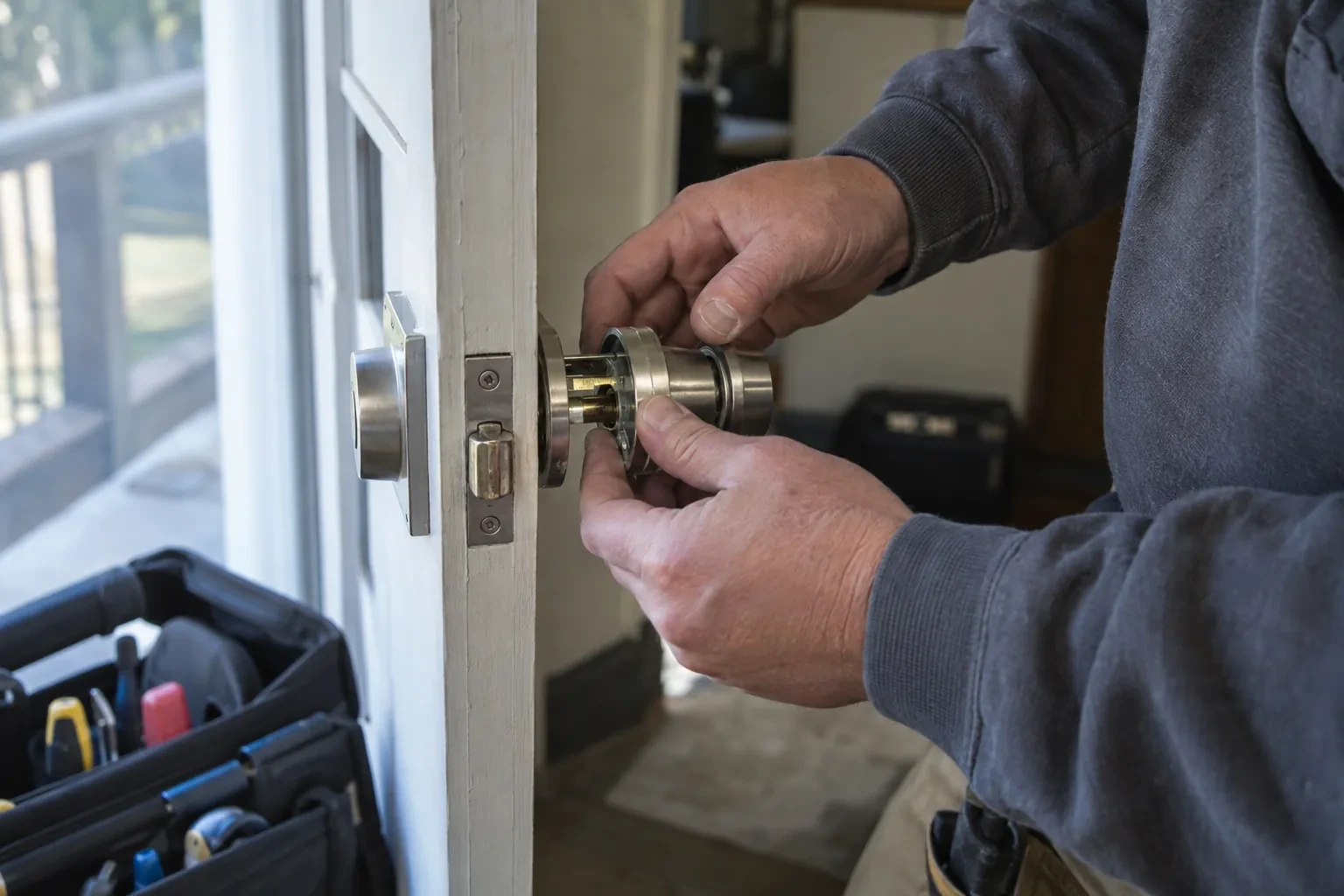
With access restored, a cylinder that seized gets a proper service. The locksmith removes it from the door, slides the plug out with a follower so the top pins and springs stay put, and lays out the pin stacks. Everything is cleaned, worn bottom pins and tired springs are replaced, and any burr on the plug is dressed. The plug is reassembled to the same combination so your existing keys keep working, then lubricated with the product that cylinder's maker specifies and cycled until it turns with a fingertip. If the key that jammed was worn, a fresh one is cut from the code rather than from that key.
Keys that match the lock again
Where a worn or drifted key was part of the jam, you now hold a key cut from the code or from a fresh master, and every spare has been tried in the lock. Retire copies that needed force, and cut future spares from the good key rather than from each other, since each generation of copying adds error. Label the keys if several locks are involved. If the cylinder was replaced and pinned to your existing key, the whole house is still on one key. Keeping a written note of the keyway and, where it exists, the key code makes any future key a simple cut.
Seized & Jammed Lock Opening
In the van
Replacement tailpiece or cam
Lock de-icer
Strike plate and hinge shims
Electronic contact cleaner
Long hinge screws
Seized & Jammed Lock Opening
What affects the quote
The drive to you
Driving time is part of every call, and a property at the end of a long rural road is a different trip from one a few streets over.
Door and hinge adjustment
When the door caused the jam, hinge screws, shims, a strike move or a deepened bolt pocket are quoted as their own line beside the opening.
Ice and salt on the day
A cylinder frozen solid or crusted with salt needs thawing, flushing and drying before it can even be diagnosed, and a winter call is quoted with that time in mind.
What to have ready
- Has anyone sprayed oil or another product into the keyway?
- Is the key worn, bent, or a copy made from another copy?
- Has there been a thaw and freeze, or a stretch of humid weather, this week?
Seized & Jammed Lock Opening: questions
QuestionsHow do I stop this from happening again?
Three habits cover most of it. Lubricate the cylinder with a dry lock product twice a year and keep oils out of it. Check that the door locks with no pressure on it each spring and fall, snugging hinge and strike screws when it starts to drag. Keep a lock de-icer handy and fit a keyhole cover on exposed doors. And act on the first stiff turn, because a lock that still turns is a smaller job than one that has stopped.
Will I need a whole new lock?
Usually not. Most jammed locks are saved by cleaning the cylinder, fitting a small part such as a tailpiece or spring, or adjusting the door so the bolt has room. A new cylinder is fitted when the plug or shell is corroded through or twisted by forcing, matched to your finish and, where possible, pinned to your current key. A complete new lockset is usually a choice you make rather than a requirement, though some internal failures cannot be serviced in place and call for a full replacement.
Do I have to prove I live or work here?
It is a normal part of the visit and it protects you as much as anyone. Photo identification matching the address is the simplest route; a lease, a bill, a management record or a manager or neighbour who can confirm you works as well. For a business, the key holder or the person on the lease is enough. If the documents are behind the jammed door, the check is completed once you are inside, before the locksmith leaves.
Related services
- Business Lockout ServiceIt is ten to nine, three staff are on the sidewalk with their coffees, and the key that has opened the glass front door for six years will not turn.
- Broken Key ExtractionThe padlock on the shed has been stiff all summer.
- Break-In Damage Lock RepairThere is a hole where the cylinder used to be.