Lockouts · London
Business Lockout Service in London
It is ten to nine, three staff are on the sidewalk with their coffees, and the key that has opened the glass front door for six years will not turn.
In plain words
Authority for a business is a question about the company, not just the individual at the door. An owner shows identification and something connecting them to the premises, such as the lease or the business registration. A manager or employee adds a call to the owner or head office, or a property manager who can vouch for them. A commercial landlord brings the lease terms or written instruction that supports the request. Good locksmiths treat this as the opening step of every business lockout and help find the right document rather than guessing, because the same care protects the business the next time a stranger claims to work there.
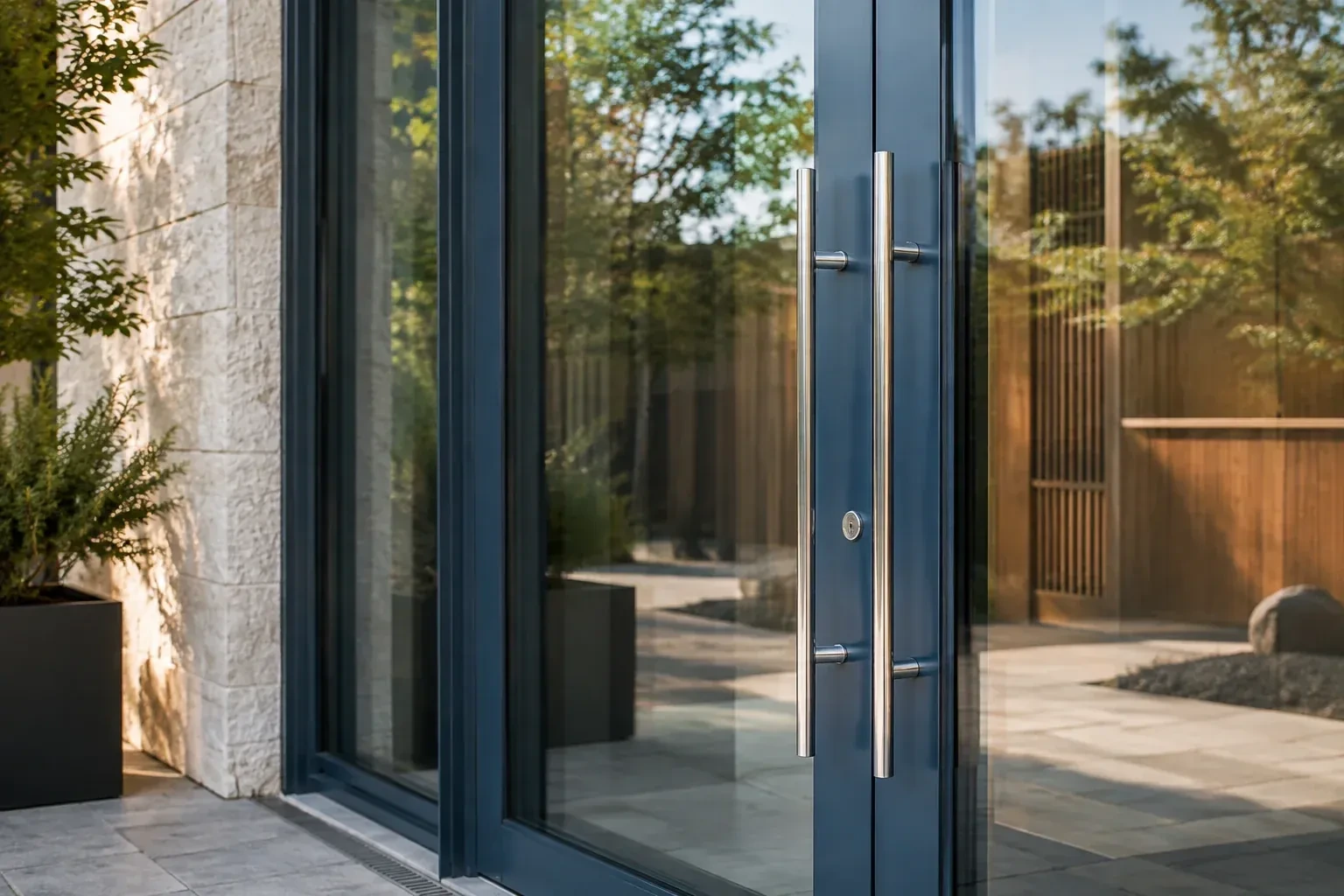
How the visit goesThe heavy glass door has been scraping the threshold for weeks. This morning the key turns, you can hear the bolt trying to move, but it is jammed hard in the strike and the door stays shut no matter how the handle is pulled.
Business Lockout Service
How the visit goes
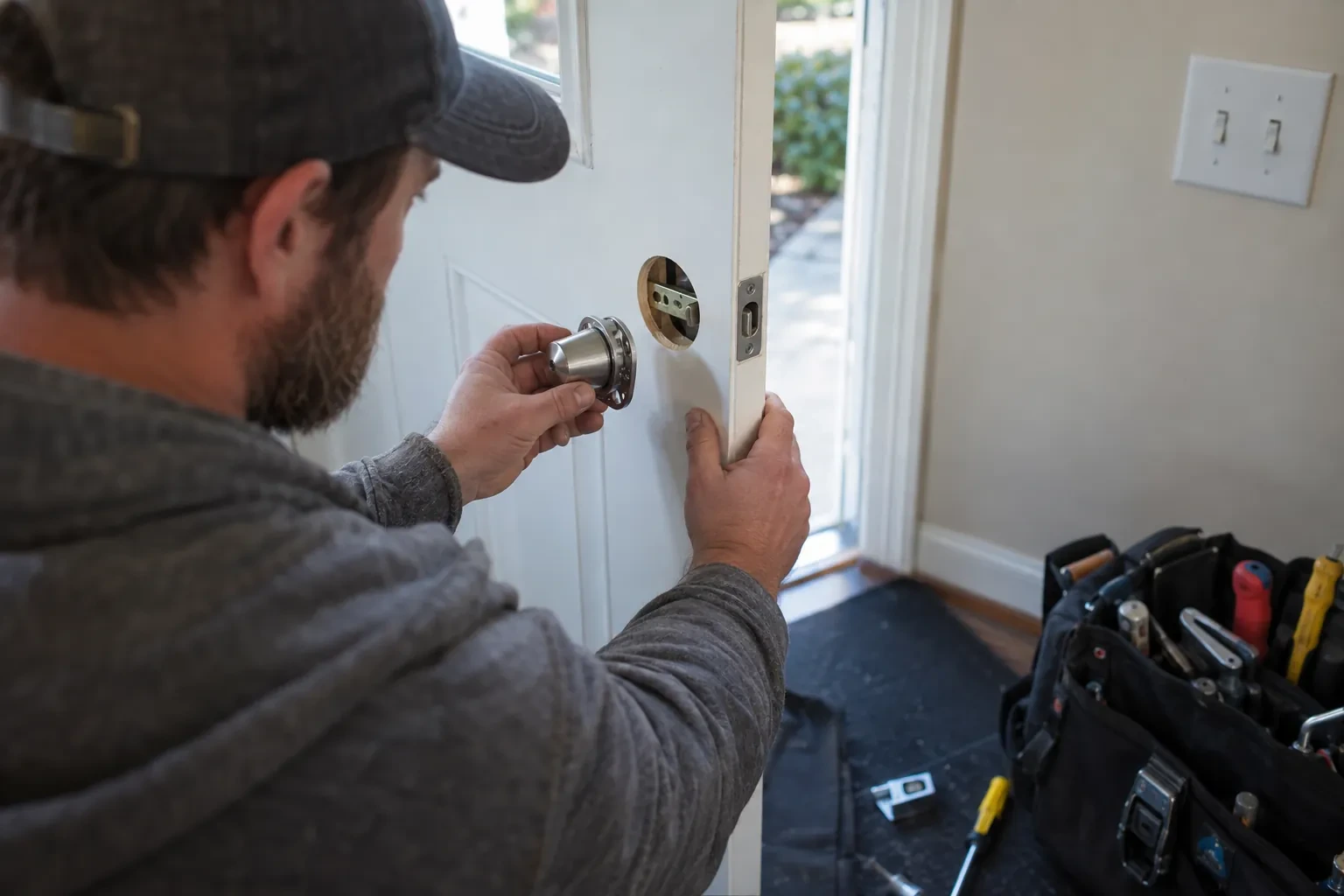
Alarm, reader and anything wired to the door
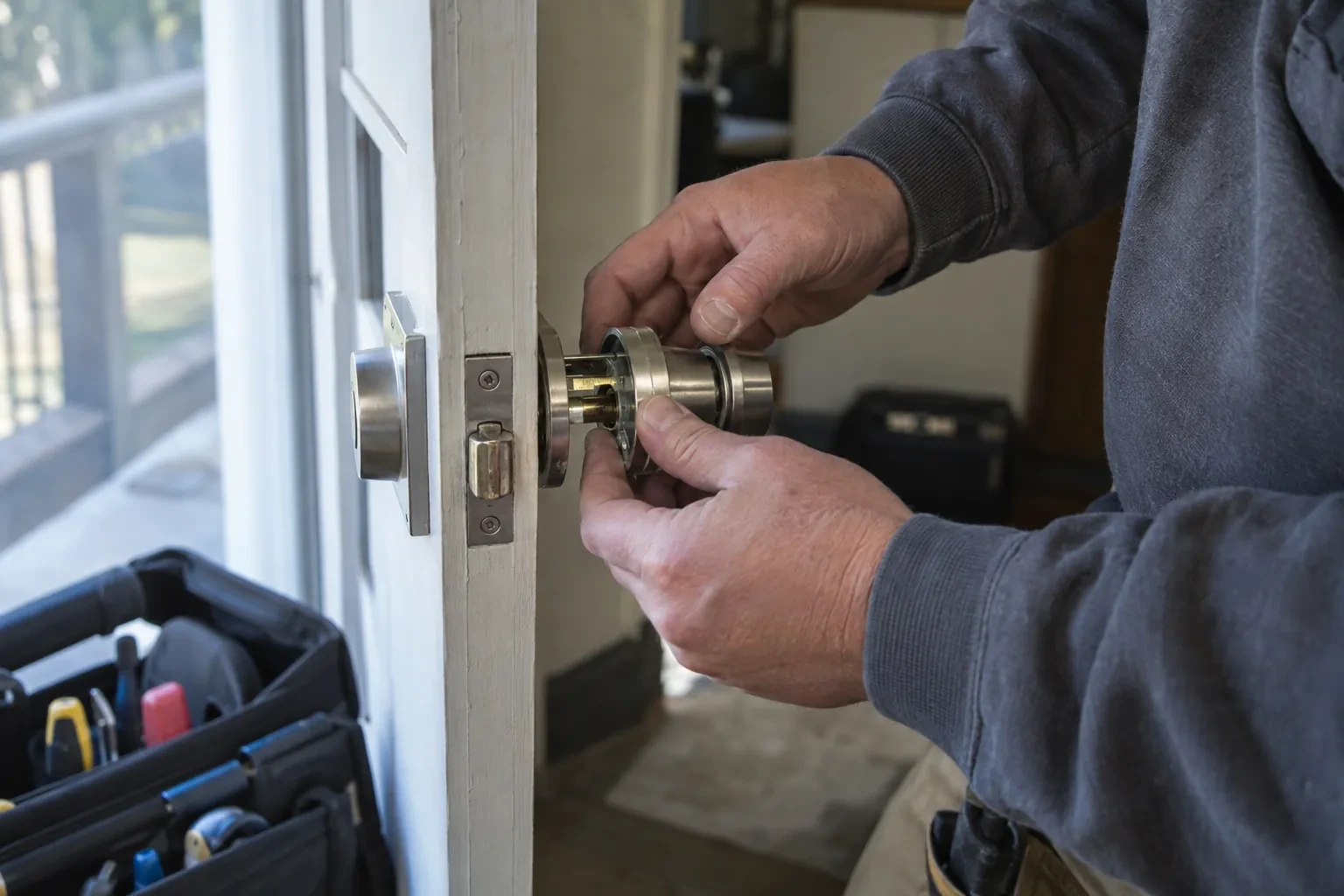
Before the door moves, the locksmith asks what will notice when it does. Is there an alarm with a contact on this door, who holds the code, and should the monitoring company be told to expect an entry? Is the door controlled by a card reader, keypad or intercom, and does it use an electric strike, fail-secure or fail-safe, or a magnetic lock, which releases? Is there a mechanical override cylinder and does anyone hold its key? Has the access-control provider got remote access to unlock it? These answers decide whether the opening is a phone call, a battery, an override key or conventional lock work, and they keep the security system intact afterwards.
Doors with a push bar inside
A rear door fitted with an exit device is opened from outside through its trim: a keyed lever, a pull with a cylinder, or a bare cylinder in a nightlatch function. Depending on that trim, picking or decoding the cylinder either retracts the latch directly, the way a nightlatch trim does, or unlocks a lever, knob or thumbpiece that then has to be turned to let the latch go. The device itself, including any vertical rods and the dogging mechanism, is left exactly as installed, because it is the way out in an emergency. Afterwards the bar is pressed from inside to confirm the latch releases with one push, and the outside trim is checked for a loose cylinder.
Keys you can account for
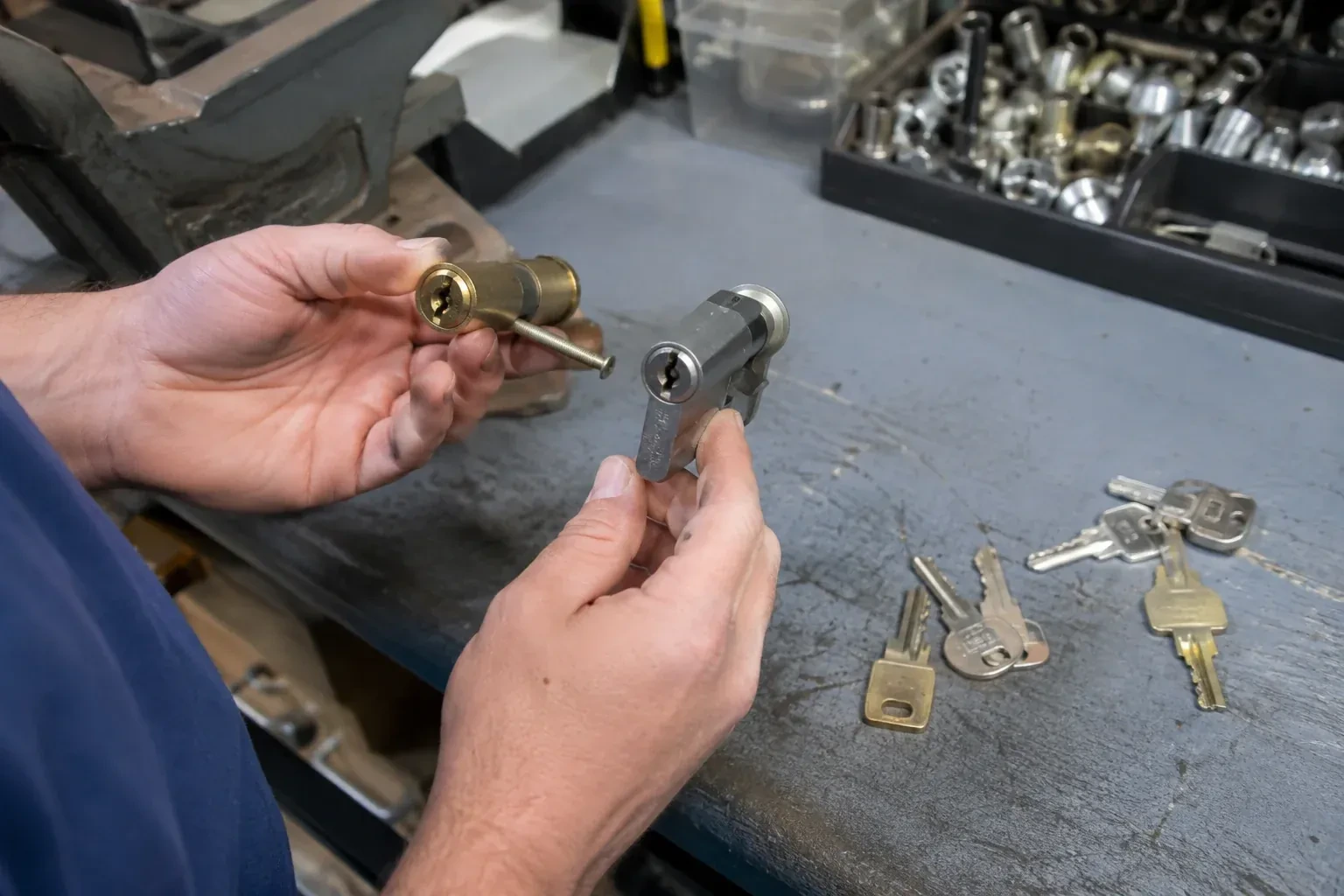
After a rekey or a core swap you receive a counted set of new keys, cut from the fresh combination rather than copied from a worn original. The sensible next step is a key register: a page or spreadsheet naming each keyholder, the key they carry and the date it was issued, updated when someone leaves. Manufacturers put it plainly: locks only limit access if the keys that work them are controlled. A restricted keyway, where blanks are supplied only through authorised channels, puts real controls around duplication, though the exact process varies by program, and can be introduced now or later. Interchangeable cores make future staff changes a matter of swapping a core rather than a rekey.
Business Lockout Service
In the van
Control keys and core-removal tools
Lock de-icer and dry PTFE lubricant
Key blanks and code cutter
Replacement mortise and rim cylinders
Cylinder decoder and plug spinner
Business Lockout Service
What affects the quote
Broken key extraction and cylinder service
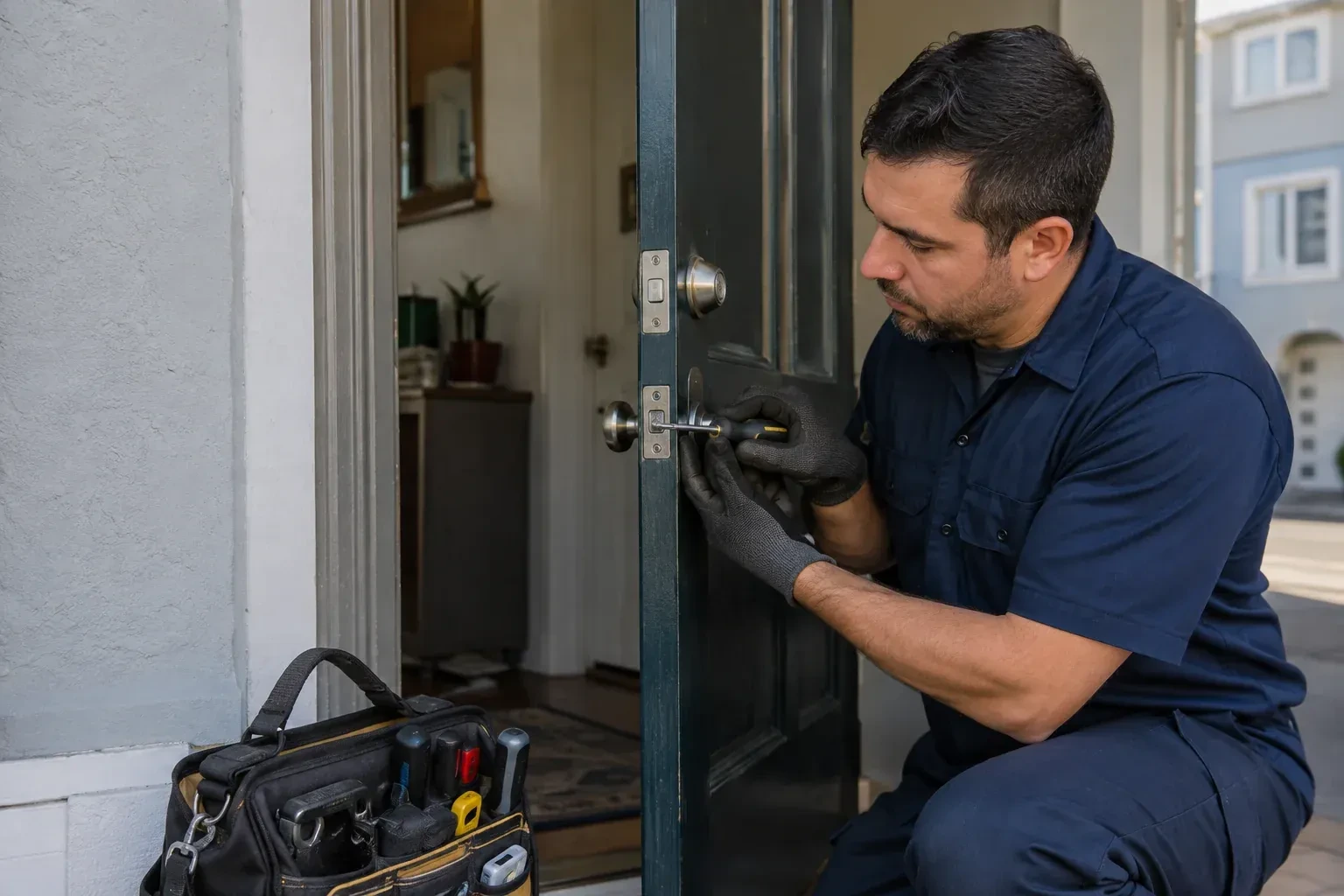
Removing a snapped key, cleaning and lubricating the cylinder and replacing a worn cam or tailpiece are added to the opening when that is what caused it, and a new key cut from code follows.
Padlocks, gates and interior doors
A shutter padlock, a compound gate and interior doors for the cash office, stockroom or server closet are lighter work than an exterior lock but each is its own line, and a padlock is often replaced rather than opened.
Upgrades you choose while the locksmith is there
Some businesses use the visit to move to a heavier storefront deadlock, a restricted keyway, interchangeable cores, a lockbox for keyholders or a reinforced strike. None of it is needed to get you open; each is priced as its own option.
What to have ready
- Has a key gone missing or left with a former employee, so that rekeying should follow?
- Where are the keys: with an absent keyholder, lost, broken in the lock, or turning without effect?
- Who on site can show identification and a document connecting them to the business?
Business Lockout Service: questions
QuestionsThis is the third time this door has locked someone out. Is something wrong with the hardware?
It can be. A cylinder that is worn, a strike plate that has shifted, or a latch that no longer seats squarely will all produce repeat lockouts even though the key looks fine. The locksmith checks the alignment of the door and frame, tests how smoothly the latch throws, and looks at wear inside the cylinder before simply letting you back in. If the hardware is the cause, fixing that during the same visit is usually quicker than calling again next month.
We need to open for customers. How do you sequence the visit?
Entry comes first and repairs second. Once authority is confirmed the door is opened, staff go in and start their routine, and the locksmith turns to the cause: extracting a broken key, rekeying for a lost one, re-springing a deadlatch or lifting a dropped door. Anything that can wait for a quieter hour, such as rekeying interior doors, is offered as a return visit so the shop floor is not blocked while it trades.
I am an employee, not the owner. Can you still open the door for me?
Yes, with the owner or a manager in the loop. Tell the locksmith who can confirm you work there and how to reach them. A call to the business owner, the regional manager or the property manager, ideally on a number that can be looked up rather than one you supply, settles it. Staff on an opening shift arrange this on the phone before the locksmith arrives so nothing waits at the door.