Lockouts · Byron
Business Lockout Service in Byron
It is ten to nine, three staff are on the sidewalk with their coffees, and the key that has opened the glass front door for six years will not turn.
In plain words
A locked business loses trading time, so the visit is arranged around getting people back to work. The locksmith opens the door first and settles the cause second: a snapped key is extracted and the cylinder checked, a lost key leads to rekeying while staff open up, a failed deadlatch spring is replaced before the door is trusted again. What matters as much as the opening is closing time. Every door worked on is locked and unlocked from both sides before the locksmith leaves, so the person doing the final walk-round that evening has no surprises and the premises are as secure as they were before.
How the visit goesA cook stepped into the alley with the recycling and the rear door swung shut behind him. The push bar works from inside, but the outside handle has a keyed cylinder and the key is hanging in the kitchen office. The front door is locked too.
Business Lockout Service
How the visit goes
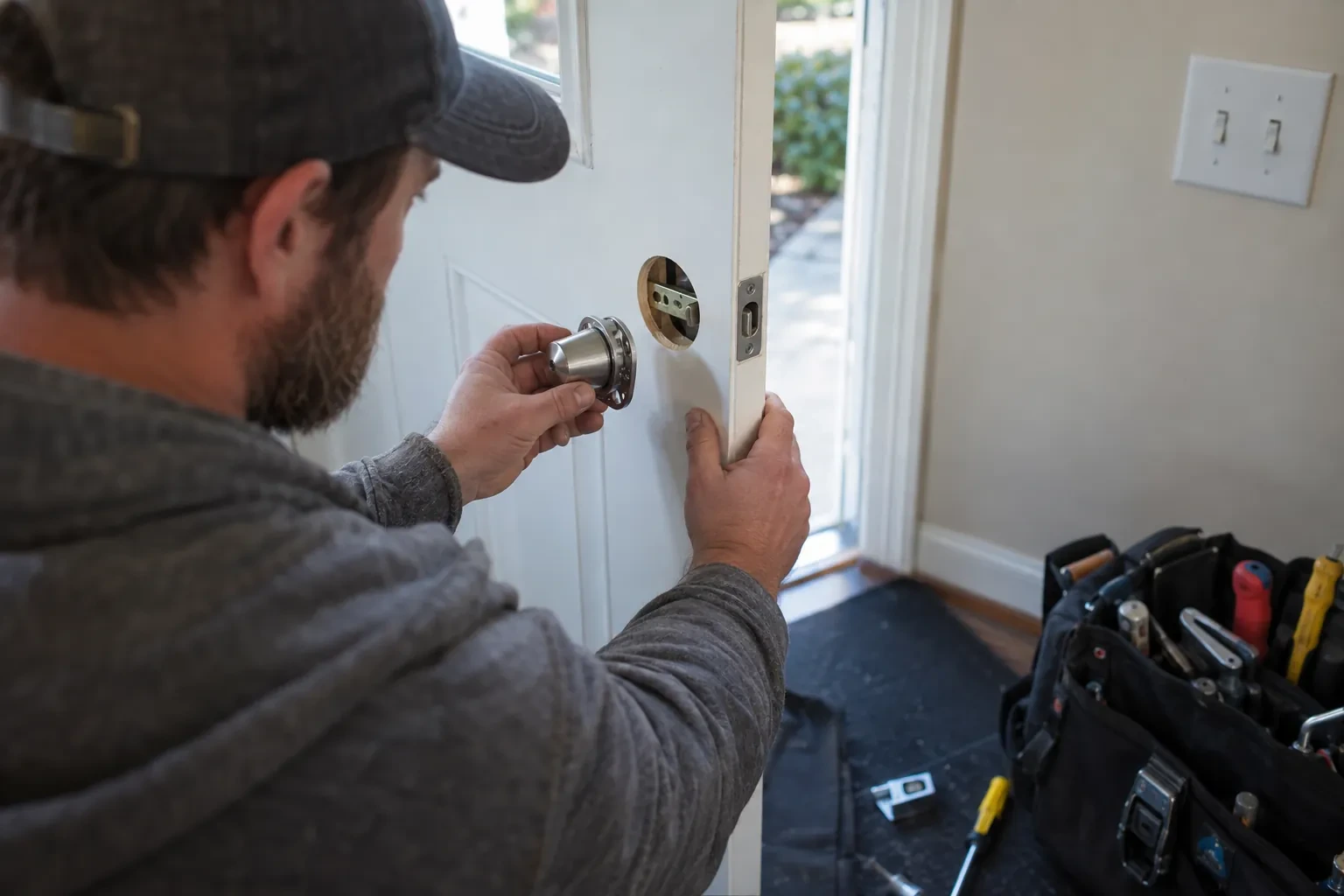
Alarm, reader and anything wired to the door
Before the door moves, the locksmith asks what will notice when it does. Is there an alarm with a contact on this door, who holds the code, and should the monitoring company be told to expect an entry? Is the door controlled by a card reader, keypad or intercom, and does it use an electric strike, fail-secure or fail-safe, or a magnetic lock, which releases? Is there a mechanical override cylinder and does anyone hold its key? Has the access-control provider got remote access to unlock it? These answers decide whether the opening is a phone call, a battery, an override key or conventional lock work, and they keep the security system intact afterwards.
Extracting a snapped key and finding out why
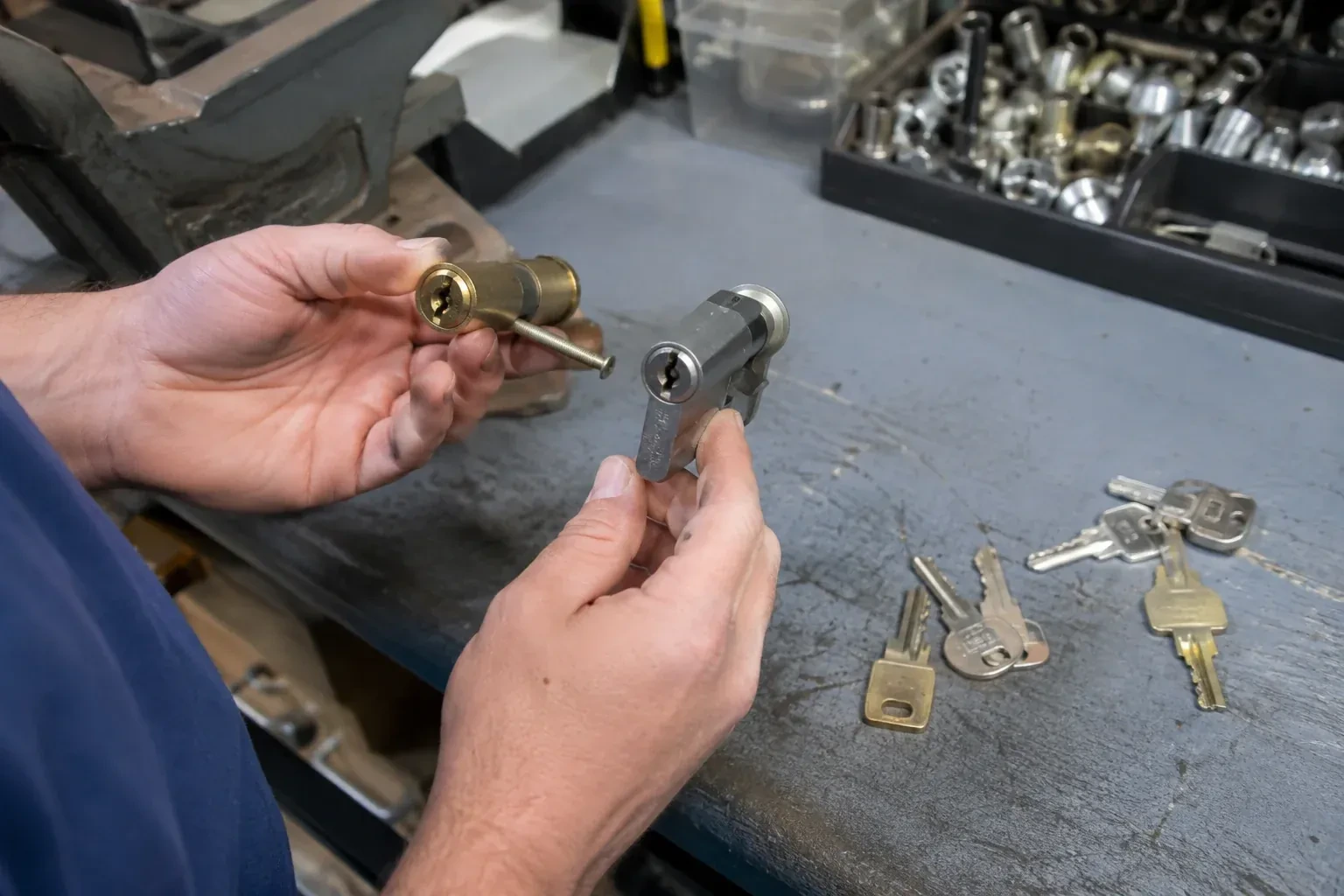
A key that broke off in a commercial cylinder is drawn out with extractor tools that grip the blade and pull it toward the face, never pushing it deeper. With the fragment out, the cylinder is picked or decoded and the door opened. The two halves of the key are then compared with a fresh blank, because a key rarely breaks in a healthy lock: a bent or thin copy, a cylinder full of grit, or a stiff cam behind it is usually the cause. The cylinder is cleaned and lubricated with a dry product, the cam checked for wear, and a new key cut from the code or from the pieces rather than from another tired copy.
Exit doors that still let everyone out
Whatever was replaced, a door on the way out of the building still opens from inside with a single motion and no key while people are in it. That standard is why a storefront gets a thumb-turn or paddle inside, a rear door keeps its push bar, and a double-cylinder deadbolt does not go on an exit route. The locksmith checks each door for this before leaving and points out any older hardware, such as a chain or a keyed-inside bolt on a back door, that the business may want to bring into line.
Business Lockout Service
In the van
Control keys and core-removal tools
Lock de-icer and dry PTFE lubricant
Key blanks and code cutter
Replacement mortise and rim cylinders
Cylinder decoder and plug spinner
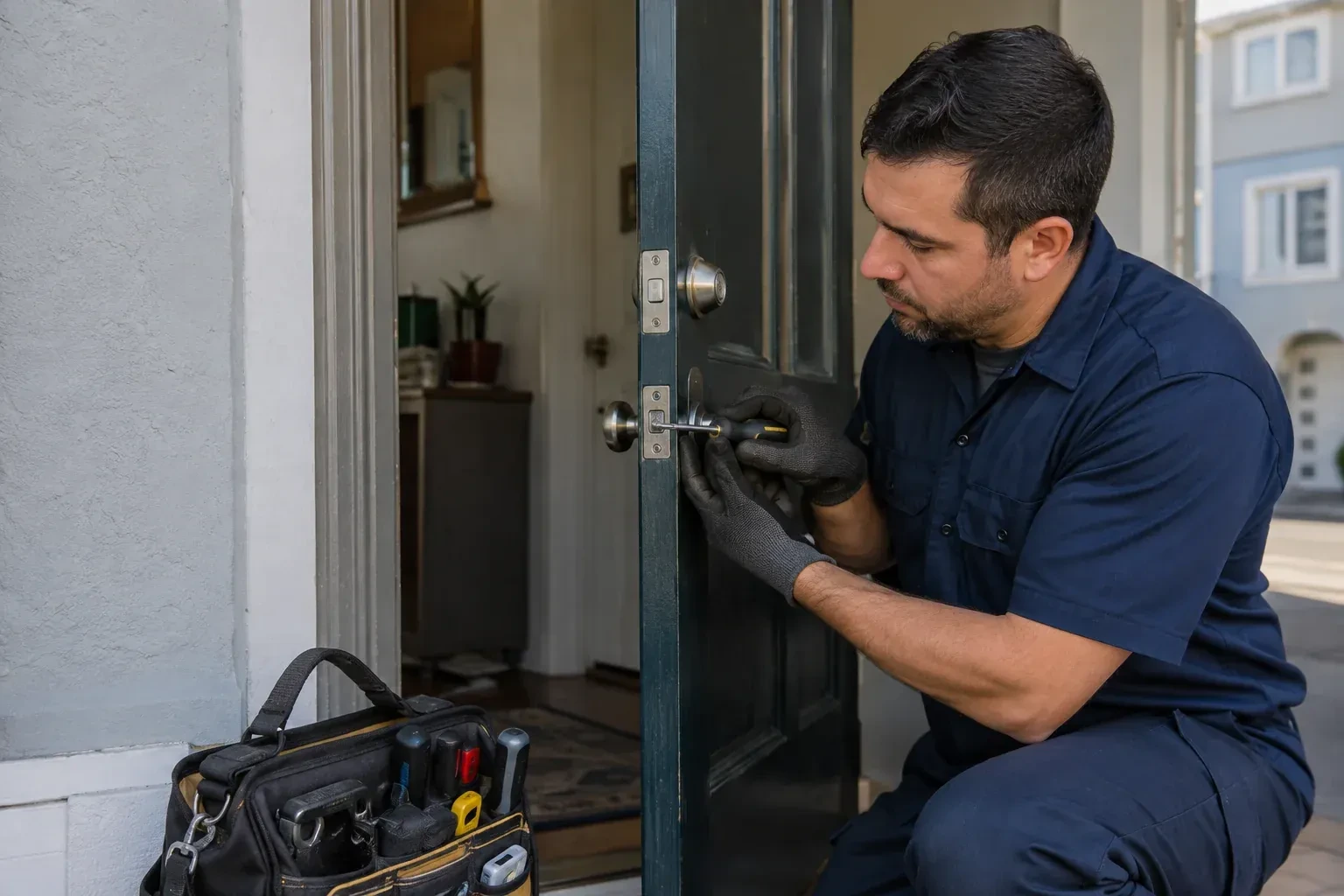
Business Lockout Service
What affects the quote
Drilling and a replacement cylinder
If a seized or blocked cylinder has to be drilled, the quote gains a new commercial cylinder or core and the labour to fit and key it. This is explained before the drill comes out.
Broken key extraction and cylinder service
Removing a snapped key, cleaning and lubricating the cylinder and replacing a worn cam or tailpiece are added to the opening when that is what caused it, and a new key cut from code follows.
Distance and access to the door
Travel is part of every call-out, and so is reaching the door: a plaza unit at street level, a suite behind a locked lobby, or a loading dock at the back of an industrial park each take a different amount of the locksmith's time.
What to have ready
- Where are the keys: with an absent keyholder, lost, broken in the lock, or turning without effect?
- Has a key gone missing or left with a former employee, so that rekeying should follow?
- Does the building have a property manager or a master key system for the unit?
Business Lockout Service: questions
QuestionsThis is the third time this door has locked someone out. Is something wrong with the hardware?
It can be. A cylinder that is worn, a strike plate that has shifted, or a latch that no longer seats squarely will all produce repeat lockouts even though the key looks fine. The locksmith checks the alignment of the door and frame, tests how smoothly the latch throws, and looks at wear inside the cylinder before simply letting you back in. If the hardware is the cause, fixing that during the same visit is usually quicker than calling again next month.
We need to open for customers. How do you sequence the visit?
Entry comes first and repairs second. Once authority is confirmed the door is opened, staff go in and start their routine, and the locksmith turns to the cause: extracting a broken key, rekeying for a lost one, re-springing a deadlatch or lifting a dropped door. Anything that can wait for a quieter hour, such as rekeying interior doors, is offered as a return visit so the shop floor is not blocked while it trades.
I am an employee, not the owner. Can you still open the door for me?
Yes, with the owner or a manager in the loop. Tell the locksmith who can confirm you work there and how to reach them. A call to the business owner, the regional manager or the property manager, ideally on a number that can be looked up rather than one you supply, settles it. Staff on an opening shift arrange this on the phone before the locksmith arrives so nothing waits at the door.