Car keys · London
Motorcycle & Scooter Keys in London
The key still opens the seat and unlocks the fork, but at the ignition it needs a slow half-turn and a small lift before the switch engages, a habit that has crept in over years of daily starts.
In plain words
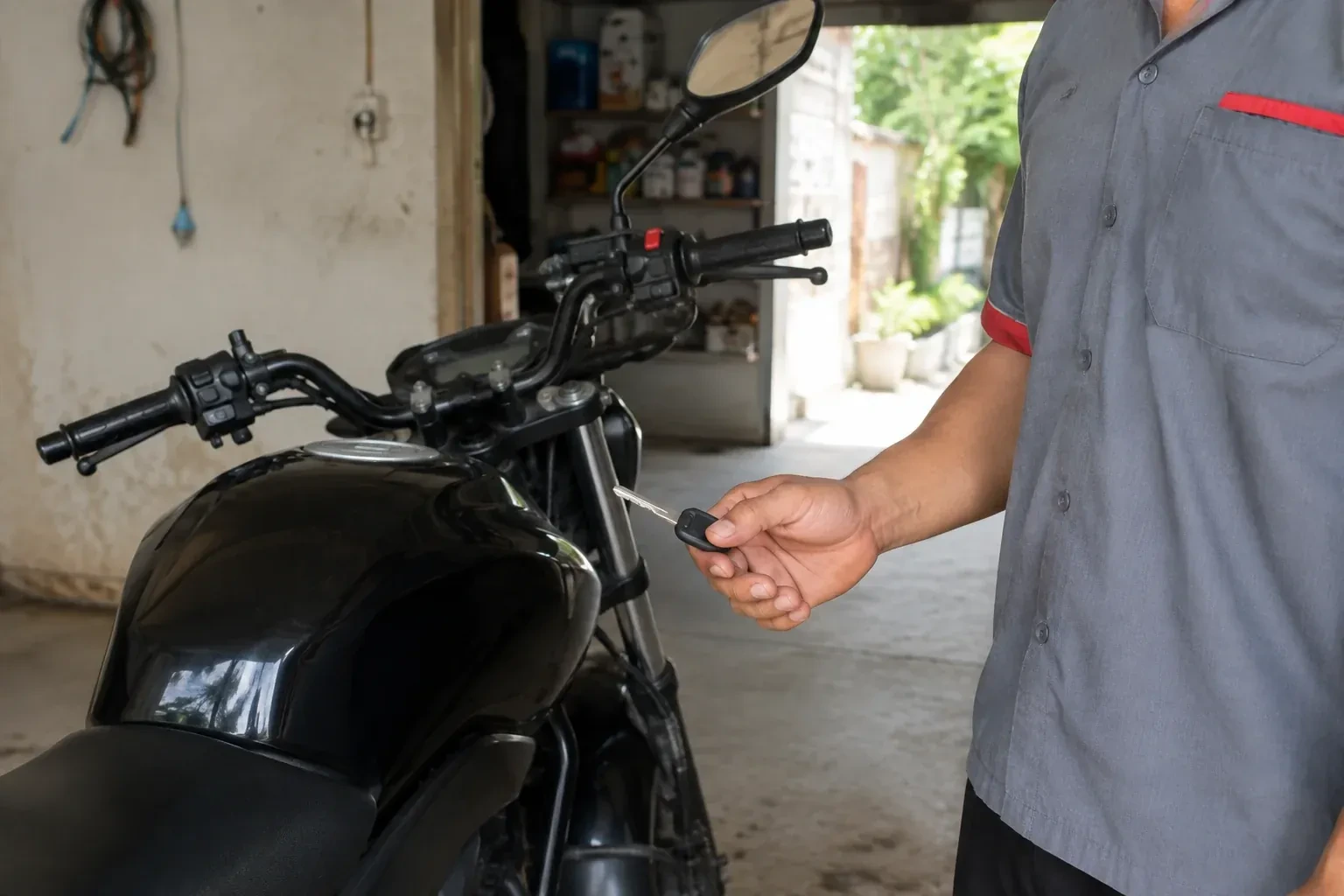
Motorcycle and scooter key service is the work of producing a key that a two-wheeled machine will actually accept, whether that means cutting a plain blade, decoding an ignition lock with no key at all, or programming a transponder that talks to the engine control unit. The locksmith starts by confirming who is asking, then reads the lock and, where fitted, the immobiliser, before choosing whether to cut from an existing key, decode from scratch, or pair a new chip. On many machines the same visit also brings the seat, fuel cap and any storage locks onto the same key as the ignition.
How the visit goesThe key turns half a rotation in the ignition, catches, then the blade lets go with a small snap. The bow is still in your hand; the rest of it is somewhere inside a lock that now has nothing to grip.
Motorcycle & Scooter Keys
How the visit goes
Confirming who is asking
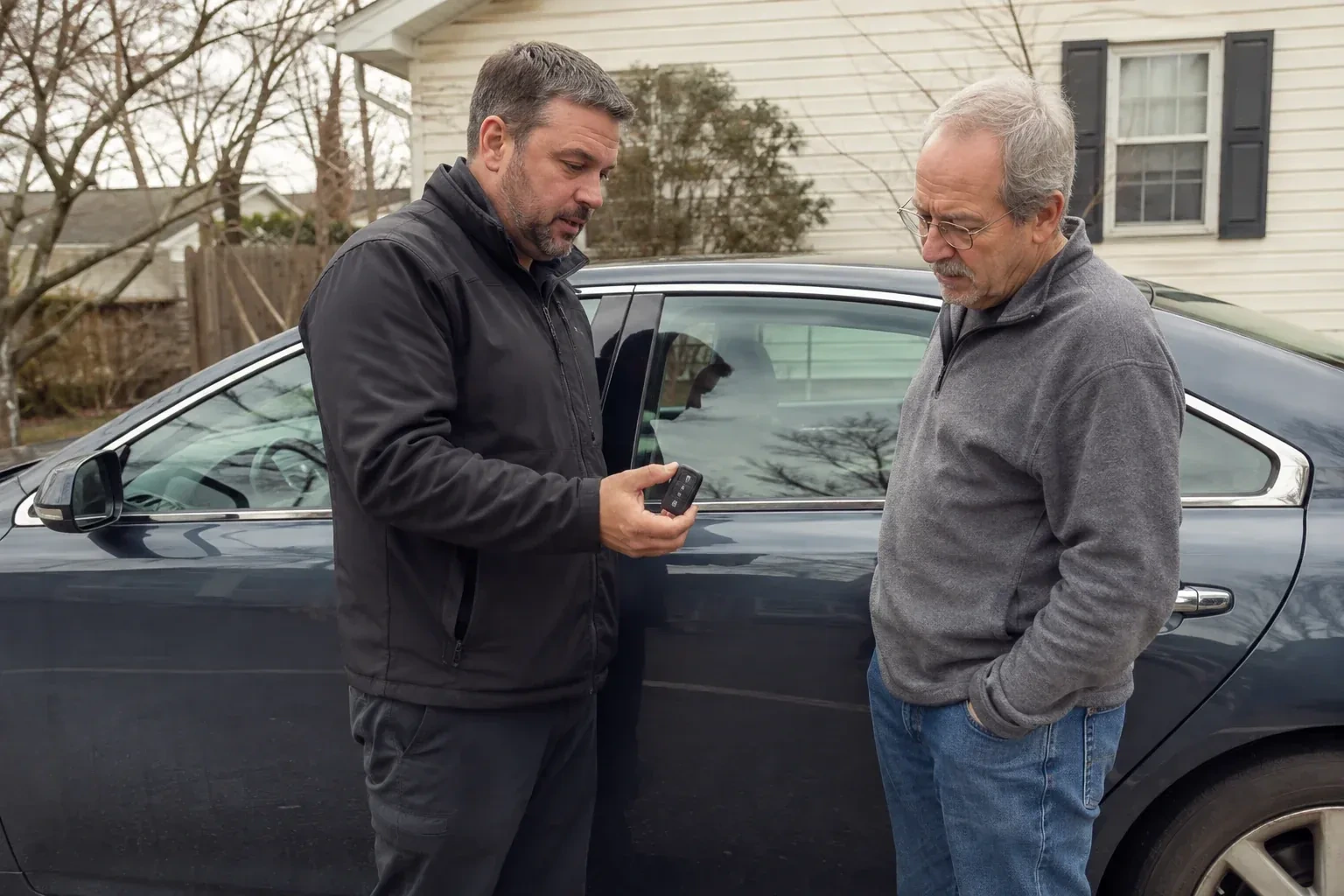
Before any lock is touched, the locksmith confirms that the person requesting a key has a real connection to the machine: vehicle registration, an insurance document that matches the plate, or a bill of sale for a recent purchase all work. Where paperwork is not on hand, a dealership record, a family member who can vouch for the owner, or a photo of the machine alongside identification often fills the gap. This step takes only a few minutes and stands ahead of any cutting, decoding or programming, since a working key is something that should only ever go to the person meant to hold one.
Testing before handover
Every finished key is tested on the actual machine before the visit ends, not just checked against a code on paper. That means turning the steering lock through its full range, opening the seat and fuel cap if they are on the same key, and starting the engine to confirm any transponder is recognised. Only once all of that behaves consistently, more than once, does the locksmith consider the key set complete. Any code or reference used to cut the key is left with the owner or noted for their records, so a future spare does not have to start from nothing.
Noticing trouble early
A key that has begun needing a small wiggle or a lift to turn, on a lock that used to accept it cleanly, is an early sign worth acting on before it becomes a lock that will not turn at all. The same goes for a steering lock that has started to feel stiffer than it used to, or a seat latch that catches before it releases. Addressing any of these while the key still works, rather than after it stops working altogether, is usually the calmer of the two visits.
Motorcycle & Scooter Keys
In the van
Motorcycle key blanks
Code-cutting machine
Fob shells and batteries
Replacement ignition or steering lock
Transponder programming unit
Motorcycle & Scooter Keys
What affects the quote
Whether a working key already exists
Whether a working key still exists changes the job considerably: cutting or duplicating from one is the more direct route, while decoding a lock with nothing to reference takes longer and shapes the time reflected in the total.
Any security upgrade added at the same time
Any additional item chosen during the same visit, such as a disc lock, an alarm, or a lockbox for a spare key, is priced as its own separate addition to the key work.
Sourcing an uncommon key blank
Some keyway profiles are harder to source a matching blank for than others, particularly on older or less common machines, and locating the right blank can add to the time before cutting even starts.
What to have ready
- Where is the machine currently kept?
- Does the engine crank but fail to start with the current key?
- Which locks need to be included: ignition, seat, fuel cap, storage?
Motorcycle & Scooter Keys: questions
QuestionsWhat counts as proof that I can request a key for this machine?
Vehicle registration or an insurance document that matches the plate is the simplest route. A bill of sale works for a recent purchase, and a dealership or family member who can vouch for the connection fills the gap when paperwork is not on hand. This check happens before any cutting or programming, since a working key should only go to someone with a genuine claim to the machine.
Would a copy from a general hardware-store machine work just as well?
It can, but motorcycle wafer locks vary between manufacturers even when they look similar, and a generic cutter is not always set up to read the specific depths and keyway profile correctly. A copy that is slightly off shows up as a key that catches or needs a wiggle, which is often what brings someone in after trying that route first. Cutting from the lock's actual code avoids that guesswork.
Do I have to have the original key for you to cut a new one?
No. When every key for the machine is gone, the locksmith reads the lock directly, working out each wafer's depth by picking and reading the cylinder or using a decoder built for that keyway, and cuts a fresh key to the code that comes out of that reading. It takes longer than copying an existing key, since every wafer is read individually, but it produces a key that matches the lock rather than a guess.
Related services
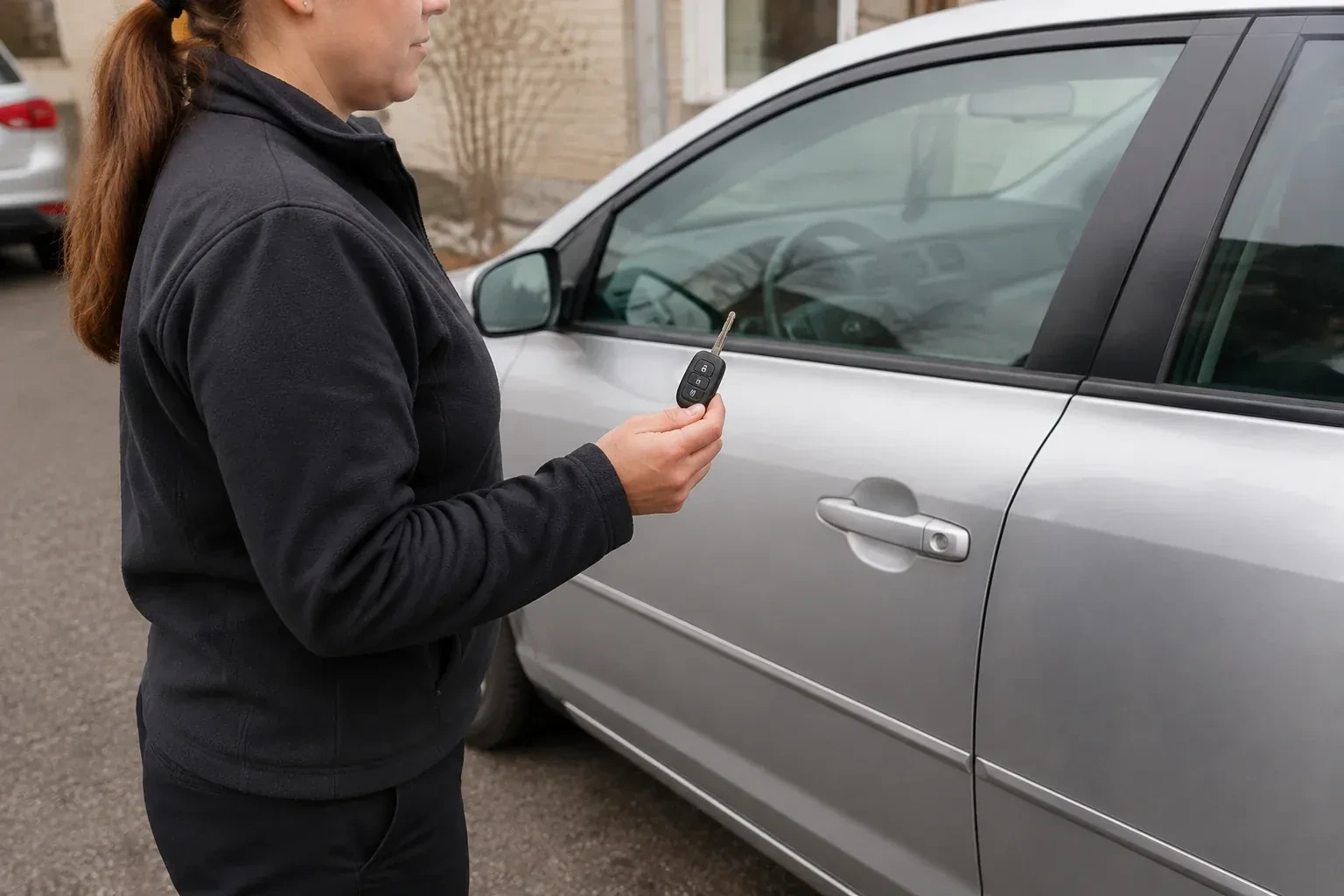
- Car Key ReplacementThe key snapped at the head while you were turning it in a stiff, frosty door lock.
- Spare Car Key DuplicationA teenager just passed a driving test and reasonably wants a key of their own rather than negotiating over the family's single copy every time the car is needed.
- Key Fob ProgrammingA fob went missing weeks ago somewhere between a coat pocket and a parking lot, and a spare has covered the gap since.