
Commercial · Oakridge Park
Master Key System Design in Oakridge Park
The new wing was built with its own brand of cylinder, so the two-year-old keys from the original building do not open a single door in the addition.
In plain words
A property that expects to add doors, departments or locations benefits from a master key system built with room to grow. Master key system design accounts for that from the outset: the keying platform and combinations chosen leave spare capacity for realistic future openings, rather than filling every available combination on the first day. That way, a new office, a new hire, or a newly leased unit can usually be added to the existing chart instead of triggering a redesign of levels that are already in use elsewhere in the building.
How the visit goesA new hire at the shop gets handed whatever spare key happens to be in the drawer, and it turns out to open the stockroom, the back office and the safe room all at once. The owner realizes nobody actually decided who should open what.
Master Key System Design
How the visit goes
Room to grow before it is needed
The assessment asks about plans the business already has in mind: a leased unit expected to fill, a department likely to split in two, a location due to open next year. Building spare capacity into the keying platform now is far simpler than adding a level to a system that is already fully pinned, which can mean touching cylinders that were never meant to change. This forward-looking check shapes which keying platform and how many reserved combinations the design settles on before any cylinder is committed to a specific level.
Building the hierarchy from the bottom up
Design starts with the smallest unit, the individual change key, and works upward. Each door that stands alone gets its own combination; doors that should share access are grouped under a sub-master; and a single top-level master is reserved for the short list agreed earlier. Building in this order keeps the levels honest, since a sub-master or master is only created where a real group of doors justifies it, rather than being added because it seems useful in the abstract. The result is a hierarchy that matches the organization rather than one imposed on top of it.
Keys that say less if they go missing
The keys handed over are marked by role or level, not by door or address, so a key that is lost or set down somewhere it should not be tells whoever finds it very little about what it actually opens. Combined with a restricted keyway where one was chosen, this cuts the odds of an unauthorized copy, though the chart still shows that a lost top-level master reaches every cylinder it was cut to operate, which is why that level gets watched most closely.
Master Key System Design
In the van
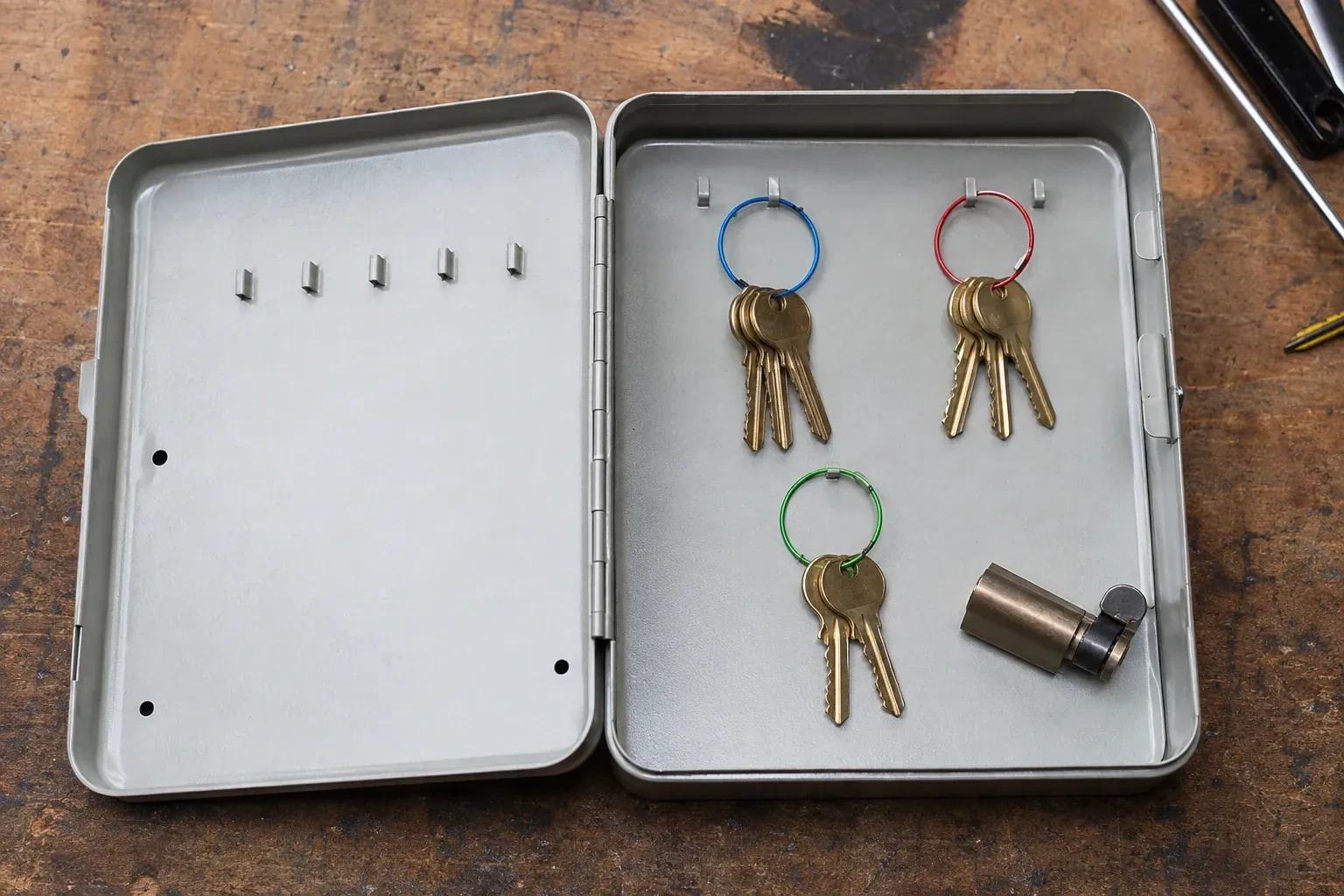
Master pin kits
Key cutting machine
Cylinder decoders
Key marking tools
Locking chart storage cabinet

Master Key System Design
What affects the quote
Condition of the property's current keys
A property with a reasonably current, if informal, sense of who holds which key gives the assessment a shorter starting point than one where keys have been copied and reissued for years with no record at all. More reconstruction work at the start affects the overall quote.
Documentation and chart detail requested
A simple chart listing levels and holders is the baseline. Some businesses want a more detailed record, cross-referenced by department, room number or staff role, which takes additional time to prepare and is quoted as part of the documentation work.
Sub-master levels beyond the basics
One or two sub-master levels are typical for most properties. A more elaborate hierarchy, with several sub-masters covering overlapping departments or floors, takes longer to design correctly and test, and that additional design and testing time is reflected in the quote.
What to have ready
- Do any doors need restricted or patented keys for duplication control?
- Roughly how many doors need to be part of the system?
- Do any doors already use keypad or card-based access?
Master Key System Design: questions
QuestionsCan a master key system be expanded later without redesigning it?
Usually yes, if spare capacity was planned into the keying platform from the start. A new hire is normally handed a copy of the bitting their role already calls for, and a realistic new door can be pinned to accept a combination already reserved for that purpose. A system pinned to its absolute limit on day one has less room to grow, and adding a level to existing doors later can mean repinning cylinders that are already in daily use.
Should I keep spare blanks or unpinned cylinders on hand?
It depends on how the keyway is controlled. With a restricted system, spare blanks are typically held by the locksmith against the authorized record rather than stored loosely on site, since that is what keeps duplication contained. With a standard keyway, keeping a few spare cylinders of the same platform can simplify a later addition, though it is not required.
What is the difference between a master key and a sub-master?
A sub-master sits below the top level and opens a defined group, such as one department or one floor, without opening doors outside that group. The top-level master sits above every sub-master and opens everything in the system. Most properties need only one or two sub-master levels; adding more than the business genuinely uses just makes the chart harder to manage without adding real convenience.
Related services
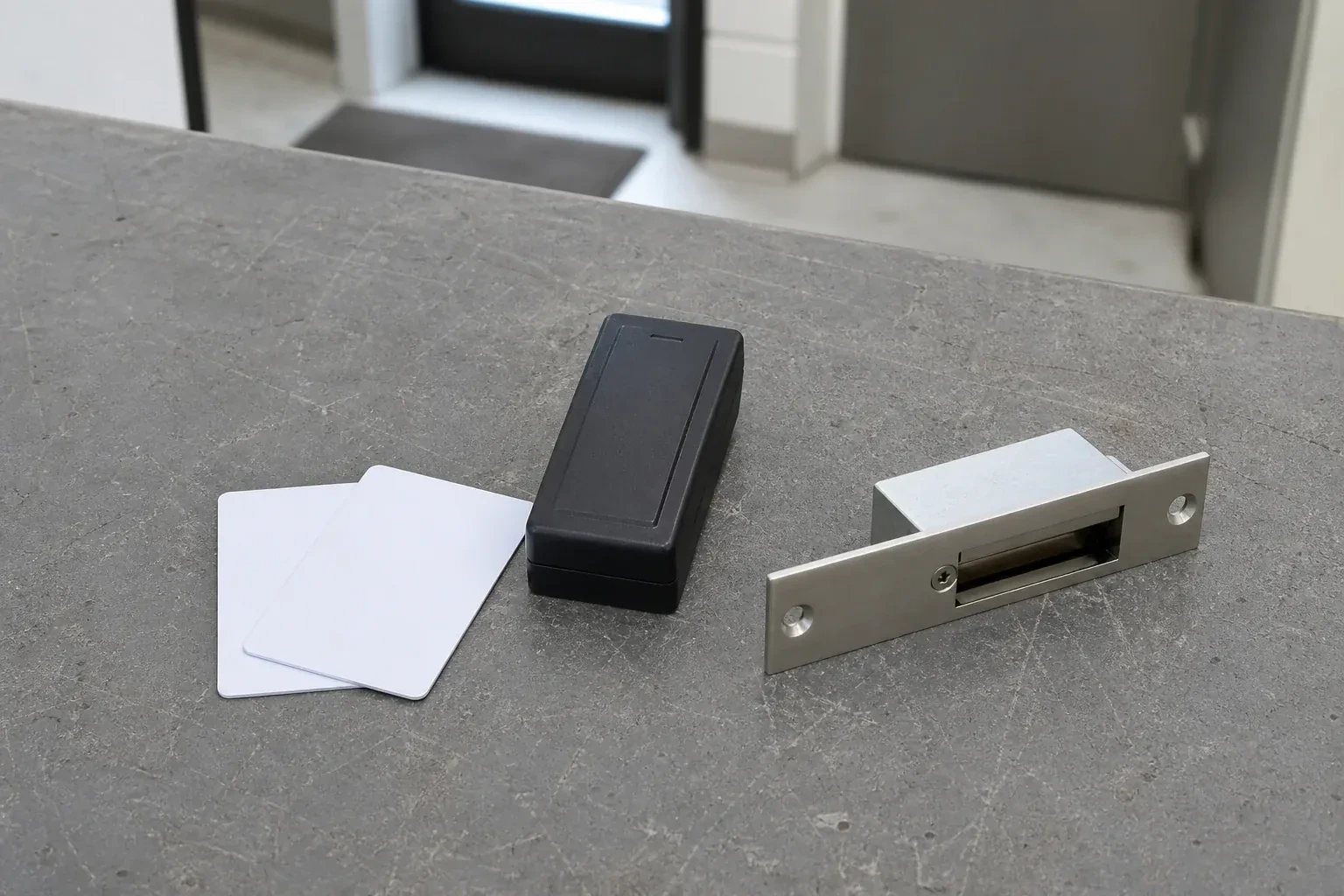
- Access Control InstallationThe keypad on the side door has started sticking on cold mornings, codes get shared instead of reset, and half the staff still remember a code you meant to retire two hires ago.
- Panic & Exit HardwareThe new access-control reader at the staff entrance works fine going in, but nobody has sorted out the door's exit side, and right now a card reader and a pushbar exist as two separate ideas.
- Commercial-Grade Lock ReplacementAn inspection report flagged the rear exit as needing hardware that opens with one motion and no key, and that door currently has an ordinary keyed knob on the inside.